



Net of Nature
Trails

Stage: Calamocha - Ojos Negros (Sierra Menera Mines)







Description
Bidding farewell to the Central de Aragón railway and connecting with the Ojos Negros mining railway.
A long, crucial stretch more 37 km long, connecting the Central de Aragón railway line with the Ojos Negros mining railway, in the Sierra Menera mines. To do so, you will pass through villages such as El Poyo del Cid, Caminreal and Monreal del Campo, among others, which are connected to the Santander-Mediterranean railway. Turning southwest in search of the village of Ojos Negros, the traveller is immersed in the mining environment, concluding at the Sierra Menera mines, where the Ojos Negros to Sagunto railway begins.
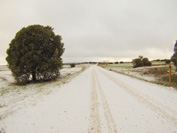
The Calamocha station marks the beginning of this stage. This is where kilometre 0 is. Facing this distinctive signposting element of the Nature Trails, there is a rest area and an interpretative panel inviting visitors to come and enjoy the beautiful village of Calamocha.
Inhabited since ancient times, Calamocha has always been a passing place. A must-see in this village is the church of Santa María la Mayor, as well as the nearby Roman bridge over the River Jiloca, from which you can begin a river walk where, besides admiring the village’s fertile orchards, you can enjoy an ethnographic site consisting of the wool washing place, the copper hammer mill and the flour mill.
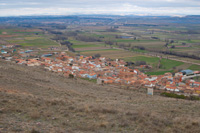
After returning to the old Calamocha station, the journey begins, and as in the previous stage, the River Jiloca acts as the walker’s faithful squire. In these first stretches, there are small bridges, which were once essential to allow the railway to cross small watercourses and streams without any problems.
After the first four kilometres of the stage, the Nature Trail reaches the village of El Poyo del Cid, which has a rest area where you can admire the beauty of this Cidian village.
It is impossible to visit this village without imagining Rodrigo Díaz de Vivar El Cid in these lands, as is attested by the imposing sculpture of the knight which stands at the entrance to the village. The visit is rounded off by the church of St John the Baptist, the five wayside crosses, the ruins of the old wool washing place and various hermitages, all of them jewels of the town’s architectural heritage.
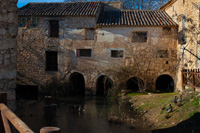
Following the old railway line for a couple of kilometres more, you will reach the village of Fuentes Claras, where the Church of San Pedro stands out, with its bell tower crowned by a Baroque spire, which is very different from the ones usually found in the area and more reminiscent of those found in Castile and Madrid, since it was commissioned from the Madrid master builder Juan Antonio Aparicio; the hermitages of the Virgen de los Navarros, San Ramón and San Salvador, an old mill and two dovecotes in a very good state of preservation. Moreover, there are two curiosities that travellers should not miss: the monument El kilómetro cero del frío, which explains that on 17 December 1963, this village set the all-time record for the lowest daily temperature in an inhabited place, at -30 ºC, and, lastly, at the roundabout leading away from the village and providing access to the N-234 road, there is a large bicycle that invites cyclists to return to the Nature Trail to continue their journey.
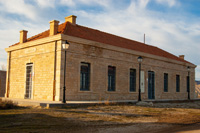
The route continues and, after passing kilometre point 6, occurs one of the most important events in the stage: the old railway line is abandoned because from this point on, it is operational, and a 31.6 km section shared with road traffic begins, which you will have to follow until the end of the stage. From this point on, travellers will continue along wide, well-surfaced and well-signposted paths, so that they can continue to fully enjoy this great stage due to the scant traffic on this type of road.
Thus, it continues parallel to the railway line, which is currently operational, reaching kilometre 8. At this point, though on the other side of the railway, you can see the old Caminreal station, which belonged to the Santander - Mediterranean railway and which currently houses the CICAR, the Centre for the Interpretation of Roman Culture in Caminreal. Metres before this station is what is known as the new Caminreal station, which was built in 1933 and which will soon house one of the three headquarters of the Aragon Railway Museum, together with those located in Canfranc and Zaragoza.
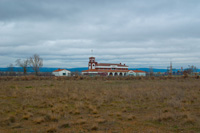
Shortly afterwards, and again on the other side of the railway tracks, you will reach the archaeological site of La Caridad, which is considered one of the most interesting in Aragon, where you can faithfully recreate the process of Romanisation that took place in the Iberian Peninsula. Then, after passing kilometre 9, there is an interpretative panel inviting you to visit the village.
The name Caminreal indicates the historical importance of this village in terms of communications, with two old railway stations: the new station and the old station. It is recommended that you do not miss the church of Our Lady of the Assumption and the Hermitages (St Christopher and Our Lady of the Caves) and, moreover, if is the right date, you can participate in the many festivities held in the municipality.
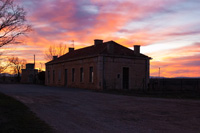
Returning to the route, an 800 m flooded section begins with a cemented and well-marked road surface which, fortunately, stays dry for most of the year. Once you have covered these 800 m you will reach Torrijo del Campo. This village boasts the church of St Peter, which has a marked Mudejar influence, and the Santa Bárbara hermitage in the centre of the town.
Upon returning to the route, you will see that the itinerary once again runs parallel to the railway tracks, leading away from the River Jiloca and its alluvial plain, which is why rain-fed cereal crops predominate. The gradient percentages are not the same as on the old train route and there are some steeper inclines to negotiate, but this does not pose any great difficulty for cyclists who decide to follow the route by bicycle.
A few metres after passing kilometre point 15, a new interpretative panel explains the option of visiting Monreal del Campo, where the bell tower, the parish church of the Nativity, the Saffron Museum and beautiful natural sites such as the Ojos de Monreal are all well worth a visit.
The journey continues and, a few metres beyond kilometre 16, it runs under the N-211 road through an underpass built for this purpose before finally leaving the company of the railway line linking Zaragoza with Sagunto, which is still in operation today. The route continues in a predominantly westerly direction on wide dirt tracks, where the main rain-fed cereal crops are dotted with small plots of holm oak (Quercus ilex) with a mycological aspect, specifically truffle (Tuber melanosporum).
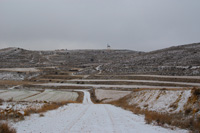
The route continues in a west-south-westerly direction, passing some well-marked crossroads, until it comes to kilometre point 28, where it begins a gentle descent which, after just over a kilometre, leads to the village of Ojos Negros.
It is a village with a past connected to the iron mining industry, of which there are still numerous remnants, such as its old mining quarters, among which the Barrio del Centro, which remains inhabited to this day, stands out. Within its main village centre is the church of Ntra. Sra. del Pilar, the Santa Engracia hermitage, in the Plaza Mayor, and the ruins of the medieval castle. On a nearby hill stands the Ojos Negros windmill, which is in perfect condition and is truly unique, given that there are many water mills in the area, but very few windmills, and travellers will find one of the few examples in Aragon.
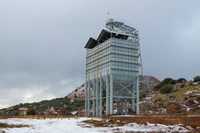
Continuing along the route, you will cross the TE-V-9025 road leading to the aforementioned village of Ojos Negros. After kilometre 30 of this stage, you will leave the village behind and slowly move beyond the windmill before turning northwards and facing a small uphill slope. From this point on, farmland alternates with uncultivated wasteland with little vegetation cover, and after reaching kilometre 33 cyclists reach Salinas del Rey, a place that is well worth stopping at to enjoy an unhurried visit to this ethnographic complex of great economic importance in the past.
This is how the final section of this stage begins, with the Santo Cristo hermitage on the left side of the path, whilst various groves of holm oak trees begin to appear, particularly on the right-hand side of the route. After passing kilometre 36, turn right to tackle the last few metres of the stage, while always taking the old mining hoppers of the Compañía Minera de Sierra Menera as a reference point. After reaching the aforementioned hoppers, you will arrive at a rest area and the interpretative panel that brings this fascinating stage of the Santander-Mediterranean Nature Trail to a close.
Managing Entities
Sites of interest
Puntos de interés
Culture
- Old Iron Ore Mines
- San Esteban hermitage
- Virgen del Moral hermitage
- Old wool washhouse
- Old Fuentes Claras mill
- Virgen de los Navarros hermitage
- La Caridad archaelogical site
- Virgen de las Cuevas hermitage
- Nuestra Señora de la Virgen del Carmen hermitage
- San Gregorio hermitage
- Virgen de los Dolores hermitage
- Ojos Negros windmill
- Santo Cristo de la Herrera hermitage
Hydrography
Infrastructure
- Old Camonreal station
- CICAR and the former SM de Caminreal station
- Old Monreal del Campo station
- Former Compañía Minera Sierra Menera (CMSM)
- Old Calamocha station
Municipality
- El Poyo del Cid
- Fuentes Claras
- Caminreal
- Torrijo del Campo
- Moreal del Campo
- Ojos Negros
- Salinas del Rey
- Calamocha
Orography
Hostel
Passport
Profile
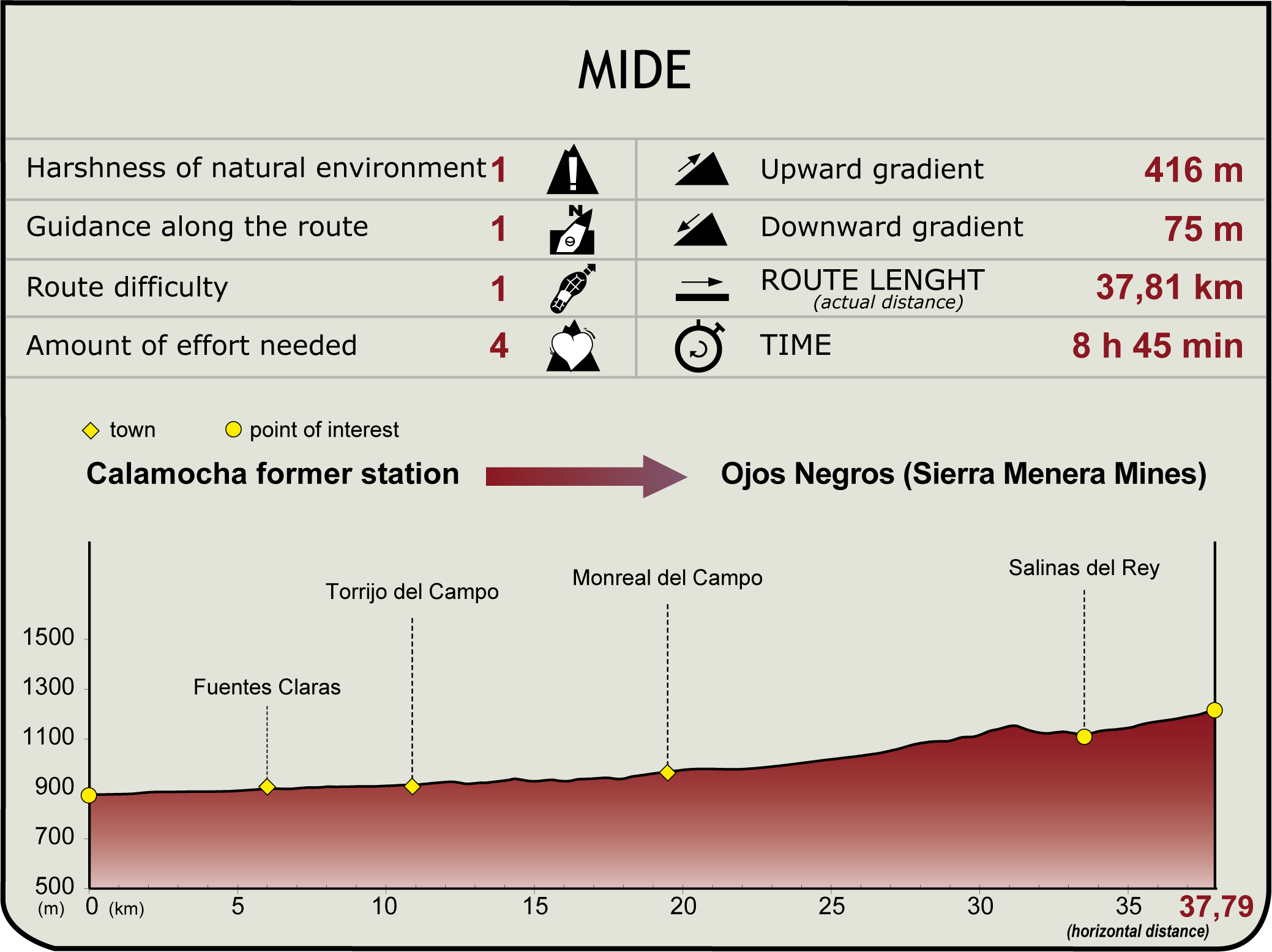
 Harshness of natural environment
- 1. The environment is not risk-free
- 2. There are more than one risk factors
- 3. There are various risk factors
- 4. There are quite a lot of risk factors
- 5. There are many risk factors
 Guidance along the route
- 1. Well defined trails and crossings
- 2. There is a clearly marked trail and signage
- 3. Requires the identification of geographic features and cardinal points
- 4. Requires off-path navigation
- 5. The trail is interrupted by obstacles that have to be gone around
 Route difficulty
- 1. Walking on a flat surface
- 2. Trails with different types of path
- 3. Walking on stepped paths or irregular terrain
- 4. The use of hands or jumping over the terrain is necessary
- 5. The use of hands is required to progress
 Amount of effort needed
- 1. Up to 1 hour of continuous walking
- 2. Between 1 and 3 hours of continuous walking
- 3. Between 3 and 6 hours of continuous walking
- 4. Between 6 and 10 hours of actual walking
- 5. More than 10 hours of continuous walking
(Calculated according to the MIDE criteria for an average excursionist with a light load)
Highlights
Compañía Minera de Sierra Menera
The company was founded on 3 September 1900 by Basque businessmen Eduardo Aznar and Ramón de la Sota to work the Sierra Menera iron ore mines.
Despite having a broad gauge railway line barely 15 km away, the high fares on the existing line meant that they began construction of their own narrow gauge railway line, which is more than 200 km long, to the Port of Sagunto, where they also built a loading dock to export the ore, after it had been processed in the blast furnaces in the Valencian town.
Ore extraction began in 1906 and the Compañía Minera de Sierra Menera ceased operations completely in 1987. Numerous traces of mining remain today, such as the enormous bings formed by the ore spoil, a multitude of buildings in varying states of preservation and the memory of a way of life etched into the memory of the local people.
Multimedia


Downloads

GPS Downloads



Cyclability
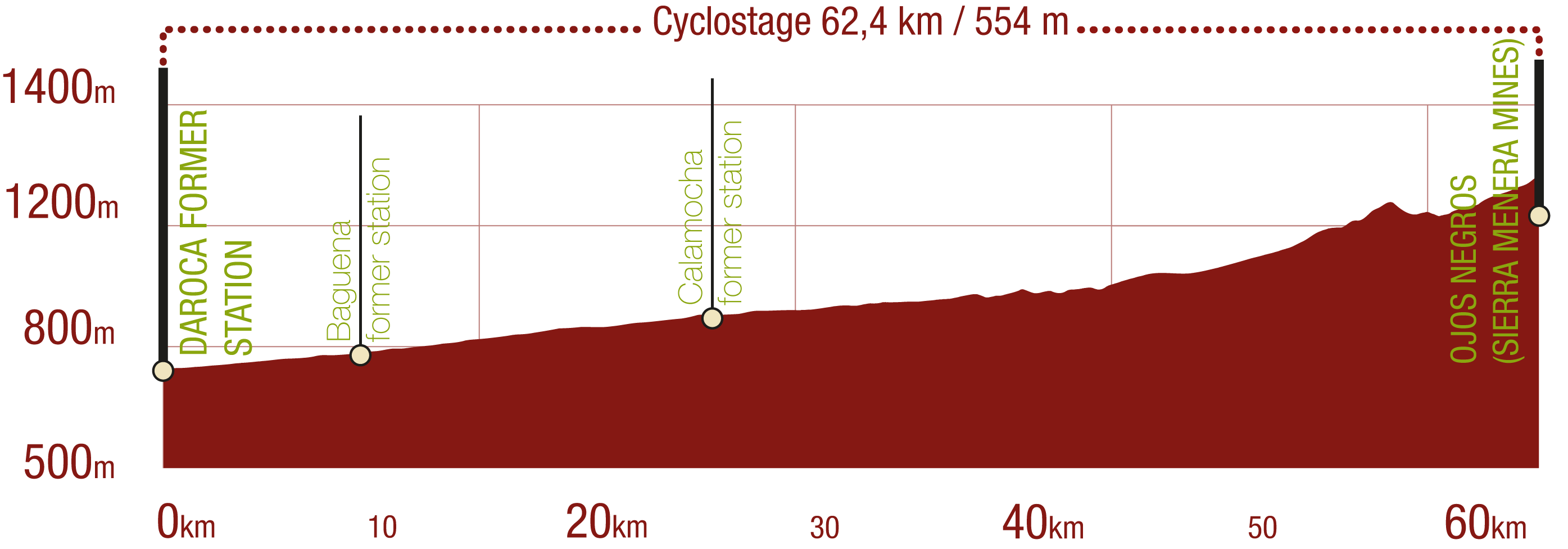
This cyclostage corresponds with the stages Daroca - Calamocha and Calamocha - Ojos Negros (Minas de Sierra Menera) of the Nature Trail
PROFILE
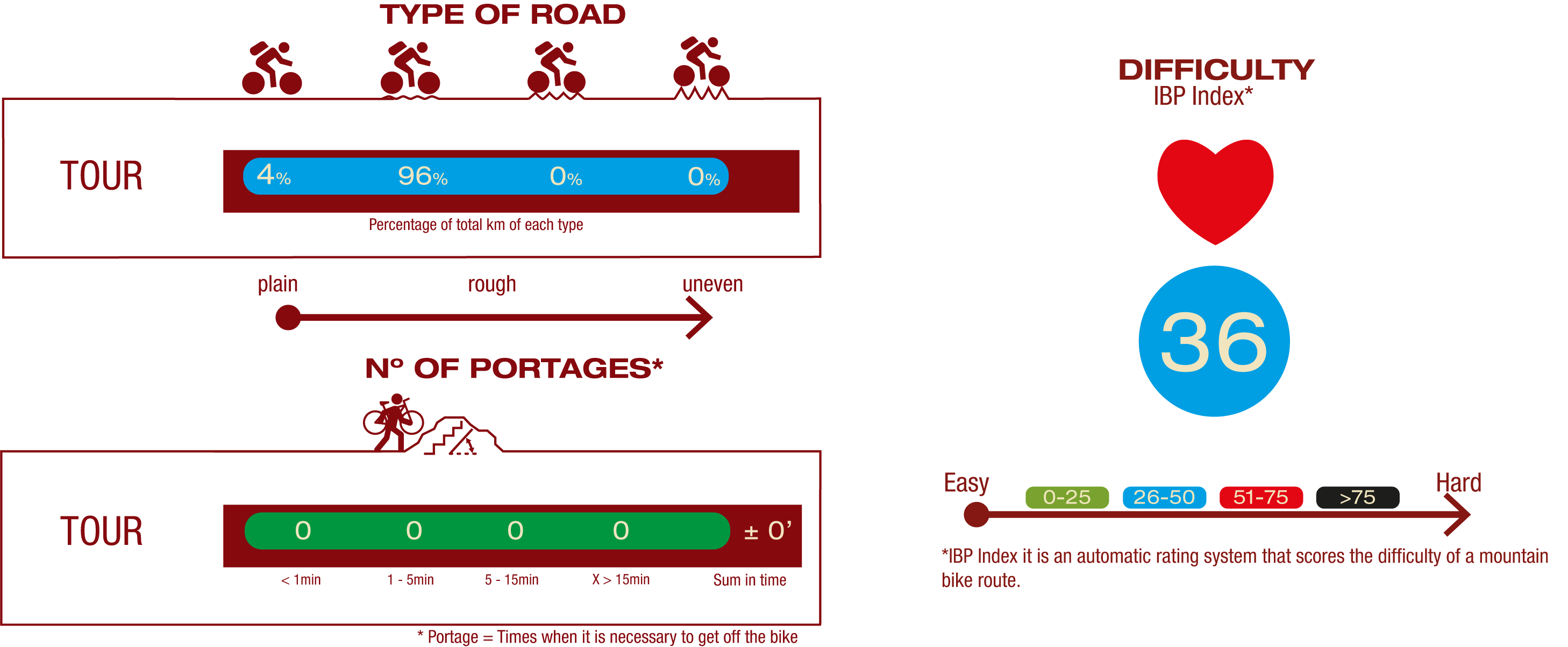
TYPE OF ROAD, PORTAGES & DIFFICULTY
TEST

SAFETY RECOMMENDATIONS
- Beware at road crossings and when crossing temporary watercourses or streams due to the water flow and the accumulation of stones and plant debris carried by the current.
- Exercise caution at the numerous road junctions, in particular those located on the 31.6-km-long section shared with motor vehicles, and apply this level of caution to the entire shared section
GENERAL RECOMMENDATIONS
- Find out about the technical aspects of the route and the weather on the day.
- Take care of the environment. Take care not to disturb animals or damage vegetation.
- Respect private areas.
- You must give priority to pedestrians and comply with general traffic rules.
- The environment in which you will be riding is open, free to move around and an area where many activities are carried out (sporting, forestry, livestock and agricultural activities).
- Always have an understanding, prudent, responsible and respectful.