

Puntos de Interés

Municipality
Caminreal
The municipality of Caminreal is in the province of Teruel, in the Jiloca District.
The origin of its name is a point of some controversy since, while some believes that it derives from its location, next to the royal Zaragoza road in the era of the wars between Muslims and Christians, others maintain that it is because it is located at the crossroads of two roads that connect cities such as Madrid and Tarragona or Sagunto and Burgos.
Some theories hold that Caminreal was founded after the disappearance of the villages of Las Cuevas and La Caridad. The proliferation of country inns on the Camino Real led to the construction, in the 18th century, of the various religious temples in the village around which the borough would grow. In 1248, Jaime I granted the village a privilege, which at that time was to be separate from Daroca and included in the Río Jiloca Sesma in the Comunidad de Aldeas de Daroca, subject directly to the crown.
There are many outstanding heritage elements in Caminreal. One of these is La Caridad, an Ibero-Roman site dating from the late 2nd century, which was destroyed during the Setorian Wars in 74 BC. The excavations have an important Interpretation Centre.
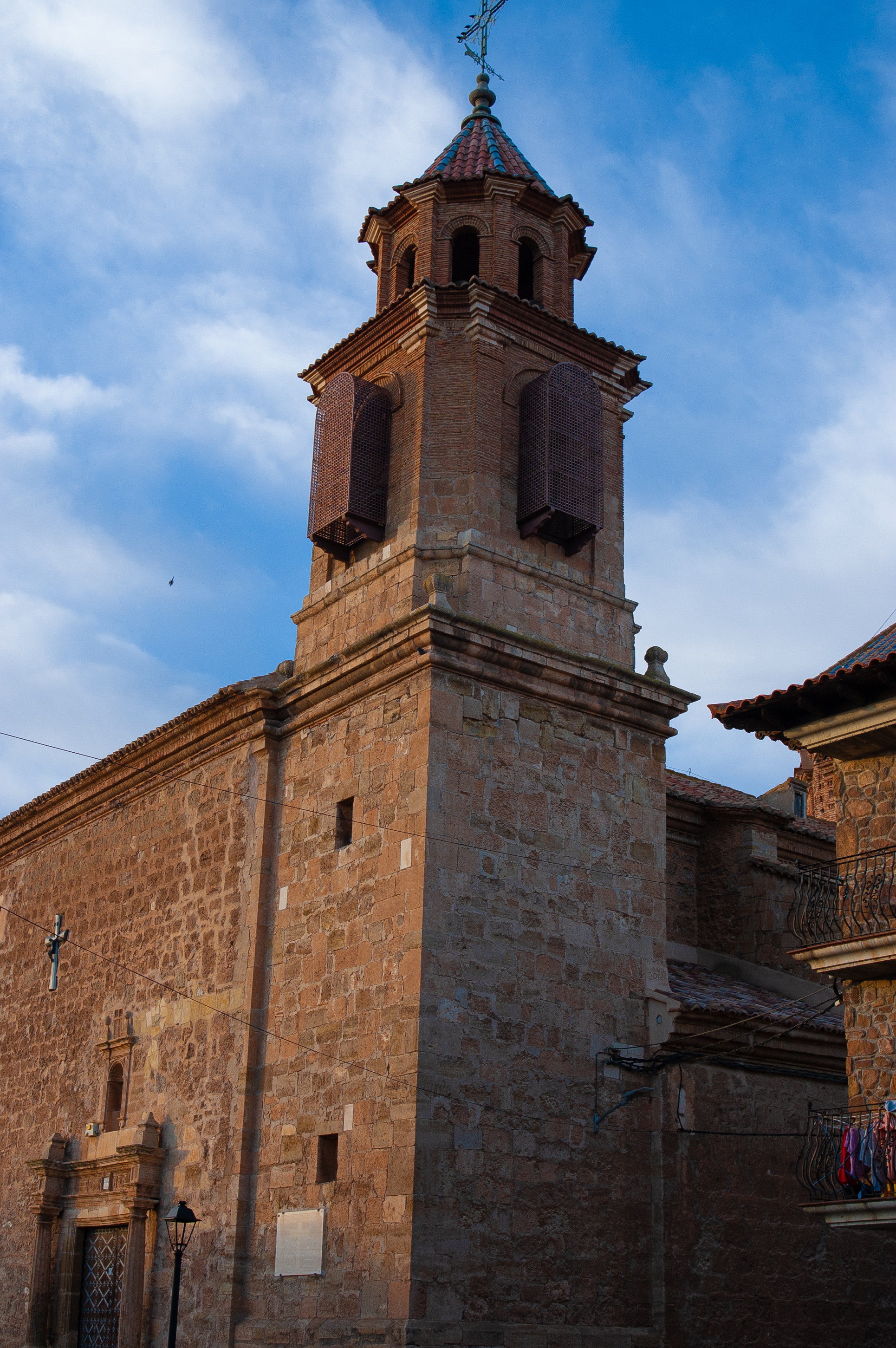
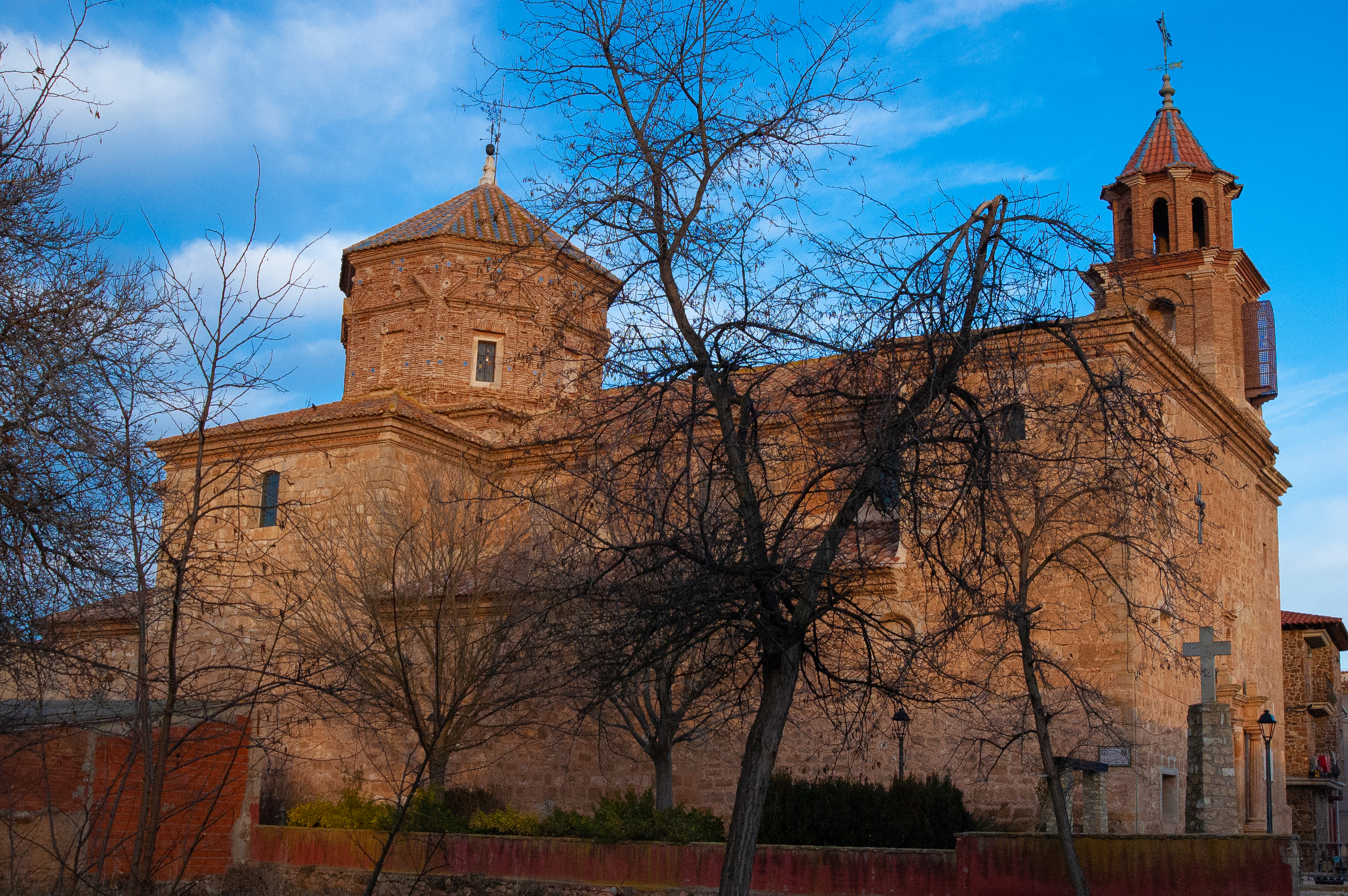
The greatest exponent of religious architecture if the church of Nuestra Señora de la Asunción and the Nuestra Señora de las Cuevas hermitage. The first of these temples is in the centre of the village. It was built in 1725 using masonry and stone. It has three naves with three bays, as well as the crossing and the main chapel. It has an octagonal brick dome. The hermitage was built using flint stone and is arranged around a central nave and several side chapels and a dome decorated with images of the life of Christ.
It should be noted that the municipality still preserves the old railway station, from 1902, since the Santander-Mediterráneo railway was key to the development of the borough.
Besides all this, Caminreal has a privileged natural environment in which the famous Ojos de Caminreal wetlands stand out; they are a paradise for bird lovers, where you can see the beautiful blue orchids or specimens of bee-eaters, storks, griffon vultures and kingfishers, among other species. Noe should one forget that the River Jiloca crosses the municipality from south to north.
The municipality’s economy is mainly based on agriculture and livestock, although because of its strategic location, it was once brimming with staging posts which served the travellers who passed through the area.
As regards the village’s festivities, the most important are San Blas, on 3 February, when the villagers light a bonfire beside the wayside cross; the day of the hill, on 3 May, when the crops are blessed from the Virgen de las Cuevas hermitage; and the summer festivities on 15 and 16 August, the Assumption of the Virgin and San Roque, respectively.