
Puntos de Interés

Municipality
Ciria
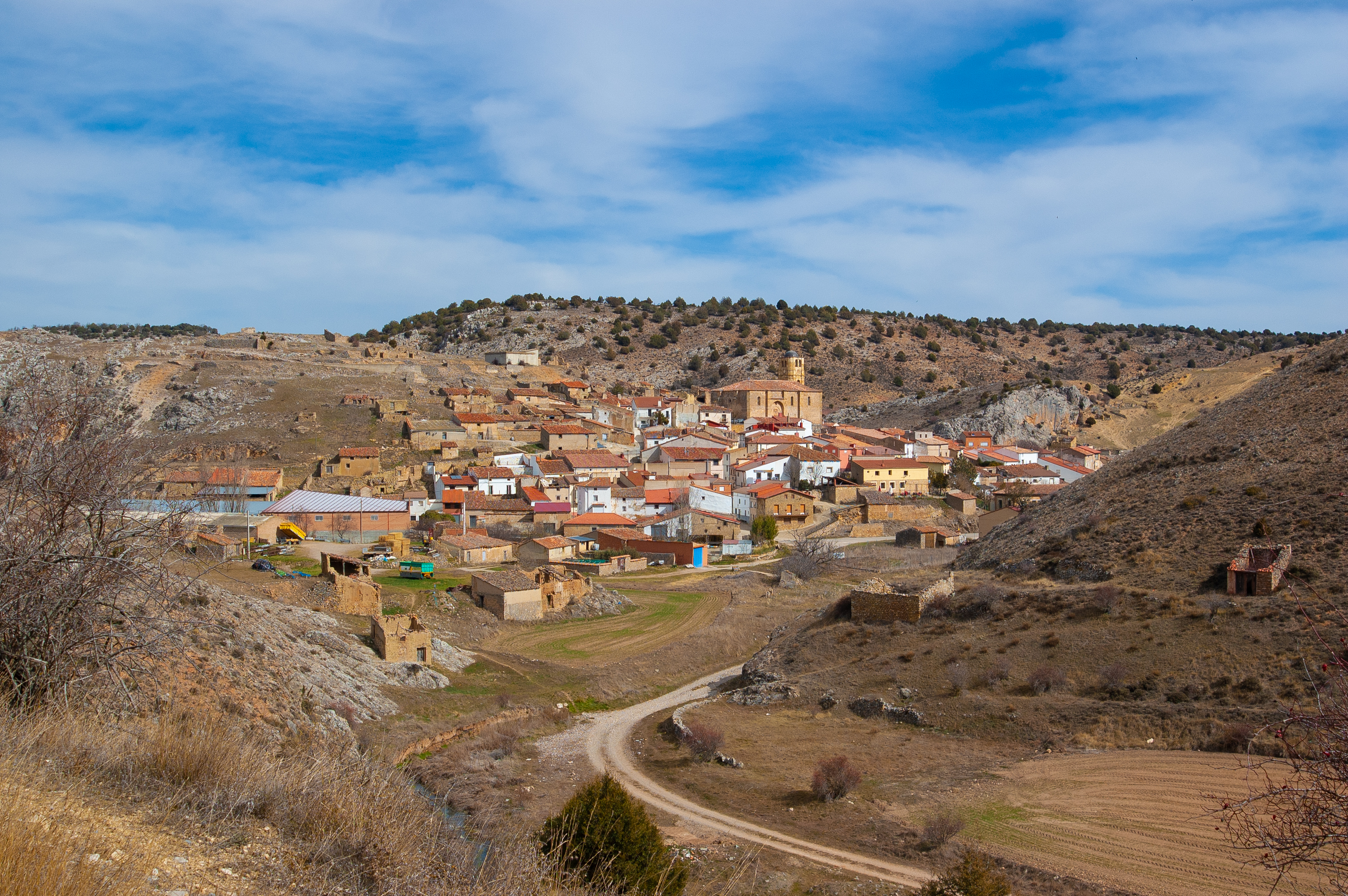
About thirty minutes by car from the city of Soria, in the valley of the River Manubles, we find the municipality of Ciria.
It would appear to owe its name to the peculiar location of the village, next to the Manubles canyon, coming from Basque and meaning "the wedge". It is worth noting that some cave engravings have been found in the area as well as bell-shaped pottery remains. There is also documentary evidence that a hillfort was located here.
Its location would also have given it fame during medieval times, as Ciria, sits on the border between the kingdoms of Castle and Aragon and site of many conflicts. Hence the location of its peculiar castle sitting on the rock, which belonged to the Lordship of the Constable Don Alvaro de Luna.
Of vital importance for Ciria was the well-known medieval road and pilgrimage route to Santiago, which ran from Bilbilis (Calatayud) to Numancia, crossing the Bigornia pass and much of the trade between Castile and Aragon passed thorugh the Ventas de Ciria .
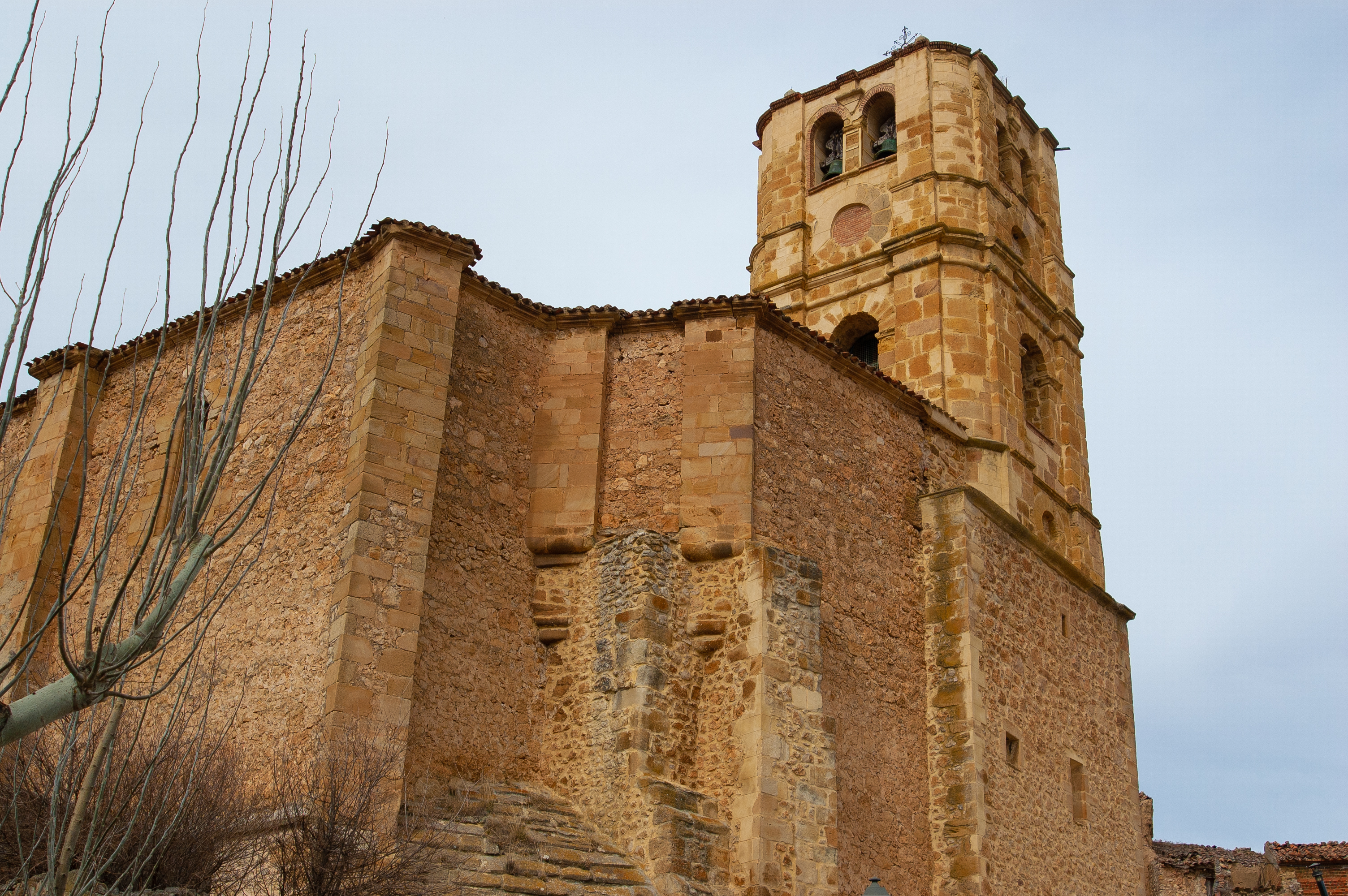
As a legacy of this historical past, there are several interesting buildings in the town. Two religious buildings stand out. One is the Catholic Parish Church of Santa María la Mayor, in Gothic style with touches of Baroque with two evidence of tow clearly differentiated construction phases. Its construction began in the 16th century with the idea of a three-nave hall church with a polygonal chancel. The work was halted with the walls only half-built, and continued some time later with a different material. The other is the Shrine of La Virgen de la Serna, which brought fame to the municipality for the miracles she was said to have performed and which saw her become patron of the town. Another, although less impressive, is the Shrine of La Virgen del Espino.
However, the most important monument in Ciria is undoubtedly its medieval fortress of Arab origin. Built in the 9th century and enlarged in the 10th century, it is made of masonry and has a characteristic rectangular shape. It is composed of ashlar with two walls filled in with irregularly shaped limestone stones, all of which is bound together using a type of lime and pebble mortar with small stones used as a binder. This is undoubtedly a typical example of a rock castle, adjusted to the terrain on which it stands, using the ravine at its foot as a natural defence.
Ciria’s economy is based on livestock and agriculture. Many local traditions are still preserved here, such as the Romería de la Virgen de La Serna pilgrimage, handball games, the bonfires of San Antón and Santa Lucía, and the bota, a payment offered by the newlyweds to the young men of the village.
In the surrounding area, there are extensive scrublands dotted with holm oaks, junipers and oaks, with the presence of rock tea standing out. It is worth taking a walk through the Sabinares de Ciria-Borobia juniper groves, a Site of Community Interest and part of the Natura 2000 Network.
Hares, rabbits and partridge roam the vicinity of the village and, from time to time, we might even encounter the occasional wild boar or roe deer.
Ciria's local patron festivals are held on 21 and 23 August.