

Puntos de Interés

Culture
Roman bridge
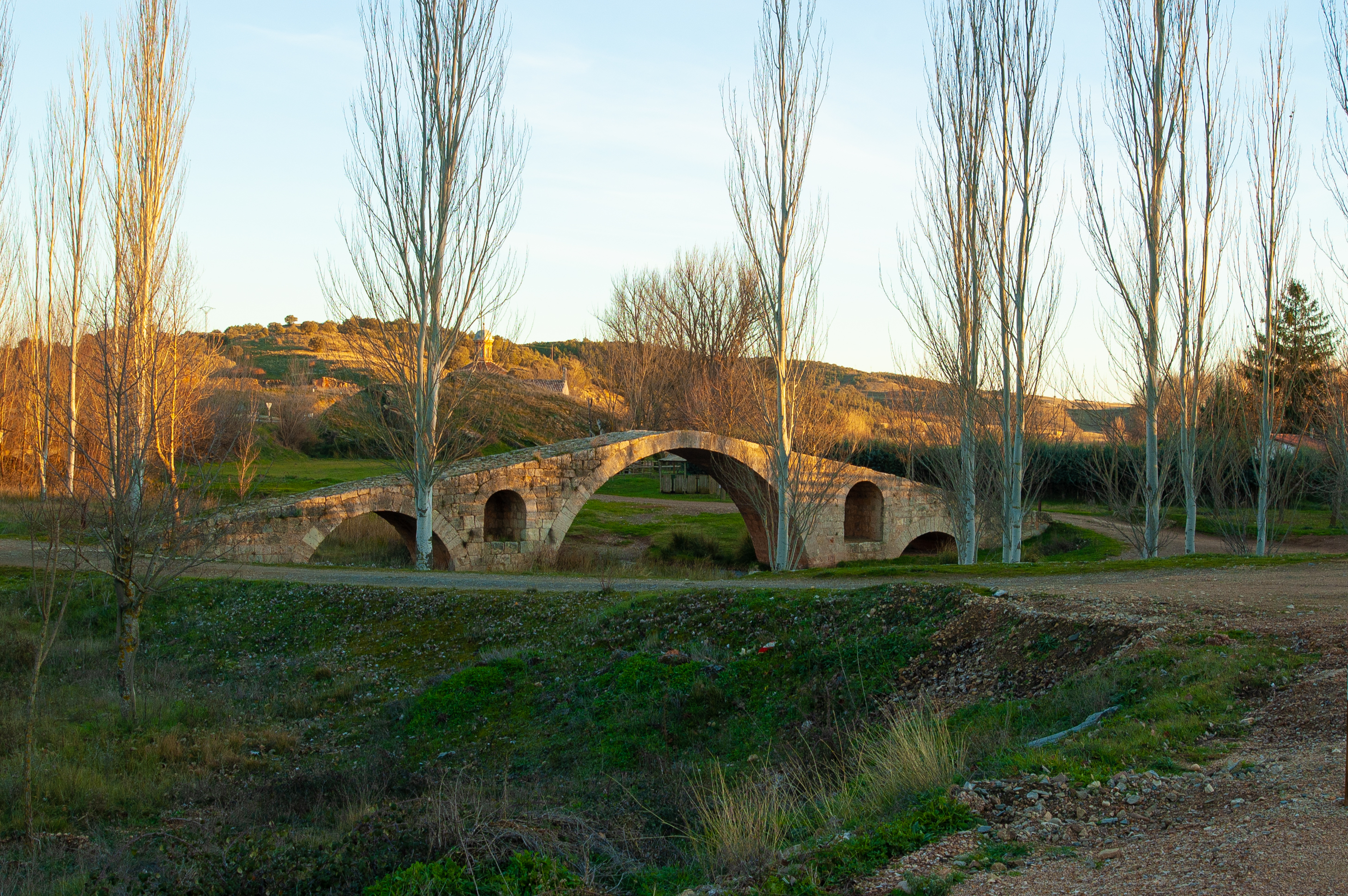
This famous Roman bridge, also known as the Entrambasaguas Bridge, is on the outskirts of the village of Luco del Jiloca, more specifically on the course of the River Pancrudo, near where it meets the River Jiloca, in the area commonly known as Entrambasaguas.
Near this viaduct is the Virgen del Rosario hermitage, or the Entrambasaguas hermitage, as well as the Wayside Cross with which it shares its name and a railway bridge, which was on the old Calatayud-Valencia railway line.
According to extant documentation, it appears to have belonged to an ancient Roman road, which linked the Ibero-Roman city of Castulo to the Roman city of Cesaraugusta, the present-day city of Zaragoza. But its architectural features are typical of bridges built during the Middle Ages.
Its “donkey’s back” form seems to refute the idea that it was built during the High Roman Empire (1st and 2nd centuries AD) and lends support to the theory that the present bridge was built on the site of an earlier viaduct. According to this theory, the bridge that still stands in the Entrambasaguas area was ordered to be built by the Comunidad de Aldeas del Daroca in around 1434.
It has now been declared an Asset of Cultural Interest in the province of Teruel, with a degree of comprehensive protection.
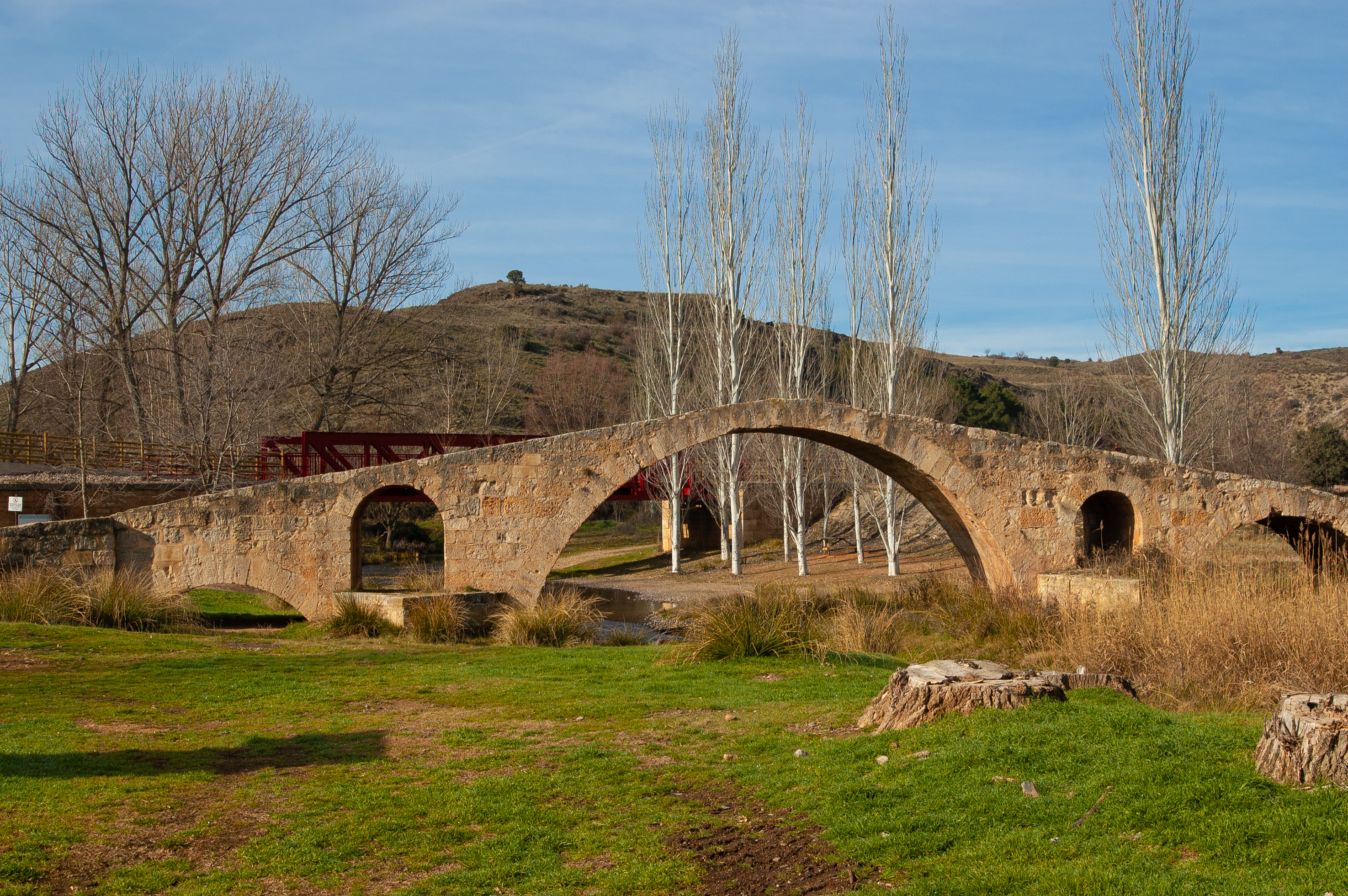
In terms of its features, this building is of a type of viaduct which, as previously mentioned, is colloquially known as an “donkey’s back” or “mule’s back,” which were typical of those built in the Middle Ages, and which were used from the Romanesque period to the Renaissance.
This model is characterised by having an odd number of arches, the lateral ones being smaller than the central arch, hence the bridge took on a descending or hillock shape.
This viaduct, which is 35 m long, has three semicircular arches, with the central one being the largest. It was built using a mixture of ashlar and masonry. And between the lateral arches there are two triangular cutwaters or arches, on which there are small, vaulted spillways, which are designed to alleviate the river’s major floods.
Curiously, in the 18th century, the scholar Joaquín Traggia wrote of the existence of an inscription on the bridge from the Celtiberian period, the translation and whereabouts of which are unknown.
Otros puntos de interés
- El Carmen hermitage
- Daroca walls
- Road labourers' house
- San Bartolomé hermitage
- Ermita de San Francisco
- San Pedro Martir hermitage
- San Roque hermitage
- Virgen del Buen Reposo hermitage
- Virgen del rosario hermitage
- Virgen del Rosario hermitage
- Virgen de los Dolores hermitage
- Torre de Nuestra Señora del Pilar