

Puntos de Interés

Culture
Torre de Nuestra Señora del Pilar
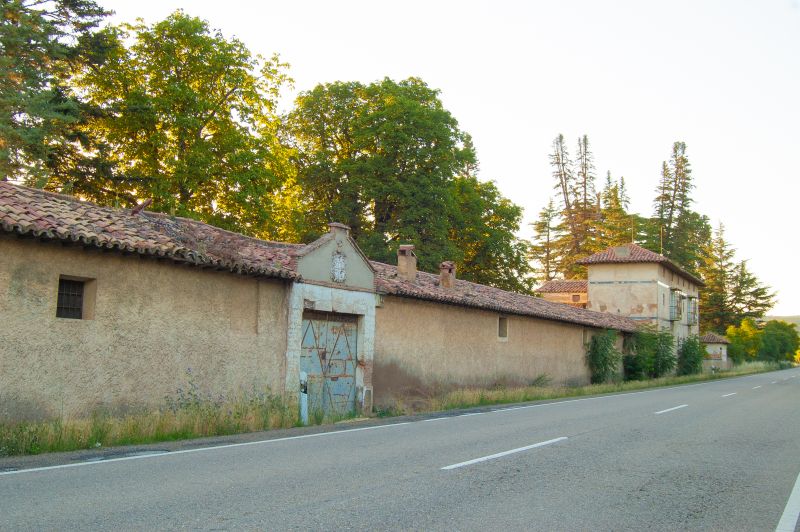
This is a country house mentioned as early as 1887 in the gazetteer and in the 1940 census. Although on the topographical map of 1939 it appears under the name of Torre de Sampillo, this complex was later referred to as Torre de Nuestra Señora del Pilar, the name by which it is known today.
Traditionally, the name tower given to some buildings in the Jiloca area originated from the Latin term turris, meaning tower, elevated house, a concept that fits very well with the nature of this type of construction.
The complex has an elongated rectangular floor plan comprising a dwelling, stables, birthing pens, a shed and several outbuildings. It was built using materials such as solid brick and rammed earth, which is plastered in which case with mortar and is painted white. The house has a hipped roof with Arabic tiles and wooden eaves adorned with Mudejar stars and wooden floor slabs. The two annexes have a gabled roof and are decorated with tiles and bricks.
The building’s façade has been decorated with windows in the form of a horseshoe, on both the second and third floors. These windows are also framed by a ceramic frieze. There are also iron balconies decorated with Mudejar stars. Another noteworthy element is the ceramic plaque on the façade reading “Nuestra Señora del Pilar,” with a small a small upper roof protecting it from inclement weather.
The dwelling is in a central location and can be access from the large central courtyard. It is four storeys high, and on the top storey there is a gallery of arches. Being narrow and very high, this building gives the impression of being monumental, standing apart from the rest. The other two buildings were perhaps used as stables; between them, there is a large gateway, which was doubtless used to admit carriages and on which there is an alabaster coat of arms.
It is worth highlighting the presence of a great number of monumental trees and allochthonous vegetation within the property. Specifically, from the outside you can see a sequoia, a Spanish fir, a fir and a cedar which, as the story goes, were planted by an Indian who made his fortune in the Americas and who built this estate for himself.