

Puntos de Interés

Culture
Virgen del rosario hermitage
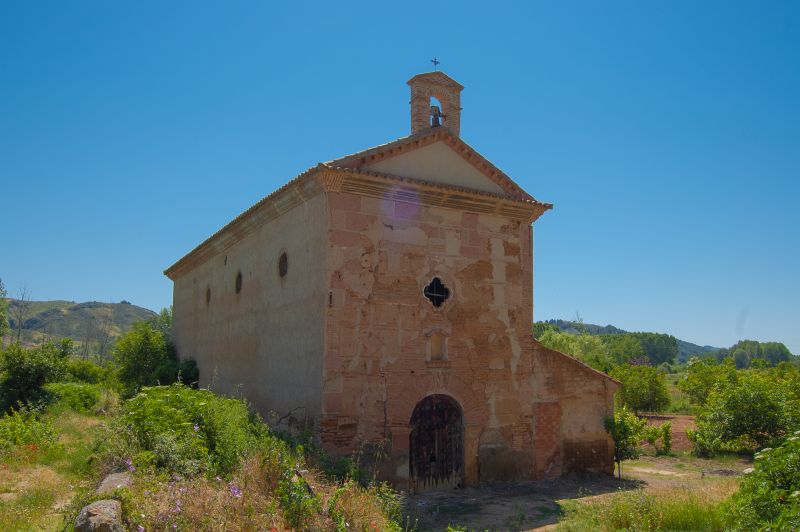
The origins of this religious building can be traced to the 16th century. It is in the Mudejar style, although the current building is from the 18th century. Various materials were used, such as rammed earth, masonry and even brick at some points on the walls.
The Nuestra Señora del Rosario hermitage has a rectangular floor plan and a single nave divided into four bays, with those at the chancel and the narthex being slightly longer. It has groin vaults supported by perpendicular arches embedded in the walls and surrounded by pilasters with striking, intricate moulding.
Despite the poor condition of the hermitage, there is still a small sacristy on the epistle side and a space for the hermit’s dwelling at the narthex of the chapel, of which hardly anything remains.
Nothing remains of the interior furnishings, but there are notable mural paintings by Salvador Gisbert, a painter born in Teruel who, between 1878 and 1885, produced various works housed in valley’s churches and hermitages. Four large murals narrate the story of the image of the Virgen del Rosario and how she arrived in the village. The remaining images and canvases were recovered from the hermitage and are in the parish museum, and the reredos depicting the Virgin was transferred to the parish church of Villanueva del Jiloca.
The exterior of the building is quite sober and its walls show various oculi that provide light to the various bays of the nave. The entrance is a semicircular brick doorway over which a niche and a poly-lobed oculus have been placed. The remainder of the façade is adorned with a cornice in which there are many mouldings and a triangular gable that acts as a pediment.