

Puntos de Interés

Municipality
Mudá
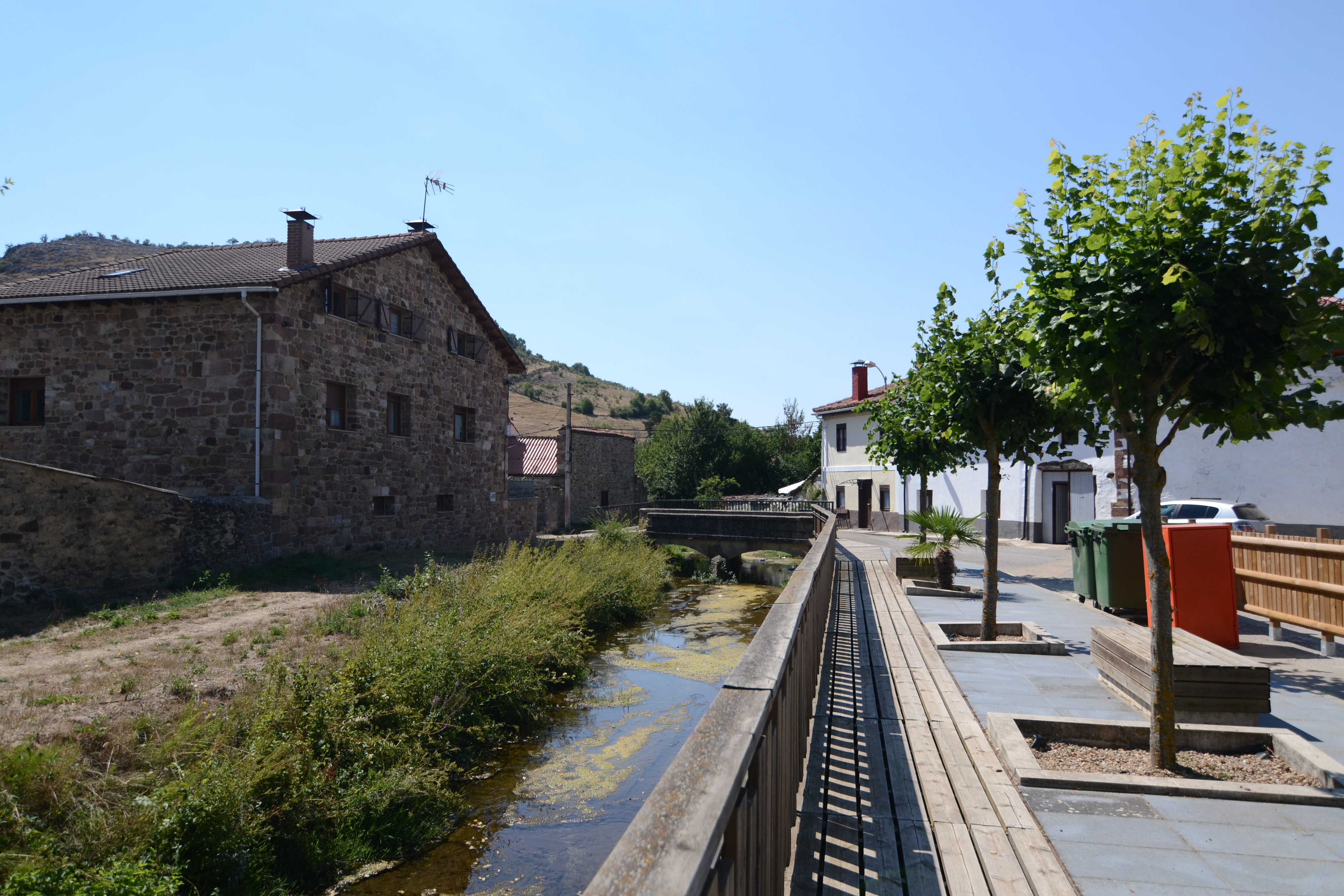
Mudá is located where the Mudá River is formed at the junction of the Pradera stream and the Monasterio River.
This village, located 10 km from Cervera de Pisuerga, takes its name from the pre-Roman term Muga, which means boundary marker. This name is a clear reference to the El Humano hill and the viewpoint that is part of the town centre.
Mudá is proof that time has passed, since it has been witness to the first settlements in the valley of the Pisuerga River in prehistoric times. Remains of these ancient civilisations have been found in the area's caves.
Centuries later, Mudá was raised and fortified with the arrival of the Visigoths after defeating the Cantabrians and Suevi in the 5th and 6th centuries. It was not until later, however, with the repopulation of Alfonso II the Chaste at the beginning of the 9th century, that it became the nerve centre for political affairs in the area, including Cervera de Pisuerga.
In the 14th century, Mudá was already part of the feudal system where it served the noble Don Tello and the abbey of the monastery of Santa María la Real in Aguilar de Campoo. Finally, the coal mining industry was important in this town from the late nineteenth century until the end of the twentieth century. Its economy is currently based on tourism.
Walking through its streets visitors will find St. Martin's parish church from the 16th century. This church was built on top of an earlier Romanesque church from the 13th century. There are still remains of that earlier church in the doorway and a small window to the southeast, as well as in the late Romanesque belfry. This Historical and Artistic Monument consists of a single nave divided into two sections, both covered by starred ribbed vaults. It still has a three-arch doorway and decorations on its columns with capitals and keel mouldings. On the inside, there is a baroque altarpiece from the 18th century with an image of St. Martin from the 16th century and a silver parish cross from the second third of the 16th century.
On the outskirts of the village, on a small hill, lies the Oteruelo chapel. It is also a Romanesque style Historical and Artistic Monument dating from the 13th century. It consists of a single nave with a flat wooden roof and a square chancel covered with a pointed barrel vault that is adorned with mural paintings from the 15th century.
Locals celebrate their patron saint festivities on September 29 in honour of St. Michael and on November 11 in honour of St. Martin, as well as a pilgrimage to the Oteruelo chapel on August 14 and 15.