

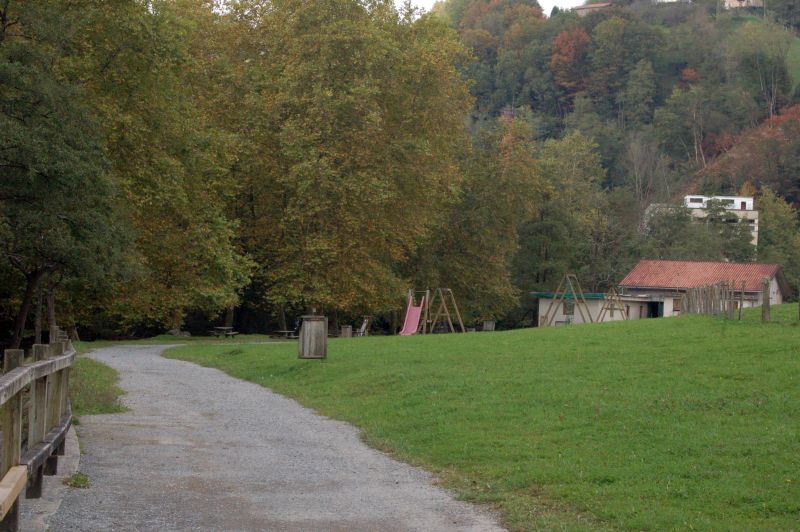
Parque de Olazar

Puntos de Interés

Municipality

Alba de Tormes
Alba de Tormes

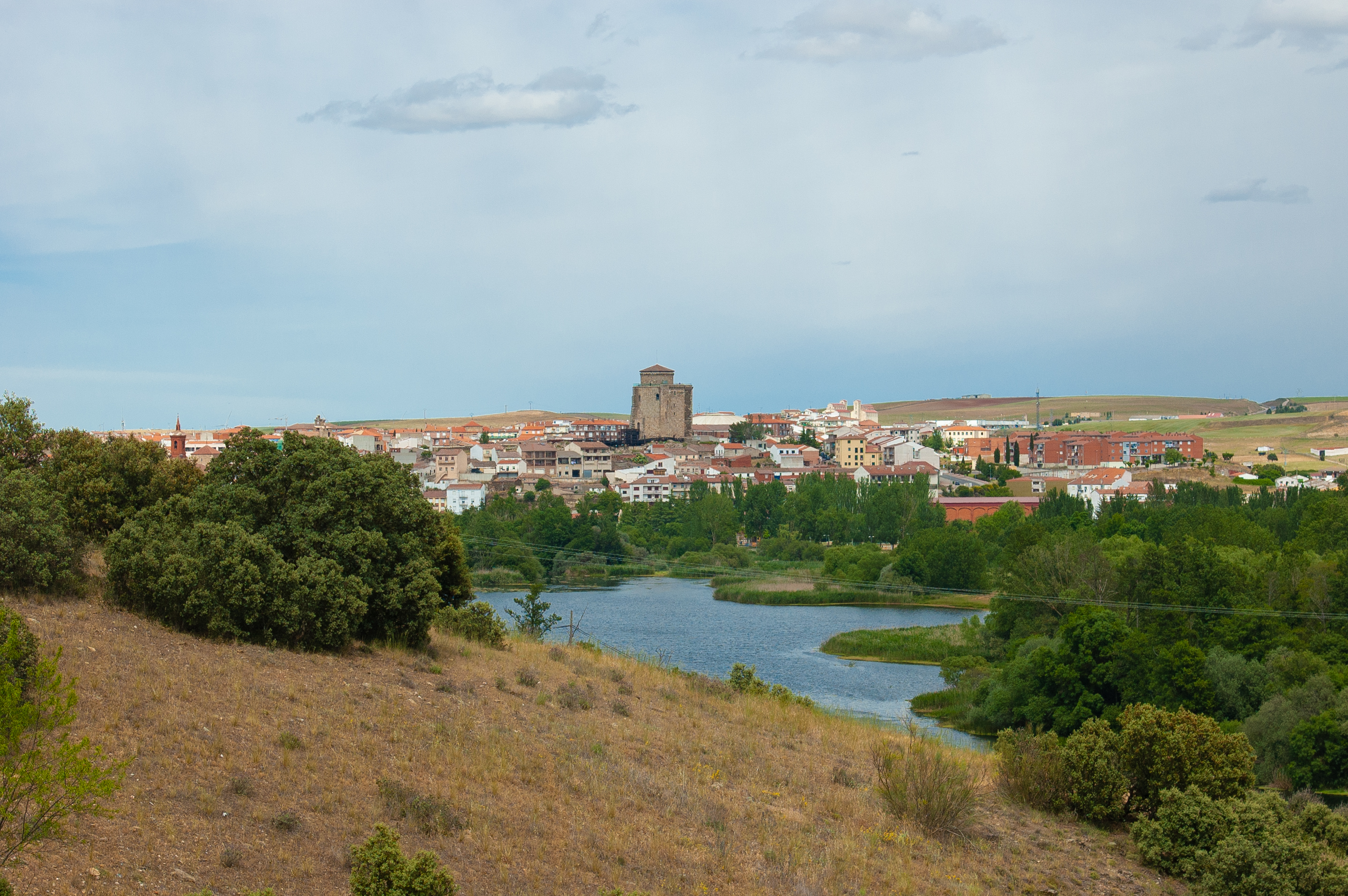
Alba de Tormes is a municipality in the region of Tierra de Alba, in the province of Salamanca.

The town was repopulated in the Middle Ages by the Kings of Leon, but its origins go back to a pre-Roman settlement that would later become a Roman nucleus, called Albocola, near the Vía de la Plata (Silver Way). However, megalithic remains have also been found on the riverbank, among which the dolmen of the corridor stands out, dating from the end of the Neolithic period.

The Alba township passed through different royal hands including the infant Don Pedro, son of Alfonso X, the Wise, the Queen Violante of Aragon, Alfonso de la Cerda, son of the infant Fernando de la Cerda until the early 15th century when King John II gave the town to a member of the House of Alvarez de Toledo, who founded the House of Alba de Tormes. Before the end of the century, the estate became a duchy.

In the 16th century, the town reached its cultural peak under the guidance of St. Teresa of Jesus and Fernando Alvarez de Toledo, the third Duke of Alba, known as the Grand Duke of Alba for his feats of war and his promotion of arts and literary culture.

The main city's landmarks include the town hall built in Renaissance style in the 16th century; the medieval bridge, built on a previous Roman bridge that was part of a branch of the Via de la Plata (Silver Way), and the Castle of the Dukes of Alba, which has been declared an Asset of Cultural Interest. The castle was built between the 15th and 16th centuries but after the Peninsular War, only the remains of the keep and walls are left. The keep has Renaissance mural paintings of the battle of Mühlberg by the Italian Cristobal Passini.
Alba de Tormes

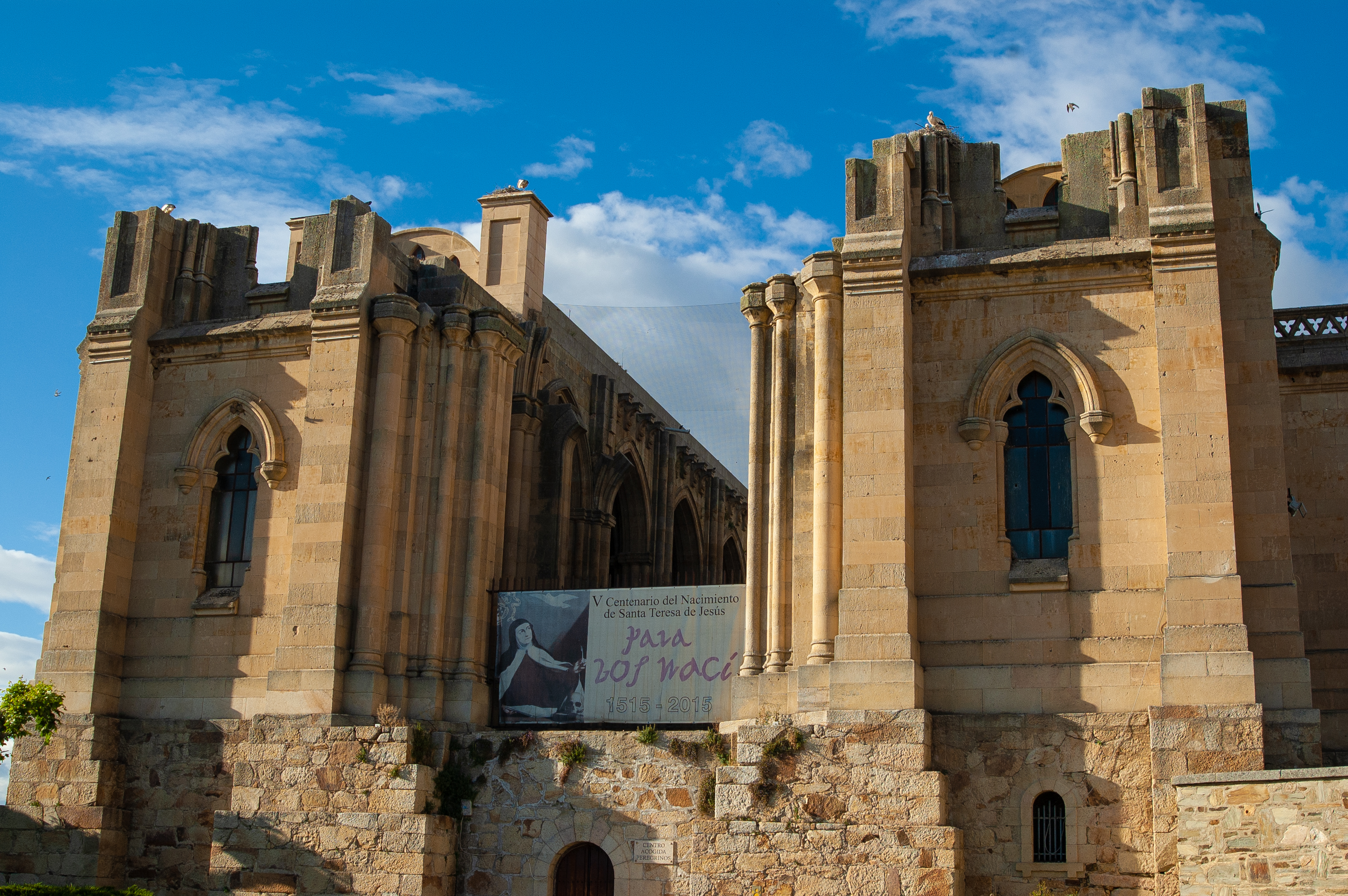
In the town, there are many religious buildings. Of note are the church of San Pedro, rebuilt in 1577 and preserving Gothic elements, and the church of San Juan de la Cruz, which was built in the 17th century and is the first church in the world dedicated to St. John. There are two other churches that have been declared Assets of Cultural Interest: the church of Santiago, from the late 11th or 12th century, and the church of San Juan, from the late 12th or 13th century, both in Romanesque-Mudejar style. The former is the older, and the latter is the finest example of this style.

There are several convents including the Convent of Santa Isabel, founded in 1481; the Convent of San Jerónimo from the 15th-16th centuries, built on the site of the convent of San Leonardo from the 12th century, which houses the Archaeological Museum Padre Belda and the Convent of the Annunciation, founded in 1571 by Saint Teresa of Jesus. In the latter, the nun died in 1582, in her room, on the 4th of Julian October (October 15 in the current calendar). The complex houses her tomb and a museum.

The economy of this municipality is based on tourism and agriculture, although there are some local companies dedicated to the production of sausages.

As an interesting fact, the origin of the almendras garrapiñadas (sugared almonds) is here, specifically in the convent of the Annunciation, and they have become a very typical product of the city. Another element of great fame exclusive to the town is the Botijo de filigrana, a type of clay jug designed to cool water.

The Vía de la Plata Nature Trail crosses Alba de Tormes, as well as several Napoleonic Spanish-Portuguese routes, a Mudejar route and other local routes dedicated to historical monuments, to famous writers who lived in the area and to Saint Teresa of Jesus.

The town celebrates the Transverberation of Saint Teresa from August 25 to 27 and the patron saint festivities of Saint Teresa from October 14 to 22.

Otros puntos de interés

Introducción general al uso de cookies en MAPA.gob.es

Las cookies son archivos que se pueden descargar en su equipo a través de las páginas web. Son herramientas que tienen un papel esencial para la prestación de numerosos servicios de la sociedad de la información. Entre otros, permiten a una página web almacenar y recuperar información sobre los hábitos de navegación de un usuario o de su equipo y, dependiendo de la información obtenida, se pueden utilizar para reconocer al usuario y mejorar el servicio ofrecido.

Tipos de cookies

Según quien sea la entidad que gestione el dominio desde donde se envían las cookies y trate los datos que se obtengan se pueden distinguir dos tipos: cookies propias y cookies de terceros.

Existe también una segunda clasificación según el plazo de tiempo que permanecen almacenadas en el navegador del cliente, pudiendo tratarse de cookies de sesión o cookies persistentes.

Por último, existe otra clasificación con cinco tipos de cookies según la finalidad para la que se traten los datos obtenidos: cookies técnicas, cookies de personalización, cookies de análisis, cookies publicitarias y cookies de publicidad comportamental.

Para más información a este respecto puede consultar la Guía sobre el uso de las cookies de la Agencia Española de Protección de Datos.

Cookies utilizadas en la web

El portal web del Ministerio de Agricultura, Pesca y Alimentación utiliza Google Analytics, esta es una herramienta de analítica que ayuda a los sitios web y a los propietarios de aplicaciones a entender el modo en que sus visitantes interactúan con sus propiedades. Se utilizan un conjunto de cookies para recopilar información e informar de las estadísticas de uso de los sitios web sin identificar personalmente a los visitantes de Google. Más información sobre las cookies de Google Analytics e información sobre la privacidad. Estas cookies se pueden rechazar o aceptar ya que no interfieren en el funcionamiento de la página web pero sirven de gran ayuda aportando información que posibilita un mejor y más apropiado servicio por parte de este portal.

Por último, se descarga una cookie de tipo técnico denominada cookie-compliance, propia, de tipo técnico y de sesión. Gestiona el consentimiento del usuario ante el uso de las cookies en la página web, con el objeto de recordar aquellos usuarios que las han aceptado y aquellos que no, de modo que a los primeros no se les muestre información en la parte superior de la página al respecto. Esta cookie es de obligada utilización para el funcionamiento correcto del portal.

Aceptación / Rechazo de la Política de cookies

El Ministerio de Agricultura, Pesca y Alimentación permite la aceptación o rechazo de las cookies no esenciales para el funcionamiento del portal. Para ello una vez que el usuario acceda al portal se mostrará un mensaje en la parte central con información de la política de cookies y las siguientes opciones:

  • Aceptar cookies: Si el usuario pulsa este botón, se aceptarán los cookies no obligatorias y no se volverá a visualizar este aviso al acceder a cualquier página del portal.
  • Configurar cookies: Si el usuario pulsa sobre el botón de configurar, se accederá a una segunda ventana modal donde se podrá configurar que cookies aceptar. Esta segunda ventana explica las cookies utilizadas en la actualidad y permite la selección o rechazo de las cookies no obligatorias. Una vez finalizada la selección se deberá presionar al botón Guardar configuración.

Cómo modificar la configuración de las cookies

Usted puede restringir, bloquear o borrar las cookies del Ministerio de Agricultura, Pesca y Alimentación o cualquier otra página web, utilizando su navegador. En cada navegador la operativa es diferente, la función de "Ayuda" le mostrará cómo hacerlo.