

Puntos de Interés

Municipality
Salamanca
Salamanca is located in the Iberian Northern Plateau, in the region of Campo de Salamanca.
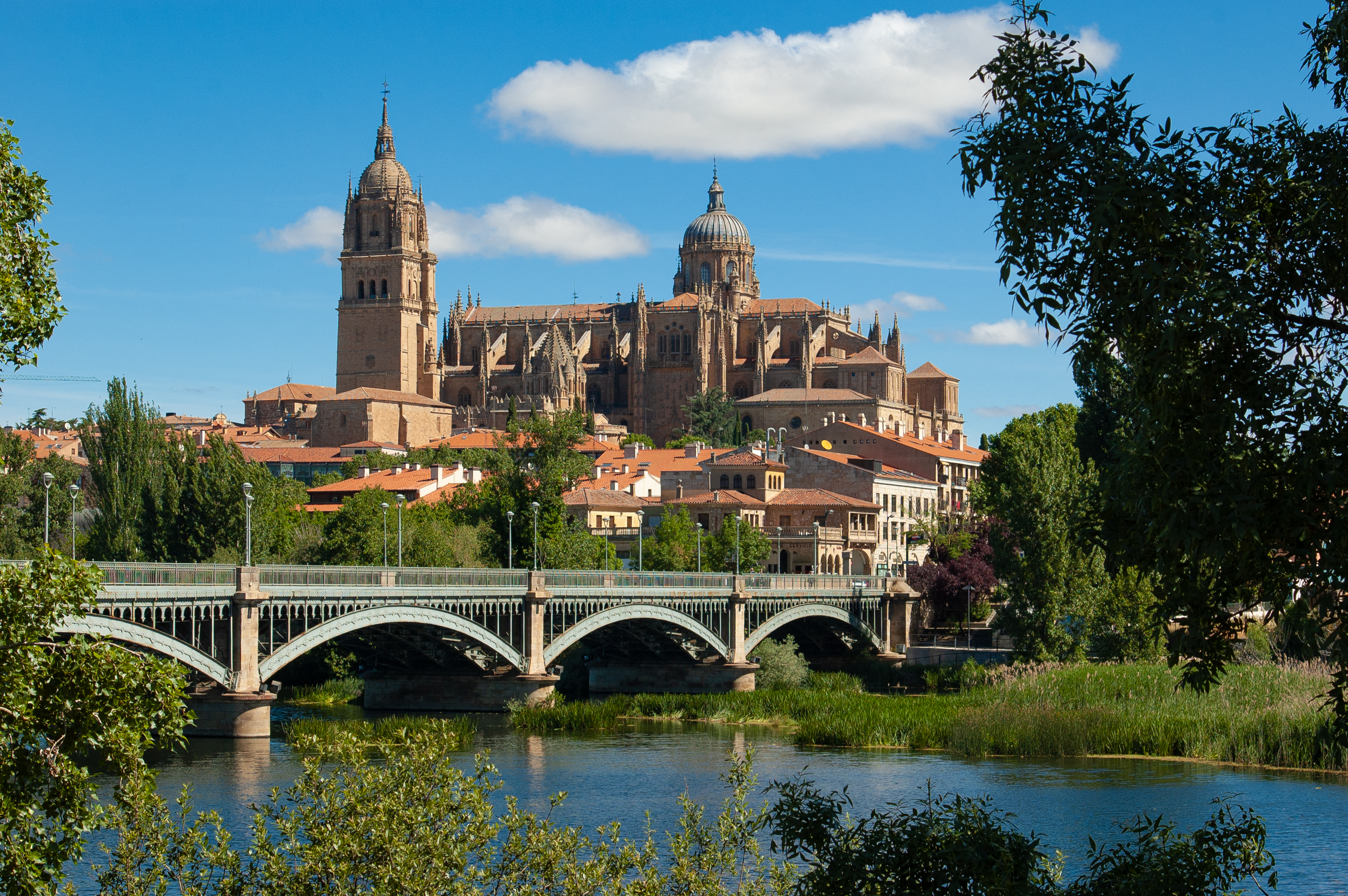
This provincial capital stands on San Vicente hill, on the banks of the Tormes River, a place various cultures chose to settle throughout the ages. The city has been inhabited since the Iron Age, and has witnessed the Vaccaei, Vettones, Romans, Visigoths and Moors all establish roots. All these peoples left numerous remnants of their passage, making Salamanca a city rich in cultural and architectural heritage – as evidenced by the fact that UNESCO declared the old city a World Heritage Site in 1988.
Among the things that make up the vast heritage of the city include the Vía de la Plata, the Roman bridge, an ancient wall, (affectionately known as Cerca Vieja by the locals), and a marble statue of a man dressed in a toga, all from the Roman period.
There are many squares, churches or palaces that can be found in its streets: the old cathedral or Santa Maria, whose construction began in 1120 in Romanesque style and finished in Gothic style in 1236. It has a paradigmatic Romanesque dome known as Torre del Gallo (Rooster Tower). The new cathedral, which was built on top of the old one in 1520, is one of the largest cathedrals in Spain and brings together different styles such as Gothic, Renaissance and Baroque.
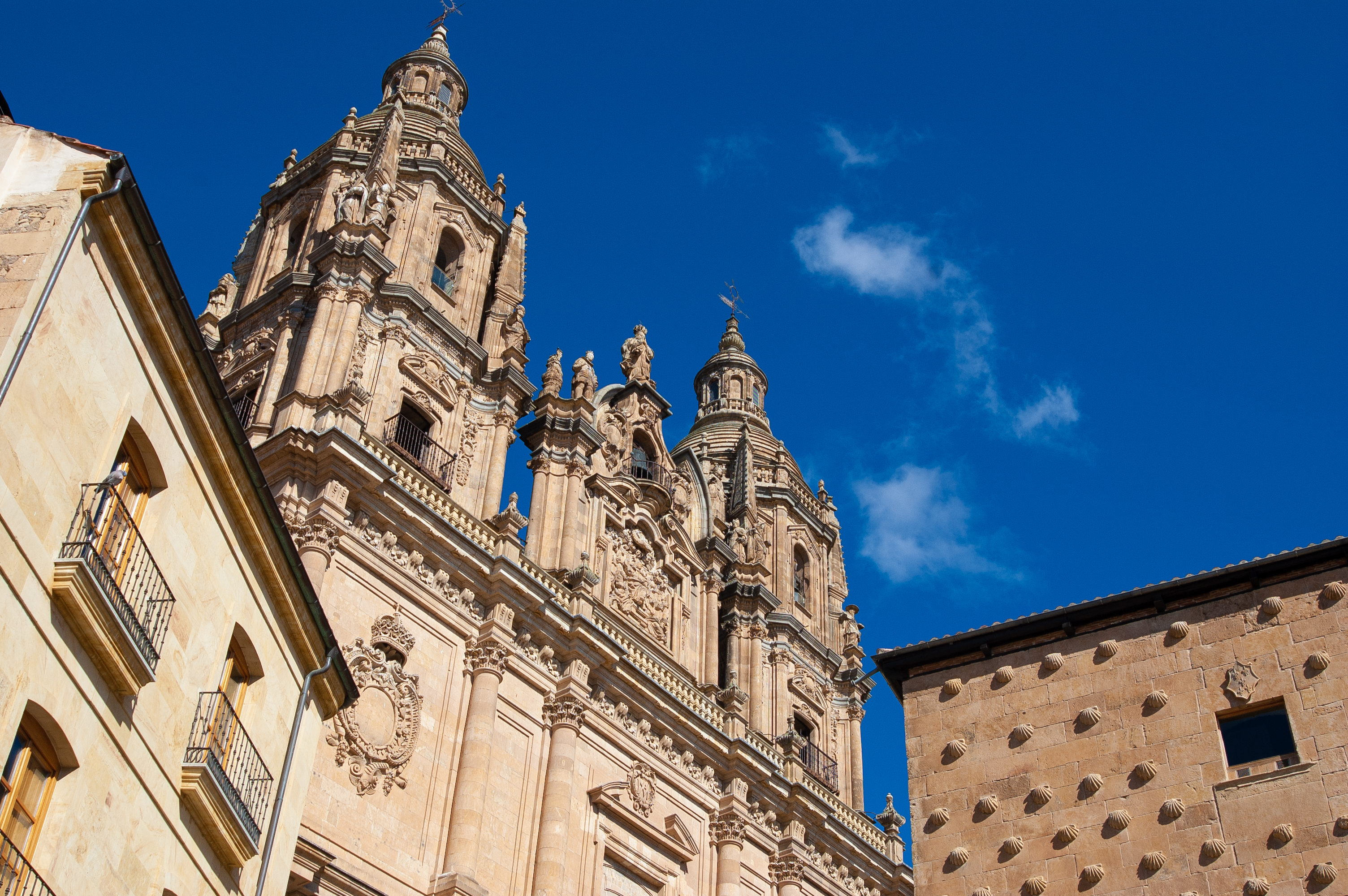
The Casa de las Conchas (House of Shells), a Gothic palace built in the 15 century, is perhaps one of the most visited places in Salamanca. The shell decorated façade, Gothic style windows and grilles, and an inner courtyard all stand out.
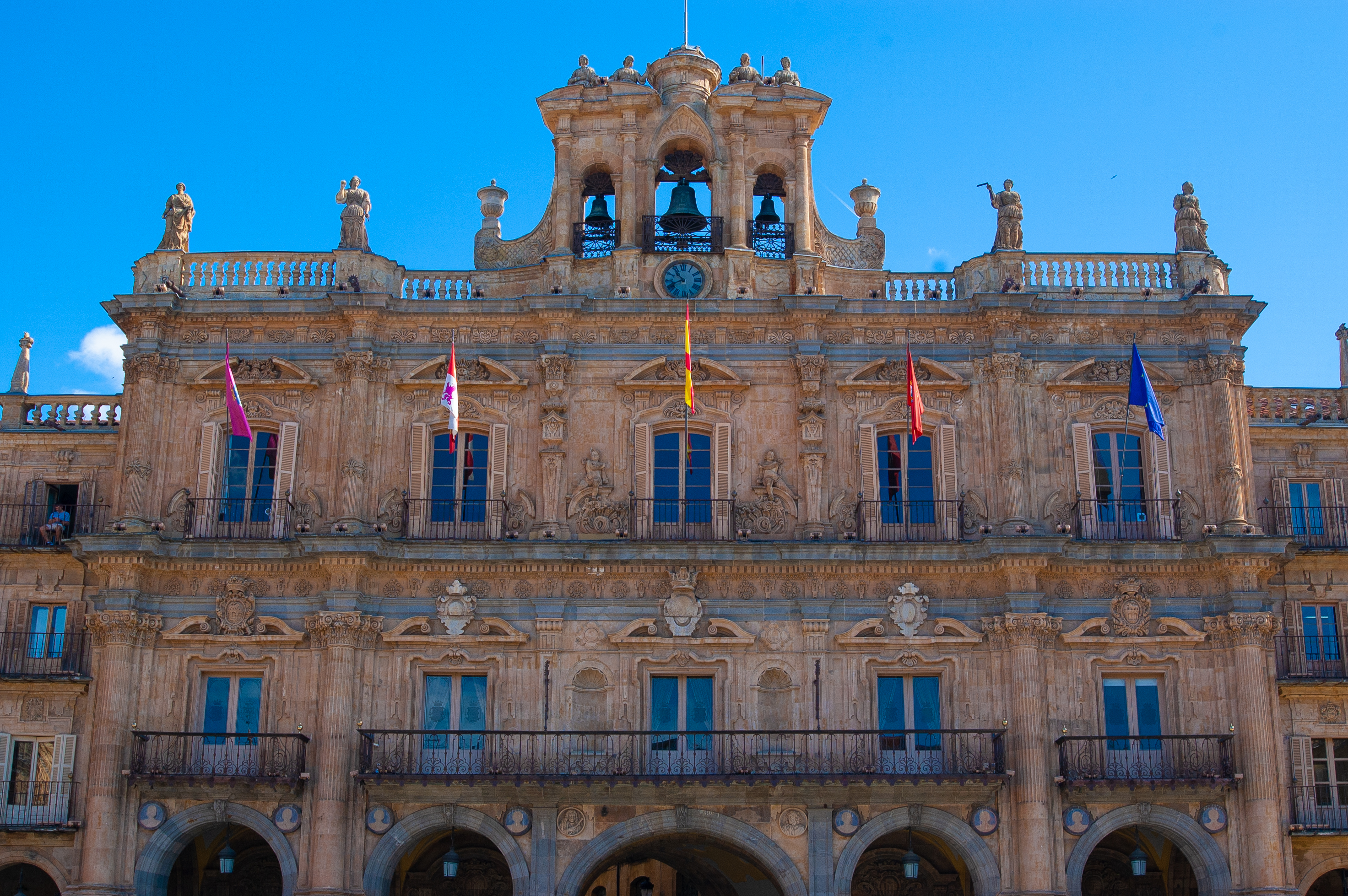
La Clerecía, a Baroque building whose towers offer unbeatable views; the Plaza Mayor, from the 18th century, designed by Alberto Churriguera in Baroque style; the Convent of San Esteban, a Dominican convent, whose construction began in the 16th century and was completed in the 17th century where Gothic, Plateresque and Baroque styles all combine together; and finally, the Escuelas Mayores, a 15th century building whose Plateresque façade is the most recognisable element of the university.
An interesting fact is that the University of Salamanca is the oldest university in Europe. It was the first to be given the title of "University" by the King Alfonso X the Wise in 1252. It welcomed the world's first female university student, and the world's first female university professor. Salamanca has always been connected to science and culture, being home to numerous historical events. This is where linguist Antonio de Nebrija wrote the first grammar of Castilian language, where Christopher Columbus prepared his first voyage to America, where Hernán Cortés carried out his studies before leaving for the New World, and where the Augustinian friar and theologian Luis de Leon translated part of the Bible into Spanish, among many other things.
Salamanca is a city closely linked to tourism. Its economy is heavily reliant on this sector and the University attracts many visitors. In addition, other important sectors such as arable and livestock farming, and even some manufacturing industry also coexist in the city.
The Charros, as the people from Salamanca are known, celebrate the festivities of Las Águedas on February 5, the patron saint festivities in honour of San Juan de Sahagún on June 12, and the festivities of the Virgen de la Luz, also a patron saint of the city, in early September. One of the most typical festivities is the Ascensión del Mariquelo, on October 31. This famous character climbs the bell tower of the New Cathedral on the eve of All Saints' Day to commemorate the Lisbon earthquake of 1755, an event that caused the bells to ring and affected the structure of the tower.
A special mention also has to go to Holy Week in Salamanca, which has been declared of international tourist interest.