

Puntos de Interés

Municipality
Fornells de la Selva
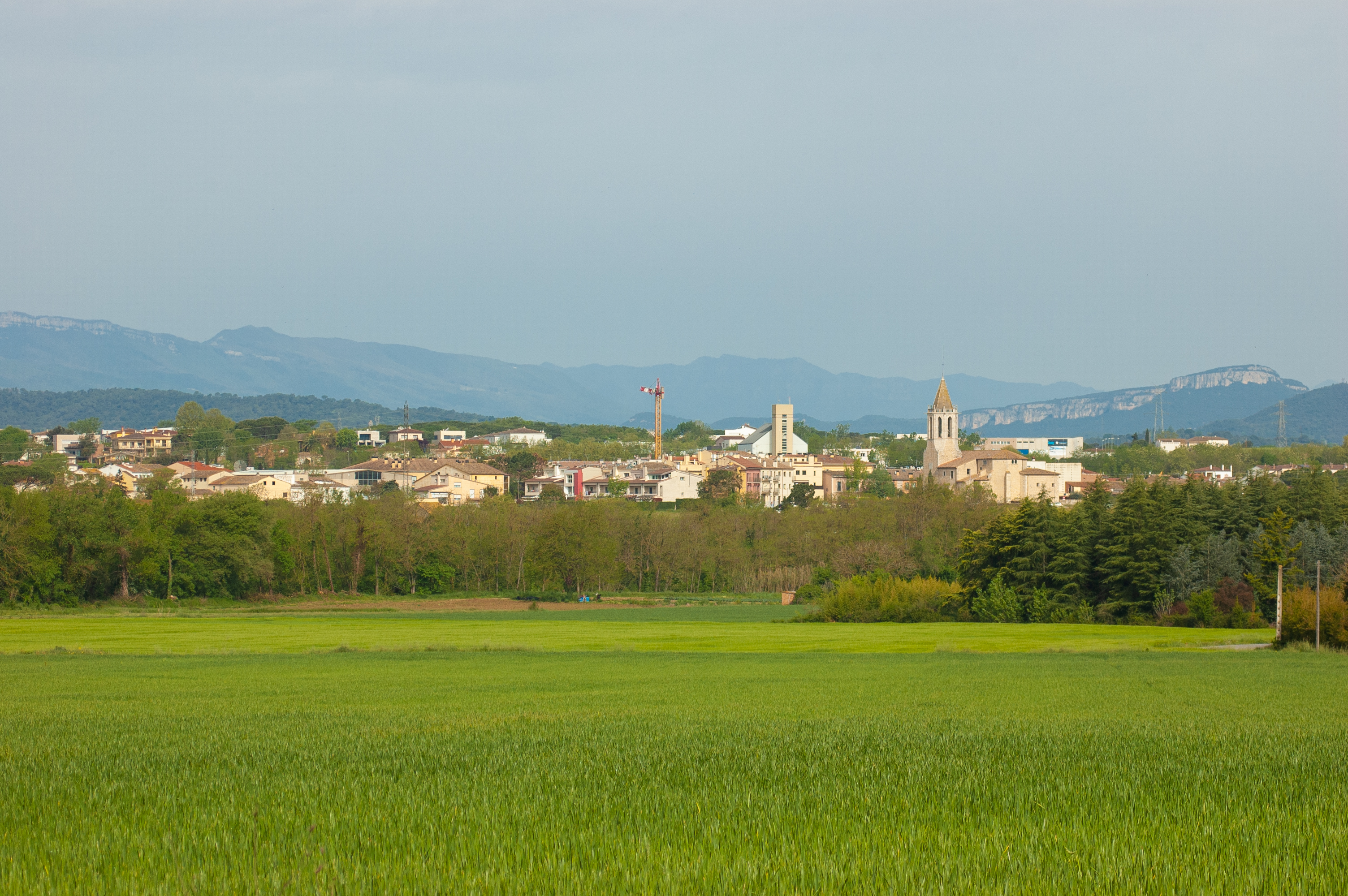
This municipality is located in the region of Girona, 6 km from the provincial capital. Its origin dates back to the year 1049, when the first mention of a castle at Fornells appears, ceded by Ramon Berenguer I and Isabel to Hugo Guillermo and his family.
Years later, it would pass into the hands of the first steward (seneschal) of Barcelona. Subsequently, it became property of the Montcada family, and would remain under their command until well into the 14th century when the Crown took over its management.
During the 20th century, the population grew rapidly, undoubtedly due to the presence of several large factories in Girona and Cassà de la Selva.
As for the architectural and cultural heritage, there are several interesting buildings, among which the parish church stands out. The construction work of this imposing building began in 1555 and its interior is easily recognisable as Gothic. The church is dedicated to Sant Cugat, a martyr from the 3rd century. A series of chapels are distributed along each side of the main nave, which culminates in a bell tower whose construction was completed in 1620. The church has three painted canopies from 1990 and 1998 by Josep Pujol, Ignasi Esteve and Ció Abellí.
Another such example is the castle of Fornells, which was built on the former site of a farmhouse. This building retains no other trait of fortification, other than being built on an artificial slope with access believed to have been granted via a drawbridge. Adjacent to the castle is a chapel, constructed in 1122, dedicated to Santa Maria.
There is also another chapel designed between the years 1738 and 1796. Its construction is attributed to a parish priest who ordered the inclusion of various inscriptions of a spiritual nature. Its design is similar to those of farmhouses found in the surrounding area.
Other curious structures in the area are Font de Can Pou and the cultural centre La Sitja. The former is a burial memorial located in the farmhouse of the same name, dedicated to the dog Tet. It is made of tiles and consists of three rectangular parts and culminates in a pyramidal roof. For its part, the cultural centre is a former grain warehouse, which has been converted into a centre for various community activities.
With regards the economy, arable and livestock farming take precedence. Tourism has increased over the years, not least due to the quantity and variety of such culturally important sights.
As for the local festivals, these are held in July with petanque competitions, open-air dances, parades and local food tasting all commonplace.