

Puntos de Interés

Infrastructure
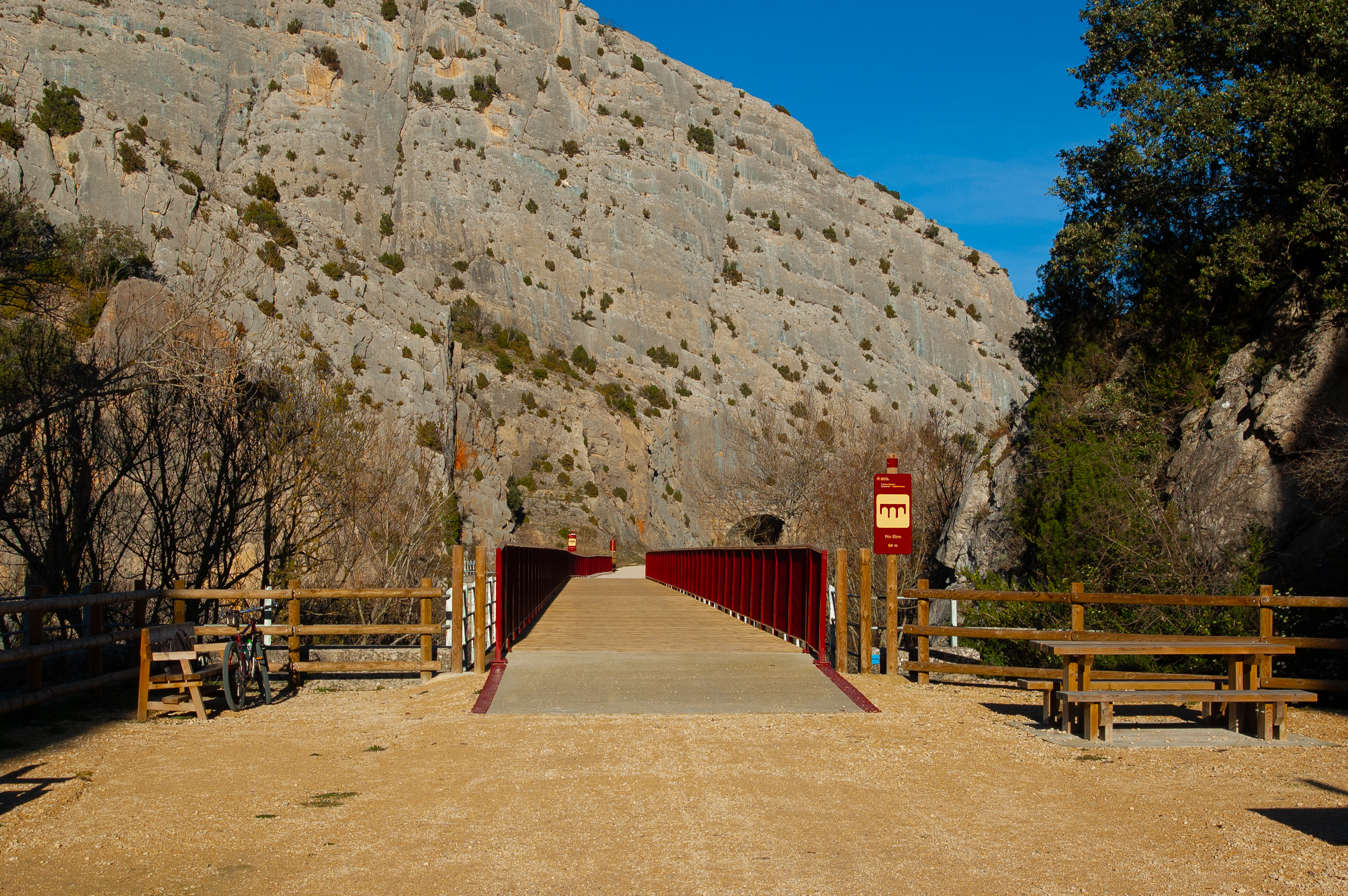
Viaduct over the river Ebro in Trespaderne
Along the route of the Santander-Mediterranean Sea railway line, more than a dozen tunnels and more than forty bridges were built, all of them of metal structure. The purpose of these infrastructures was to help the train to cross different orographic features.
In the case of this viaduct, its purpose is twofold, as it allows hikers and cyclists to cross the N-629 road and the Ebro riverbed. One of the most important watercourses of the peninsula with a length of 830 km, a river basin surface area of 86,100 km2 and an average flow rate of 414 m3/s.
This infrastructure is located just 200 m from the Trespaderne tunnel. The first part is 14 m long and passes over the road. Immediately after, it crosses the Ebro riverbed by means of another 63 m viaduct.
The process of restoring this double structure allowed to ensure its use by pedestrians and cyclists. Once restored, auxiliary structures, new metal railings and a wooden deck were installed to adapt the bridge to its new use.
The Santander-Mediterranean Sea railway line, designed to link the ports of Santander and Valencia, was in operation for more than fifty years from Cidad-Dosante in Burgos to Calatayud, where it connected with the Ferrocarril Central de Aragón (Aragon Central Railway). The project originated at the end of the 19th century, but did not come to fruition until 1920, when the State Government took up a previous study. The line was opened to the public between 1927 and 1930, although the connection with Santander never took place, despite the construction of the La Engaña tunnel that crossed the Cantabrian mountain range. In addition, the line underwent shut downs and abandonment, and finally closed in 1985.
During the rehabilitation of the Santander-Mediterranean Sea railway line in a Nature Trail, the old metallic railway bridges, which were in different states of conservation, have been rehabilitated and commissioned.