


Net of Nature
Trails

Route: Engaña Tunnel - Santelices (Las Merindades)







Description
A small branch of great historical importance on the Santander-Mediterranean route.
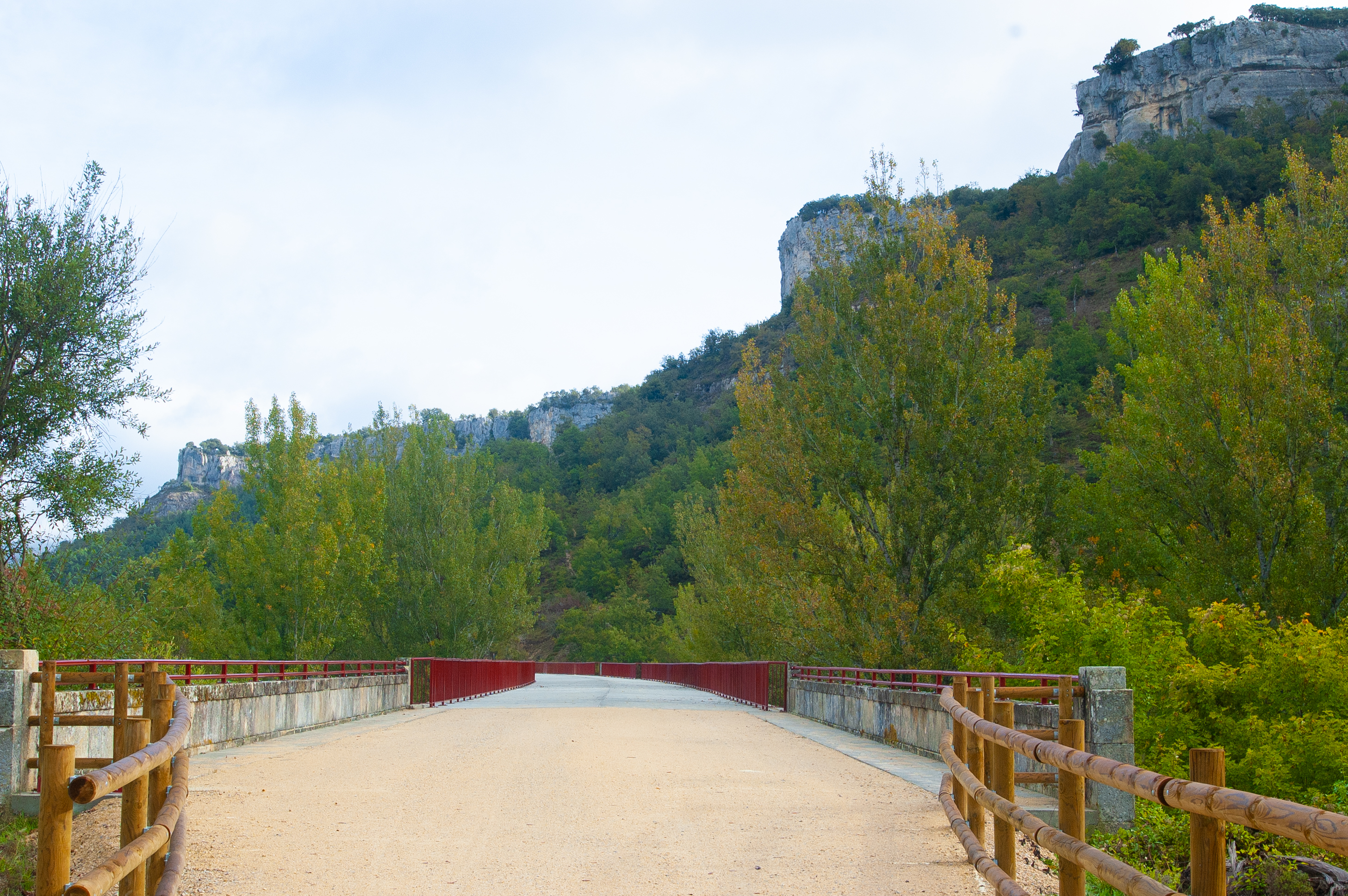
The unfinished railway known as Santander-Mediterraneo encloses a rich history condensed into this short route just under 7 kilometres. A clear example of this is La Engaña Tunnel, at 6,976 metres long, where years of effort and work culminated in a monumental work which, despite being finished, never saw trains run, but which left a great legacy in the area.
This branch, steeped in history, begins its almost 7 kilometres at the Rest Area located next to the Nature Trails interpretative panel. The southern entrance to the La Engaña Tunnel is located here. This impressive engineering work, built in the mid-20th century, was intended to overcome the Cantabrian Mountains. Although this objective was achieved after 17 years of construction work, the tunnel was never used for various reasons, mainly economic and political.
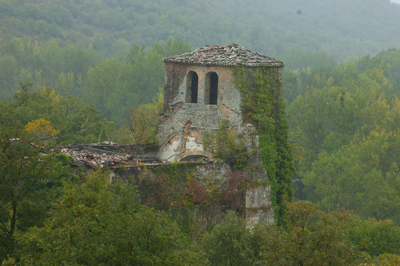
The journey begins with a small bend around the ruins of the old Church of Portolés, a village built to house the tunnel workers. The name comes from the company Portolés y Cía. from Zaragoza, which was awarded the contract for the works. Over time, the village grew to include a hospital, a commissary and other services, and at its peak it had a population of over 300 inhabitants. The church, which also served as a nursery school, is located near the old La Engaña station, designed with similar characteristics to other buildings on the railway line, but intended for service functions, as it was not located near any town.
Upon reaching kilometre 1 of the route, on the left we can see three buildings that were probably used by the engineers, given their size and the quality of their materials. The route runs parallel to the River Engaña, which gave its name to the aforementioned tunnel. The river offers great biodiversity, with a riverside forest that combines poplars (Populus sp.), alders(Alnus glutinosa) and willows (Salix sp.) with oaks (Quercus sp.), pines (Pinus sp.) and hawthorns (Crataegus monogyna) located further away from the riverbed.
The panoramic views of the Sierra de Rozas and the Montes de Somo form a landscape of special beauty that dazzles the traveller. Shortly after the third kilometre of the route, you will cross a gate with a Canadian crossing next to it, which must be left securely closed after crossing.
A small bridge, which is crossed underneath, indicates the proximity to the village of Rozas, part of the municipality of Merindad de Valdeporres. In its heyday, Rozas had a palace and walled church, owned by the Count of La Revilla. As you walk along the path you can enjoy the remains of these constructions, which, although affected by the passage of time and neglect, still conserve a great deal of interest. Vegetation covers part of the walls, giving them a special and unique charm.
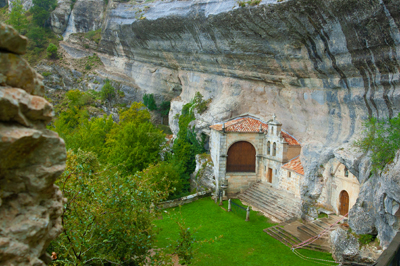
Shortly after passing kilometre marker 4, the old railway line, where ultimately the tracks were never laid, curves around a bend with the picturesque village of San Martín de Valdeporres on the right, with its church and the Shrine of La Ribera
The route then continues along the Cerro de la Muela on the left and the village of Pedrosa de Valdeporres, which precedes the neighbouring village of Santelices, on the right. Here you can admire the Churches of San Esteban and San Mamés.
After passing the last kilometre marker, the sixth kilometre of the route, we reach the old railway depot before what was once to become Pedrosa de Valdeporres station, also known as Santelices. This building, similar to others on the railway line, is in a perfect condition and is used by the "Las Merindades" caving group, providing training for the Castilian-Leonese Caving Federation. The complex also has a themed children's playground that pays tribute to the railway heritage with swings and games.
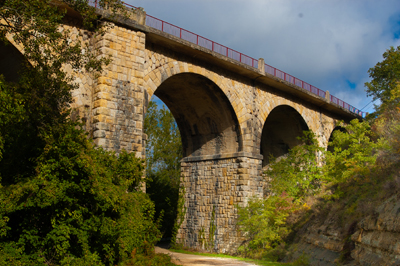
After leaving the old station behind, a short, shared stretch precedes the impressive viaduct over the River Nela. This spectacular railway construction, made up of 9 arches with ashlar and masonry pillars and abutments, crosses both the River Nela and the BU-561 road. On the other side, a rest area awaits, which marks the end of the La Engaña Tunnel - Santelices branch. However, this is only a point and a continuation of the adventure, as this is where you join the stage that goes from Cidad-Dosante to Medina de Pomar. And so the Santander-Mediterranean route continues, promising new and exciting experiences.
Managing Entities
Sites of interest
Puntos de interés
Culture
Hydrography
Information
Infrastructure
- La Engaña Tunnel
- Portolés village (old church-school)
- Old La Engaña tunnel station
- Old Pedrosa de Valdeporres Station
- Viaduct over the river Nela
Municipality
Passport
Profile
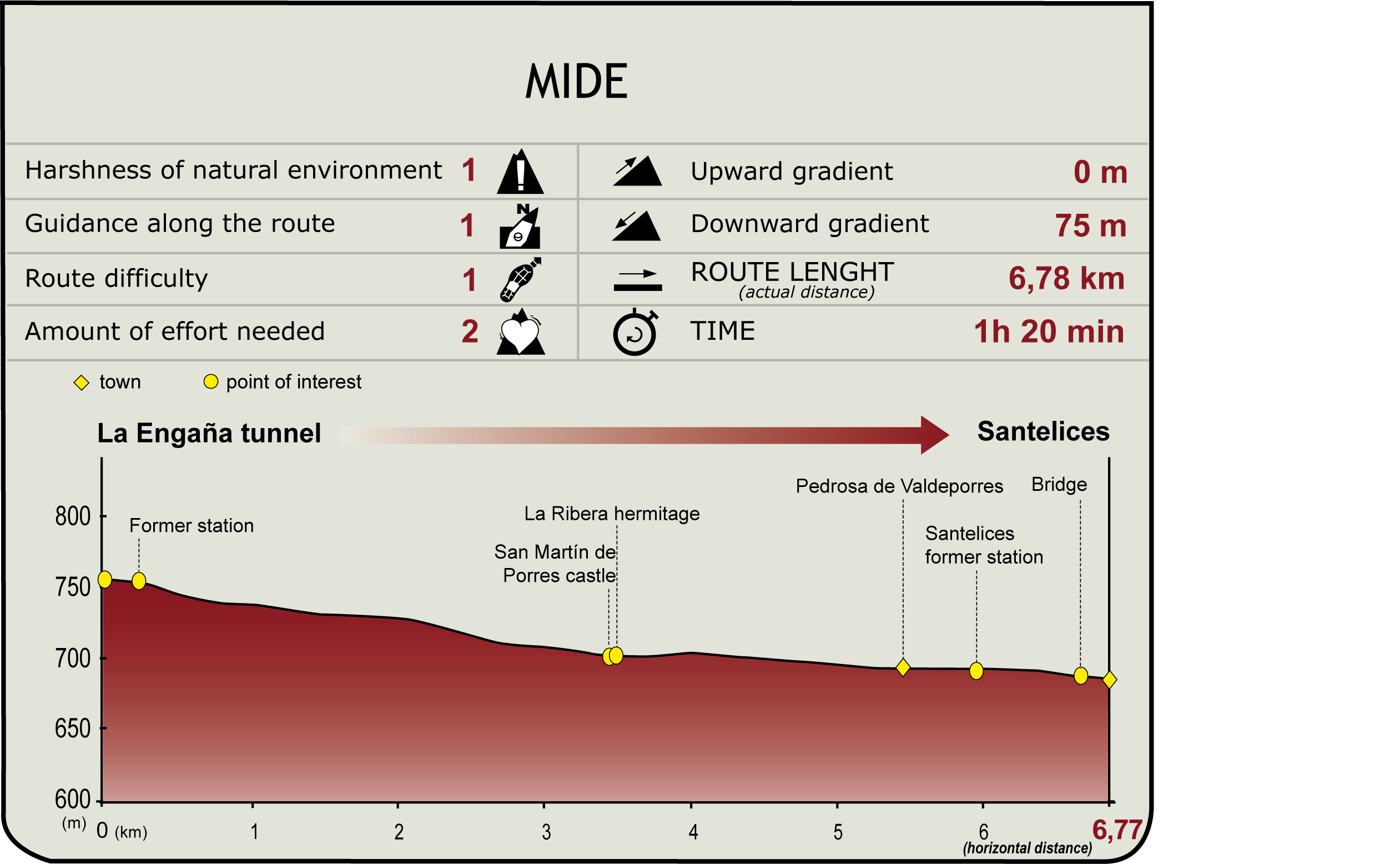
 Harshness of natural environment
- 1. The environment is not risk-free
- 2. There are more than one risk factors
- 3. There are various risk factors
- 4. There are quite a lot of risk factors
- 5. There are many risk factors
 Guidance along the route
- 1. Well defined trails and crossings
- 2. There is a clearly marked trail and signage
- 3. Requires the identification of geographic features and cardinal points
- 4. Requires off-path navigation
- 5. The trail is interrupted by obstacles that have to be gone around
 Route difficulty
- 1. Walking on a flat surface
- 2. Trails with different types of path
- 3. Walking on stepped paths or irregular terrain
- 4. The use of hands or jumping over the terrain is necessary
- 5. The use of hands is required to progress
 Amount of effort needed
- 1. Up to 1 hour of continuous walking
- 2. Between 1 and 3 hours of continuous walking
- 3. Between 3 and 6 hours of continuous walking
- 4. Between 6 and 10 hours of actual walking
- 5. More than 10 hours of continuous walking
(Calculated according to the MIDE criteria for an average excursionist with a light load)
Highlights
Further information
Ojo Guareña Natural Monument
The River Guareña flows through this limestone massif creating the Complejo Kárstico de Ojo Guareña. Nearly 100 kilometres long, it is the largest in Spain and one of the 10 largest worldwide. It is one of the largest known cave systems with a rich cultural legacy, although only the Shrine of San Bernabé and the Cueva del Ayuntamiento can be visited. The climb down to Ojo de Guareña is also recommended. It may be accessed via a network of well-marked trails.
Multimedia


Downloads

GPS Downloads


Documents

Cyclability
This Cyclostage corresponds to stage Cidad Dosante Station - Medina de Pomar of and stage Medina de Pomar - Oña of the Nature Trail
PROFILE
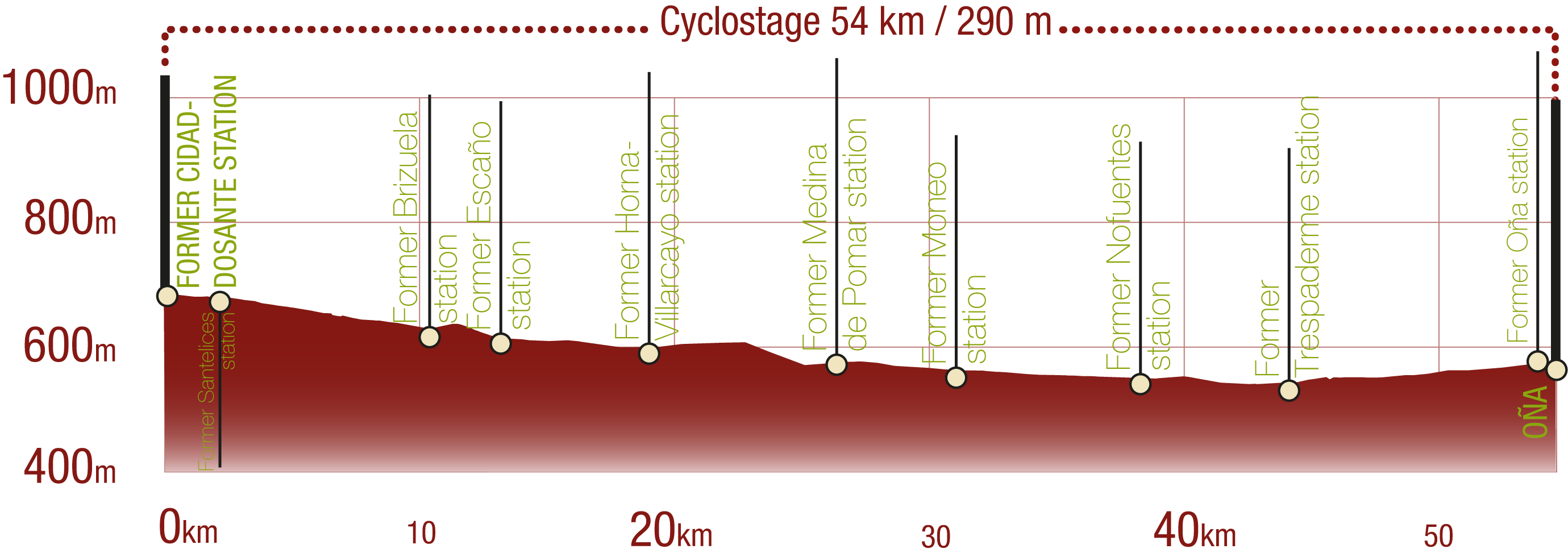
TYPE OF ROADS, PORTAGES & DIFFICULTY
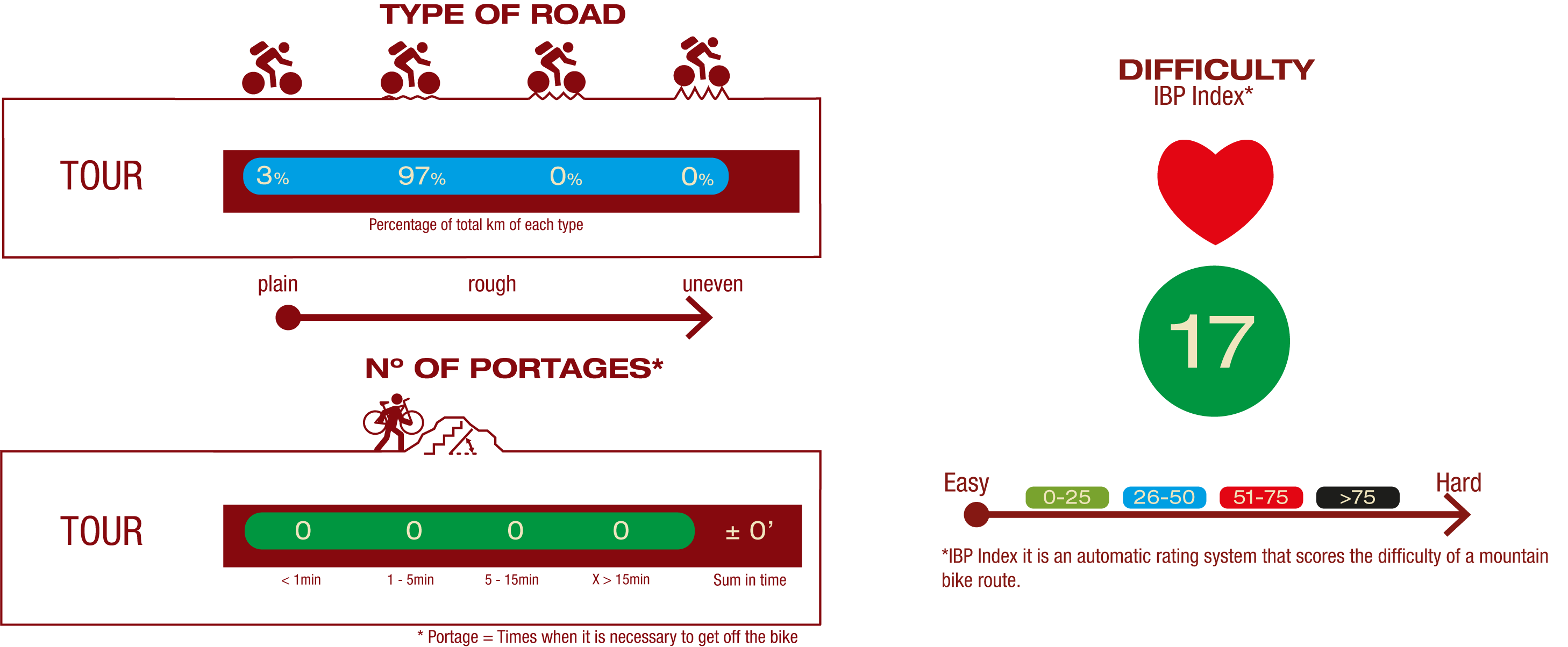
TEST

SAFETY RECOMMENDATIONS
- Caution at the road junctions along the stage and when passing through the eight short tunnels, seven of which are not artificially lit (it is therefore recommended to carry a torch). Mention the existence of several signposted sections with a risk of landslides.
GENERAL RECOMMENDATIONS
- Find out about the technical aspects of the route and the weather on the day.
- Take care of the environment. Take care not to disturb animals or damage vegetation. Respect private areas.
- You must give priority to pedestrians and comply with general traffic rules.
- The environment in which you will be riding is open, free to move around and an area where many activities are carried out (sporting, forestry, livestock and agricultural activities).
- Always have an understanding, prudent, responsible and respectful attitude.