

Puntos de Interés

Information
Ojo Guareña Natural Monument
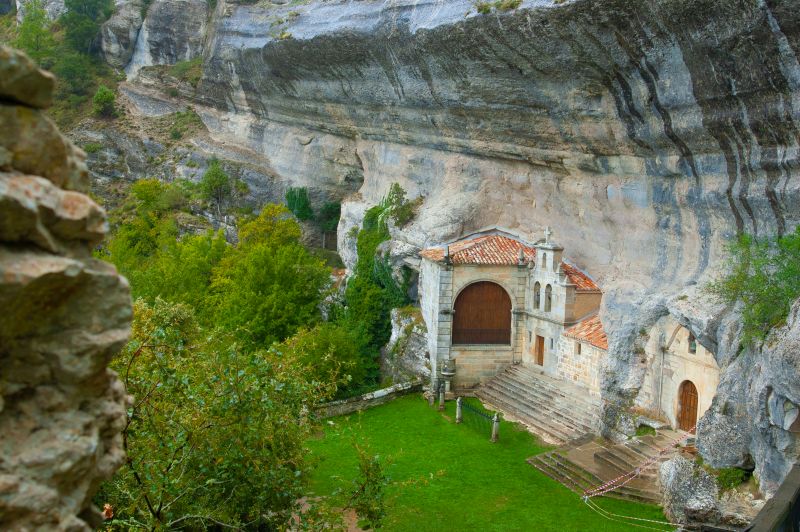
The Government of Castilla y León declared Ojo Guareña a Natural Monument in 1996. With its 110 kilometres of galleries, it is the second largest karst complex in the Iberian Peninsula and one of the ten largest in the world.
The complex, in the north of the province of Burgos, is part of several municipalities, such as Espinosa de los Monteros, Merindad de Montija and Merindad de Sotoscueva, covering a total of 13,850 hectares.
The whole area in which the Natural Monument is located is of great morphological, hydrological and scientific interest, given the presence of numerous levels, some of which are even fossilised, as well as those that are still hydrologically active.
In addition, some prehistoric sanctuaries have been found inside, as well as about 63 different species of cave invertebrates. Four of the said species are only present in these caves. All this makes it possible to clearly trace the historical evolution of this enclave practically from the Middle Palaeolithic to the present day.
The predominant landscape in this enclave is characterised by its relief of slopes forming a limestone ridge. In the area there are several species of nesting birds such as the golden eagle, the griffon vultures or the Egyptian vulture. Mammals such as the roe deer, the wild boar or the Pyrenean desman live in these territories where they find shelter among holm oaks, gall oaks, and beech and pine forests.
It is recommended to visit some of the viewpoints in the area to contemplate the impressive panoramic view of the complex. Some viewpoints include Alto Concha, Retuerta or the Pico del Cuerno.
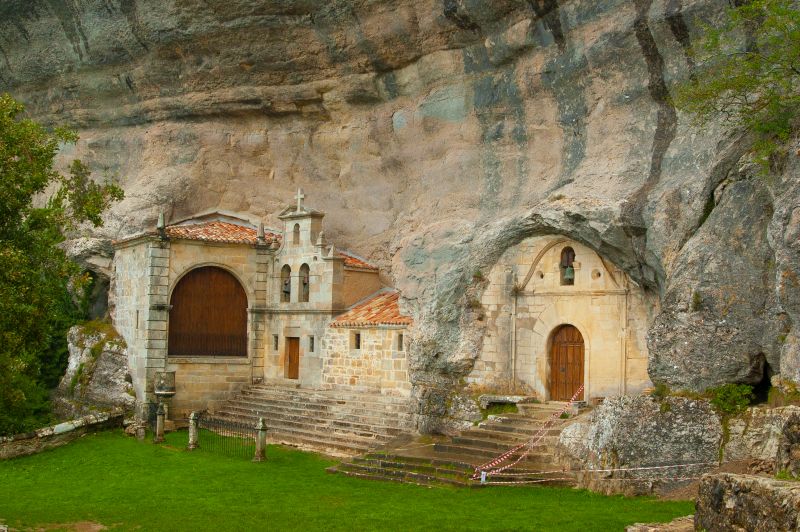
You can also visit the San Bernabé Hermitage Cave and Palomera Cave, located at one of the entrances to the karst complex. A surprising construction that houses some mural paintings dating from 1705 and 1877 in the interior of its natural vault. By looking at them you can learn about the life, miracles and martyrdoms of San Bernabé. Other jewels found at this unique temple include the Pila del Santo and the Silo gallery. The saint has a pilgrimage that is celebrated on the Saturday following the 11th of June.
When planning a visit to this Natural Monument, a good option is to go first to Quintanilla del Rebollar, at Ojo Guareña Park House. Here they will provide visitors with all the necessary information for the visit, including brochures, personalised guides and local monitors.