

Puntos de Interés

Culture
Castillo de Peracense
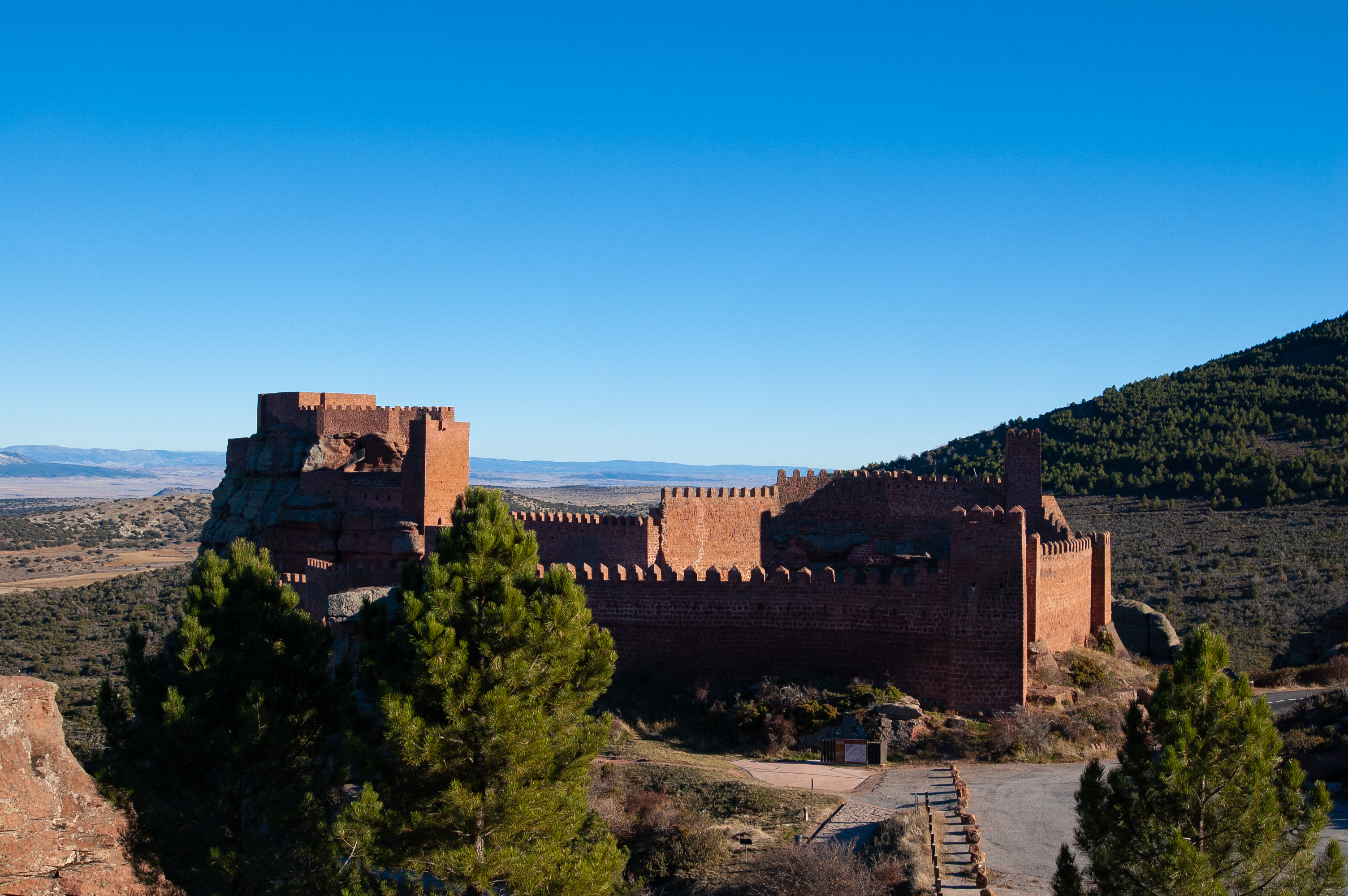
If there is one thing the residents of Peracense can say without fear of contradiction, it is that the fortress built in its domain is one of the most impressive and beautiful in Aragon.
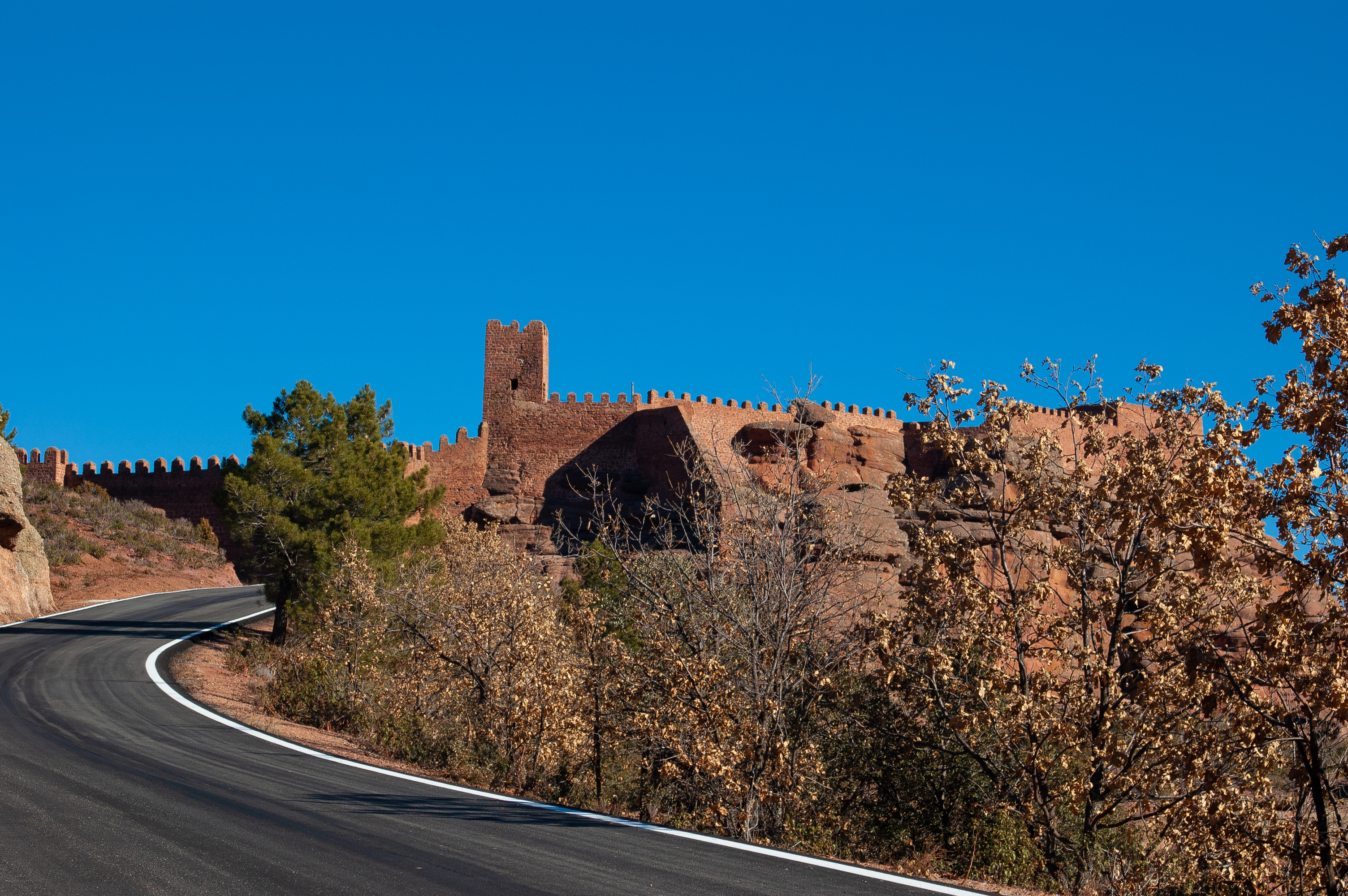
It is an imposing reddish building that stands out in the foothills of the Sierra Menera. It was built over an earlier Islamic fortress in the 13th century to defend the border with the Kingdom of Castile. Many years later, during the Carlist wars, it also served as a prison and barracks.
After the marriage of the Catholic Monarchs and the union of Castile and Aragon, the castle lost its main function and became part of the Comunidad de Daroca.
It should be noted that the complex is in a unique natural setting, and that it exploited the topography of the terrain to build a castle, which stands on a steep rodeno rock at a height of about 1,365 m. One of the main materials used to build its impressive walls is sandstone in the form of masonry, megaliths and ashlars on lime and gypsum mortar, which lend it its reddish colour. Another material used was wood, although much less; it was used mainly for the beams and putlogs.
The fortress consists of three concentric enclosures. The lower one is the first defence on the north and west and consists of a rampart with 3 m-thick walls. It has an L-shaped floor plan with three higher support towers. Inside there is a large esplanade known as albacar, where the villagers and their belongings found shelter.
The middle enclosure also extends towards the north and west. It consists of a wall, in this case a rampart and, in turn, of three hollow towers. On the south and west sides there is no rampart, doubtless due to the fact that there is a steep escarpment, which is easily defended. This middle sector has several levels and an irregular floor plan. It contains the main rooms, bedrooms, latrines, kitchens, the chapel and there is also a cistern nearby. On the other hand, the east side houses the prison, a chapel and a natural rocky access leading to the village. They are all at a lower level.
Finally, the upper enclosure is the main part of the fortress. It is on top of the rock because this made access more difficult, it could be defended more easily and, moreover, it offered views that made it possible to control the entire surrounding area.
There are three different levels. The first is a terrace with a false tower, then there is a second tower allowing access to the residential area and to an upper area. There were three cisterns in it to secure the water supply in the event of siege for the governor and his family. A quite primitive dungeon and an armoury have also been found there.
Over the course of its history it has undergone various modifications and additions, such as those made during the Carlist wars. Finally, the Aragon Provincial Council undertook restoration work on this Site of Cultural Interest in 1987, while simultaneously conducting various archaeological excavations that brought to light the vestiges of a quarry in the outer enclosure.
Peracense castle is open to visitors as follows:
- Between 1 January and 16 April: Saturdays and Sundays from 10.30 to 14.00 and from 15.30 to 18.00.
- Between 17 April and 30 June: Wednesday to Sunday from 10.30 to 14.00.
- Between 16 September and 13 October: Wednesday to Sunday from 10.30 to 14.00 and from 15.30 to 19.00.
- Between 14 October and 31 December: Saturdays and Sundays from 10.30 to 14.00 and from 15.30 to 18.00.