


Puntos de Interés

Culture
Old barrio minero
In 1902, the Cortes granted the right to work the mines in the Ojos Negros area to the Compañía Minera de Sierra Menera.
The beginning of the mine-working brought with it a large number of workers from other regions, such as Andalusia and the Basque Country. To work the mines, the company had an average of approximately 1,000 workers. To accommodate so many people, various settlements were built where all kinds of infrastructure was provided to house them and provide them with services to allow them to live in the area.
Thus, a total of six neighbourhoods were built housing staff and services. These neighbourhoods were known as Relojería, Hospital, Centro, Gerencia, Estación and Casas de Manolo. They were spread over three main neighbourhoods: the Barrio del Norte, also known as the Barrio del Hospital, which, besides the building that lends it its name, housed the Guardia Civil barracks and housing for the workers; the Barrio del Centro, which contained most of the services provided for the workers, such as schools, sports facilities, a casino that also served as a cinema, the commissary and the church. It was undoubtedly the largest.
Finally, the Barrio del Sur, which was divided in two. On the one hand, the Barrio de la Estación, where the railway workers lived and where depots were built, and on the other hand, the Barrio de la Gerencia, where the company’s offices were located.
The structure of these built-up areas was quite similar, since they were all built around the road linking Ojos Negros to Villar del Salz, running over a total of almost three and a half kilometres between the northernmost and southernmost settlements.
Furthermore, they usually consisted of single-family dwellings laid out such that they formed linear streets.
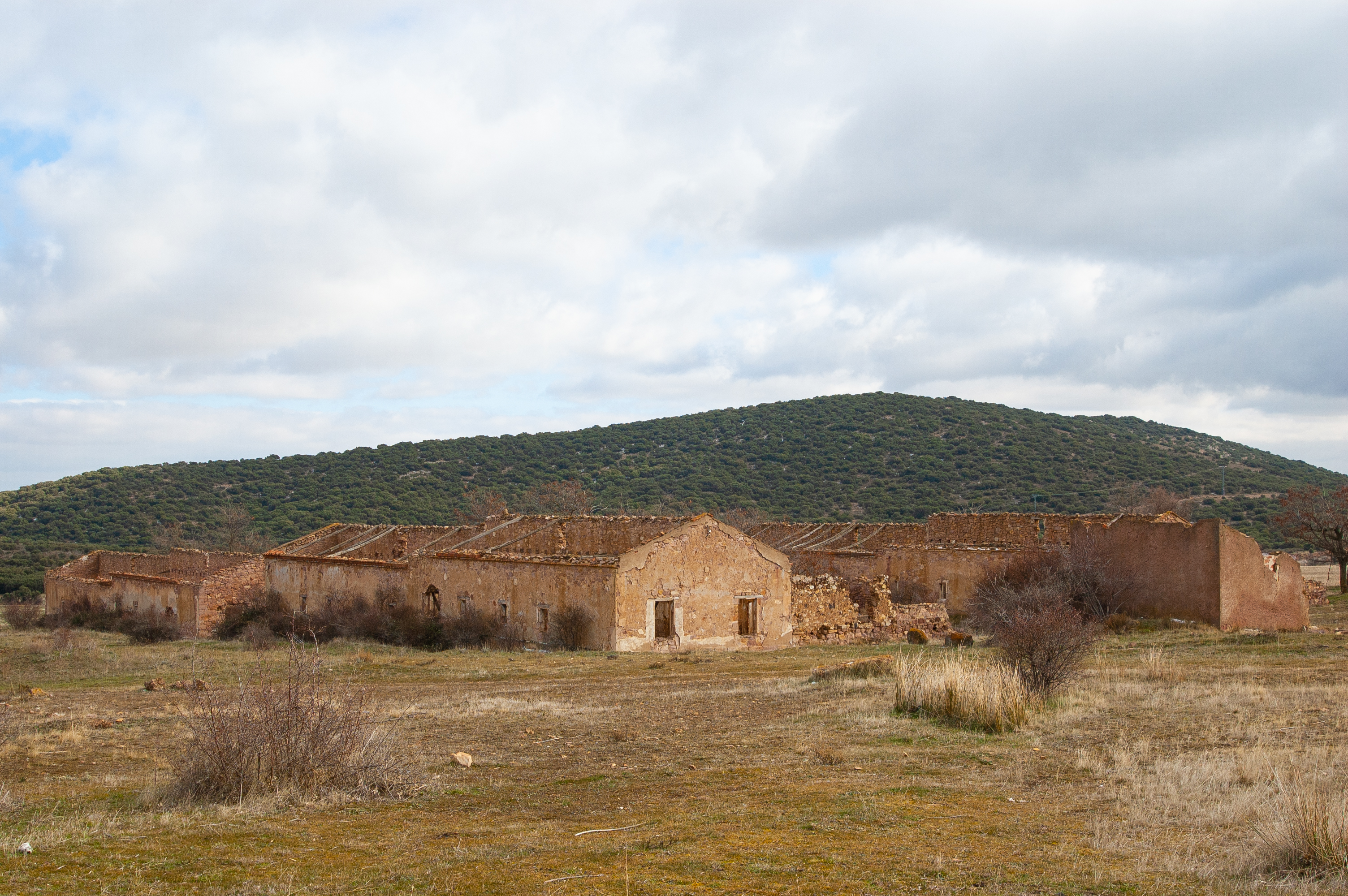
Besides these constructions, there are other buildings in the sierra, such as the one we are discussing now, known as the Montiel houses, a group of dwellings very near the mines. This group of dwellings is perhaps the worst preserved, with not a single house still standing. There are therefore no remaining residents either.
As a whole, all these dwellings, leisure and service buildings, and workspaces, highlight the importance of the Compañía Minera de Sierra Menera’s mining in this area.