

Puntos de Interés

Municipality
Calamocha
Calamocha is a municipality in Teruel province and the administrative capital of the Jiloca District.
The municipality covers a great area, with 11 population centres, including: Collados, Cutanda, Cuencabuena, Luco de Jiloca, Lechago, Navarrete del Río, Olalla, Nueros, Valverde, Villarejo de los Olmos and El Poyo del Cid.
Calamocha has been an important fortified enclave because of its excellent geographical location. The ancient Roman road that connected the city of Caesaraugusta (Zaragoza) and Corduba (Cordoba) passed along its borders. It was subject to Muslim rule for four centuries and was given the name Qal’at Musa, meaning ‘fortress of Musa,’ after the village’s founder, Musa ibn Musa. And it was on this land that El Cid Campeador established his barracks, more specifically in the area of El Poyo del Cid.
However, this settlement was not consolidated until the Christian conquest of the Aragonese territories by Alfonso I “The Battler” (1123). Later, in 1248, Calamocha became part of the Comunidad de Aldeas de Daroca, within the Jiloca Sesma.
The architectural monuments in the village include the abandoned Colegio de Misioneros Apostólicos de San Roque (1690), the Convento de la Concepción, a 17th century Baroque building, the 1st century A.D. Roman bridge and the church of Santa María la Mayor.
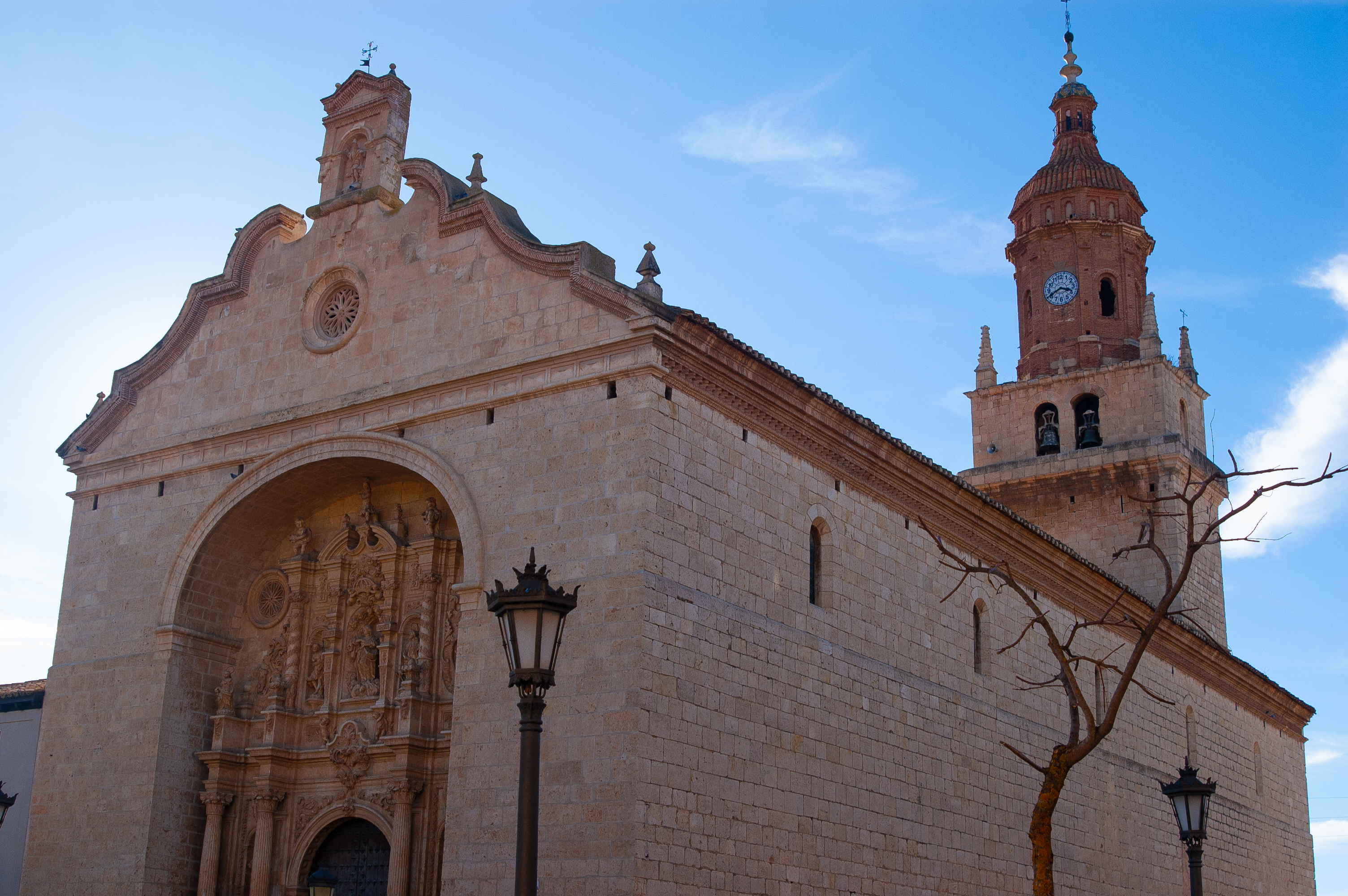
The latter is a large 16th-century Baroque church with three naves, a hall-shaped floor plan and star-shaped ribbed vaults. Outside, the most striking features are: the tower, whose Mudejar-style peak is topped by a half-orange dome with a lantern; and the Baroque portico split into two sections, with the upper section being overlooked by an image of the Virgin Mary.
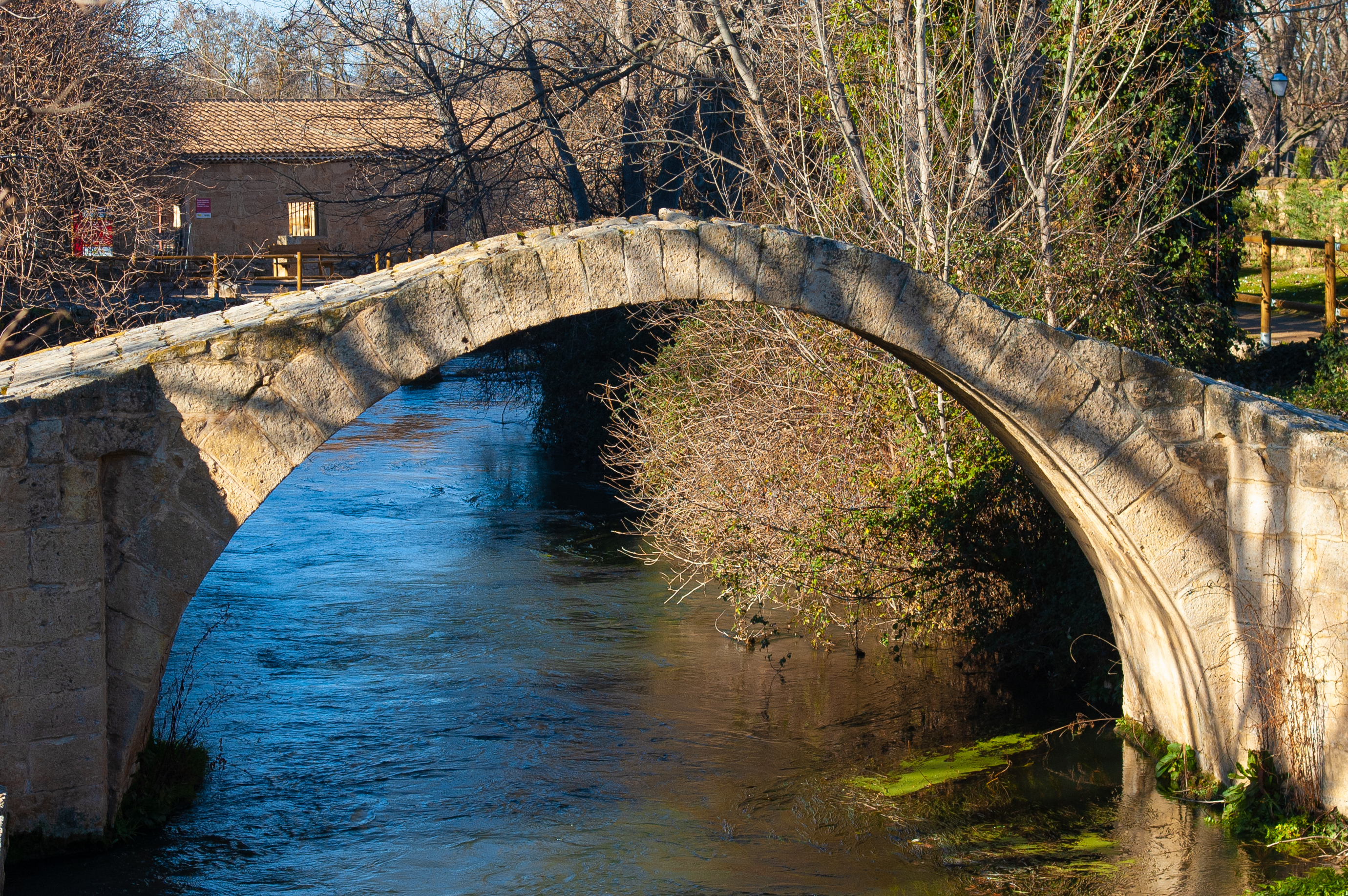
Furthermore, there are several hermitages in the municipality, such as the San Roque hermitage, the Santo Cristo del Arrabal hermitage (18th century) and the Santa Bárbara hermitage, which was renovated in 1976. And in the village proper there are see several Aragonese-style stately homes such as the Tejada family’s palace and the Vicente family’s palace, both from the 16th and 17th centuries, and which were declared Sites of Cultural Interest in 2002.
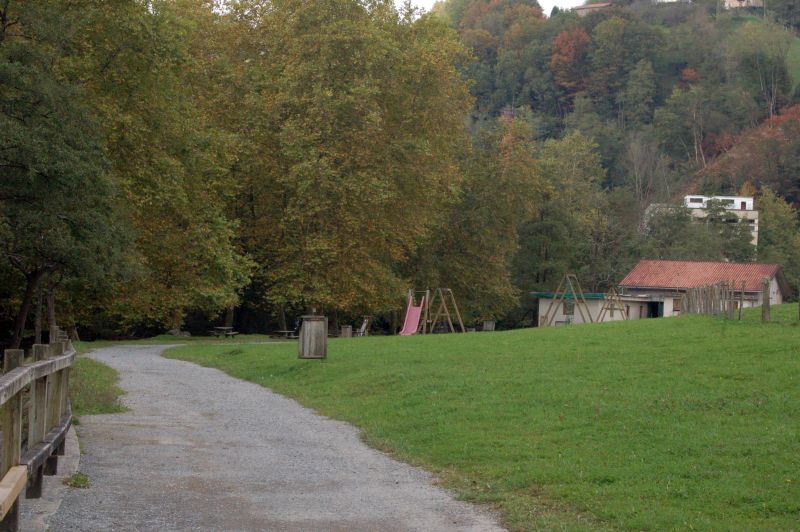
As for the natural surroundings of the municipality, there are several places of great scenic interest such as: the Cutanda and Barrachina gypsum, the poplars (Populus nigra) in the valley of the River Pancrudo, the Gallocanta Lagoon Nature Reserve, the juniper grove (Juniperus sabina) at El Villarejo de los Olmos and the Sierra de Fonfría.
As for the festivities, the most important are the patron saint festivities in honour of San Roque, which are held between 14 and 17 August. Here it is traditional to perform the dance known as the San Roque dance, which was declared a Festival of Tourist Interest in Aragon and whose origins go back to 1885. More than 300 people participate, dancing to popular music for approximately three hours.
Other popular festivities are those held in honour of Holy Christ of Arrabal (14 September) or the centenary popular pilgrimage on the first Sunday in May, which takes place in the chapel of Santa Bárbara.