
Puntos de Interés

Infrastructure
Tunnel 9 Bado
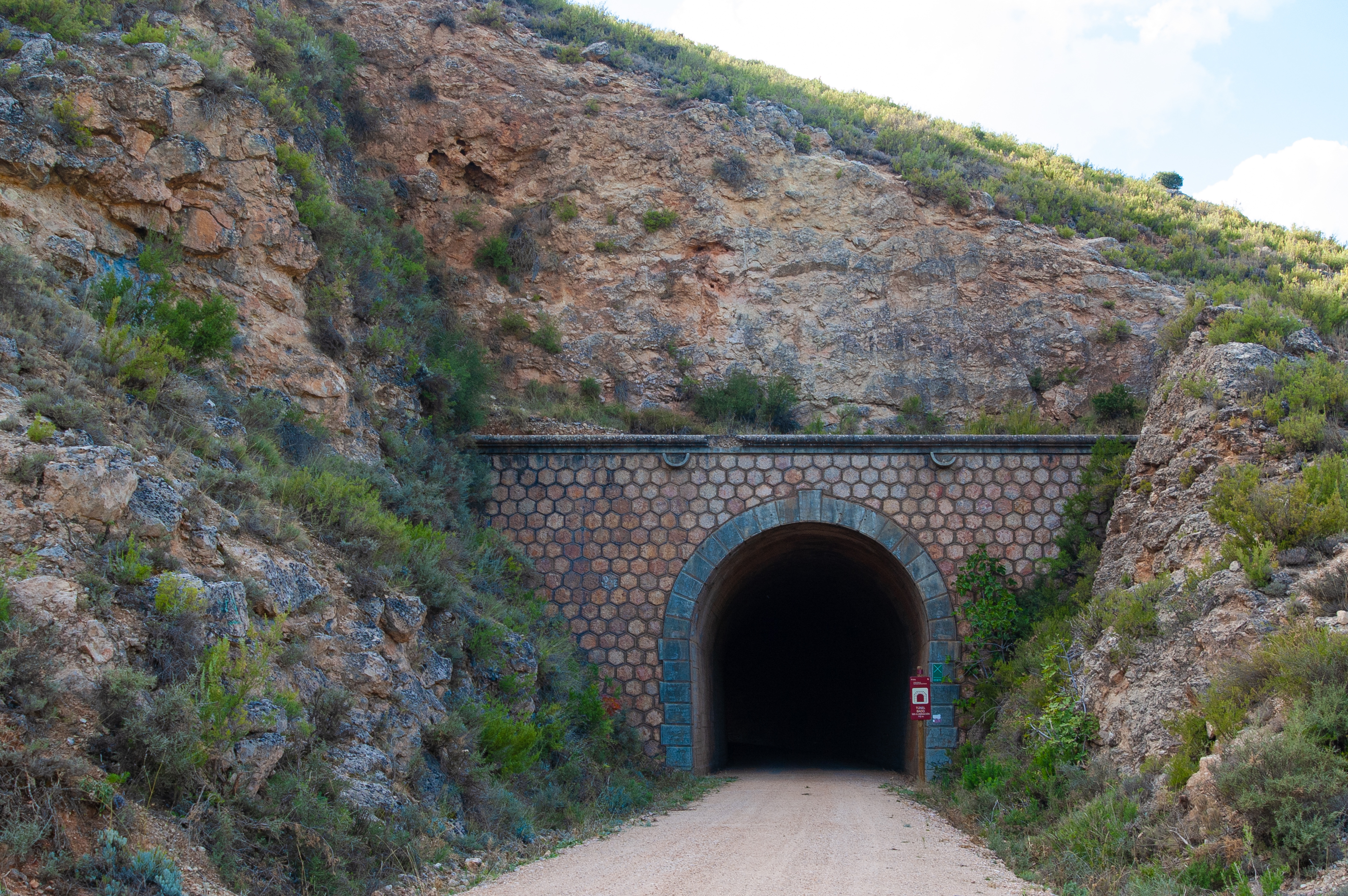
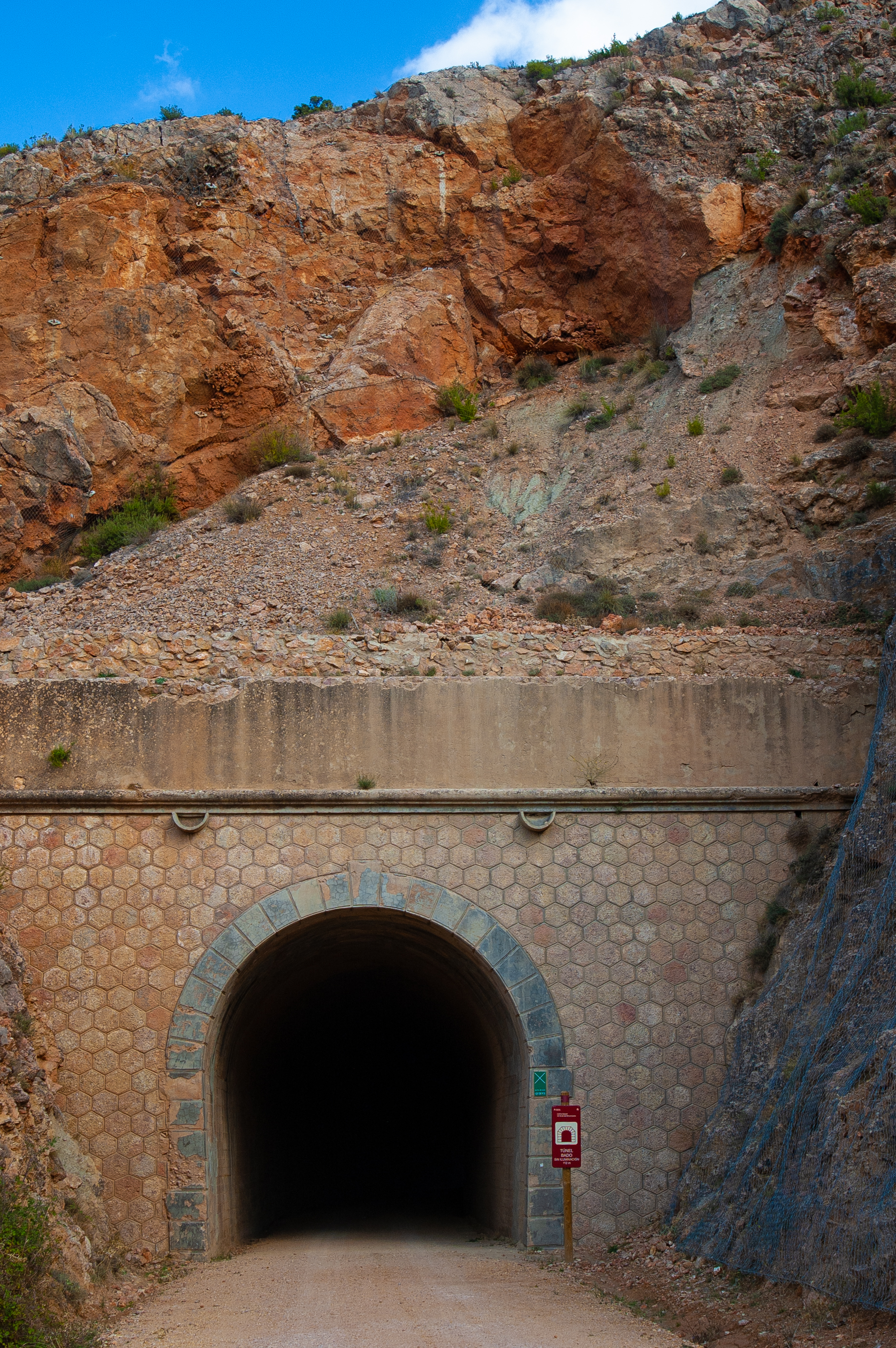
Tunnel 9, known as the Bado Tunnel, with a length of 112 metres, is part of the infrastructure built for the planned Baeza-Utiel Line, an ambitious railway project designed to connect Andalusia with the Levante region by means of a high-capacity transversal rail corridor. Construction began in the early 20th century, driven by the need to boost freight traffic and improve territorial communications. However, despite the fact that numerous tunnels, viaducts and earthworks were completed, the line never entered service and was abandoned after the vagaries of changing political and economic times brought the works to a definitive halt in the 1960s.
The entrance mouth to the Bado Tunnel has a hexagonal masonry face, designed to stabilise the slope and protect the entrance from landslides. The mouth of the tunnel preserves a round arch with marked voussoirs, characteristic of the typical railway engineering of the time.
The name Bado comes from the natural watercourses in the terrain, which used to serve as passages between the different levels of the landscape. Its name was kept in the technical documentation to distinguish each infrastructure project along the planned route.
Again, this tunnel is equipped with no artificial lighting whatsoever so walkers must make sure they carry a torch to pass through safely. It is pitch dark just a few metres from the entrance, which makes extreme caution especially advisable, especially for cyclists.
The environment in which it is inserted - with reddish rock slopes, retaining walls and scattered vegetation - illustrates the magnitude of the railway project that was never completed and that today, thanks to its recovery as a Nature Trail, allows visitors to discover a unique heritage integrated into the landscape.