
Puntos de Interés

Infrastructure
Lechago Dam
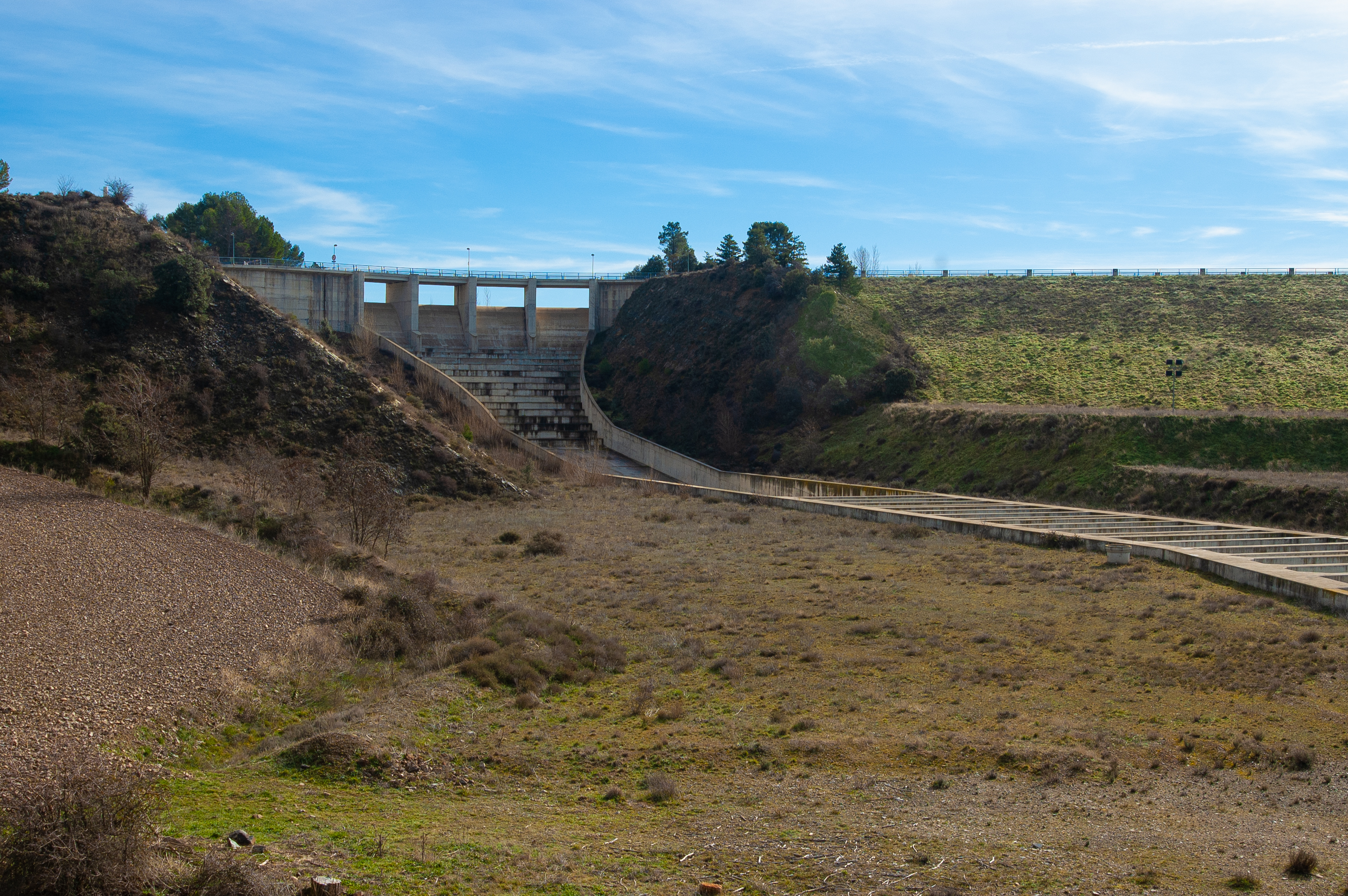
The Lechago Dam is between the villages of Lechago, Luco de Jiloca and Navarrete del Río, which belong to the municipality of Calamocha in Teruel province.
This is an irrigation dam which was built on the course of the River Pancrudo, 1.3 km from its mouth on the River Jiloca.
A water project that came into consideration in the early 20th century, when the need to regulate the waters of the Jiloca started to become obvious, due to a hydrographic system with a pronounced seasonal imbalance. For centuries, this impacted the availability of its riverbed for nearby towns and municipalities, affecting irrigation and agricultural activity especially.
The Lechago reservoir was the result of Aragon Water Pact and a priority project of the National Hydrological Plan, which sought to consolidate and improve the farms in the middle and lower course of the River Jiloca, which is traditionally irrigated land.
These works sought to resolve the water problems suffered in the surrounding districts and would end the water imbalance in the provinces of Zaragoza and Teruel. It was also intended to exploit of a fruitful horticultural fertile plain, from Calamocha to Calatayud.
Likewise, regulating the water balance of the Jiloca would aid in preserving the quality of the aquifers in the district, by contributing greater stability to the surface flow of the river and reducing the pressure on them. This is an essential environmental function to meet the needs of the river and riparian ecosystems.
Besides the dam built on the bed of the River Pancrudo, this water structure also features a pumping station and a diversion channel to collect water from the River Jiloca during the winter months and to raise the level of the reservoir in summer; it has a capacity of 18 hm3.
Interestingly, during the construction of the reservoir, which was completed in 2009, an archaeological site dating back to the Roman period was found, including an ancient Roman villa from between the 1st and 2nd centuries AD, which for years prevented the reservoir from being completely filled.