

Puntos de Interés

Infrastructure
Old Daroca station
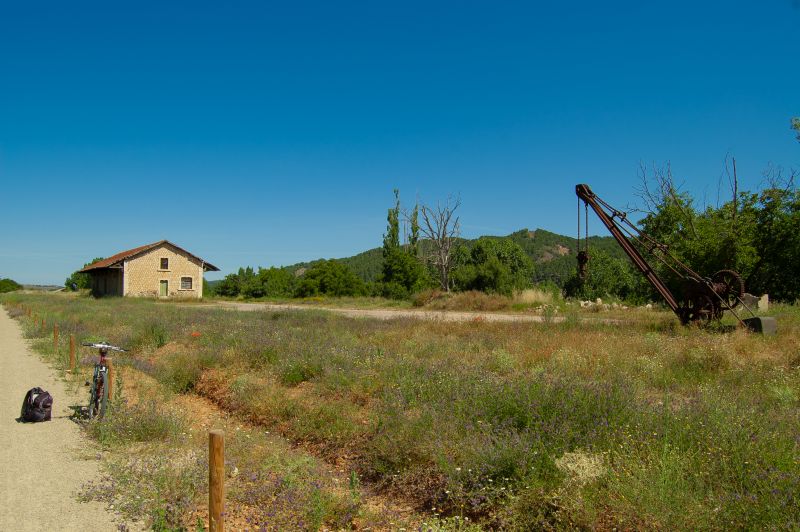
It is an old railway building belonging to the unfinished Santander-Mediterráneo railway line, which served the Aragonese municipality of Daroca. The purpose of this service was to connect the Cantabrian coast from Santander to the Mediterranean through the port of Sagunto.
In 1920, the Provincial Councils of Burgos, Santander, Soria and Zaragoza drove the central sections of the Santander-Mediterranean railway. The section between Calatayud and Cidad-Dosante, of which this station is part, would be completed in 1930.
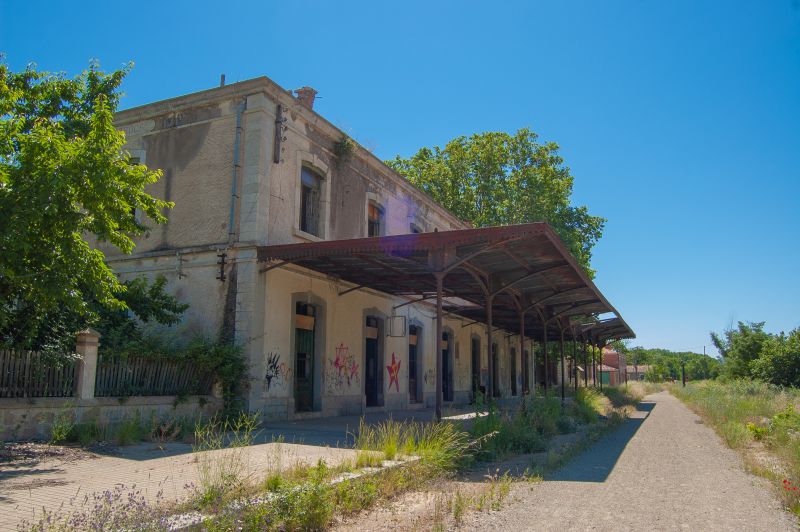
Daroca station, the most important station on the stretch between Calatayud and Caminreal, was built by the Central de Aragón. In its heyday it had sister stations in Teruel and Segorbe. The arrival of the railway to this region caused a major movement of capital and labour for the municipalities along the route. Of the three sisters, it was the one that would suffer the worst fate, being abandoned in 1985.
The railway complex in Daroca has a linear layout, on one side of the track where there is a larger, sober two-storey building designed to be the passenger reception and waiting area. On the main floor users would find the facilities typical of this type of building, such as the toilets, the ticket office and the main platform, which featured a beautiful canopy. The upper floor was used as living quarters for the Station Master and other workers. The complex also had an area for handling goods, consisting of a warehouse, the loading bay, a water crane, a weighbridge and a loading gauge. Plus, the switchman’s hut and the tanks.
The technical problems, as well as the line’s low profitability, combined with the political instability of the early 20th century, ensured that, in the end, the route planned in this ambitious project was never completed. This line was permanently closed in 1985 and with it the infrastructures on the sections that had been opened to that point were condemned to oblivion. In the specific case of Daroca, the station was completely abandoned.
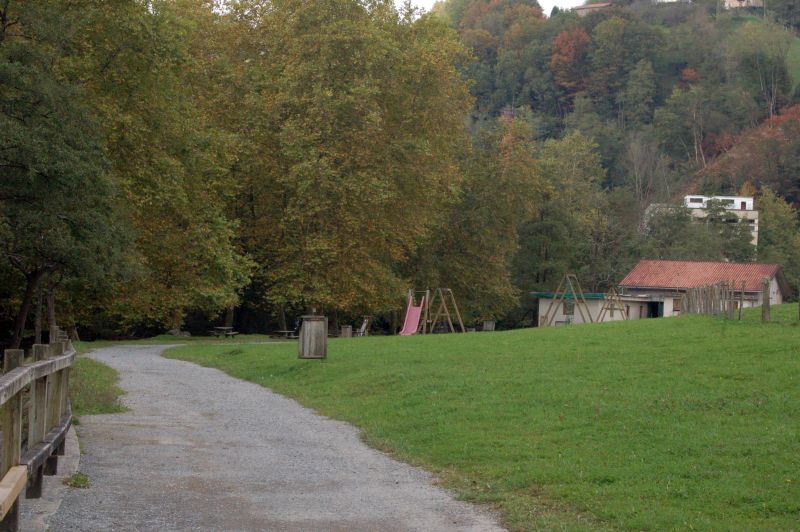
Finally, uses can halt on the path in the rest area which today is beside this old infrastructure, where, as well as the interpretive panels, there are bike racks and tables.