

Puntos de Interés

Culture
The royal salt mines
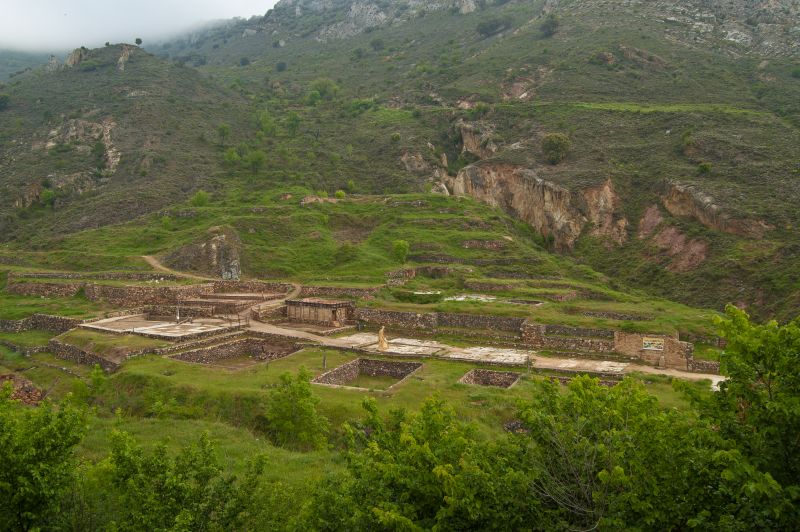
On the edge of the Páramo de Masa moorland, there is a saline outcrop that gives its name to the municipality of Poza de la Sal in Burgos. This diapir consists of a crater of more than two kilometres in diameter, at the bottom of which is the salt vein. At its centre is the ancient settlement of El Castellar. Although the area has been exploited since prehistoric times, it was not until the Roman occupation that salt production intensified and bridges and roads were built for bringing the produce to market.
The Castilian crown always exercised strong control over the exploitation and trading of salt, granting frequent concessions to religious entities or private individuals, especially Philip II who, in 1564, rationalised salt exploitation.
The salt was extracted by digging wells about 40 m deep and with a cross-section of one metre that allowed access to the salt vein. By joining the wells together via a series of galleries, fresh water was introduced to dissolve the salt, obtaining a brine that was poured into the granjerías, or waterproofed ponds where the salt forms crusts with the evaporation of the water. At this point, the salt was piled up once it had been extracted and stored in the warehouses before being carried to market by mule.
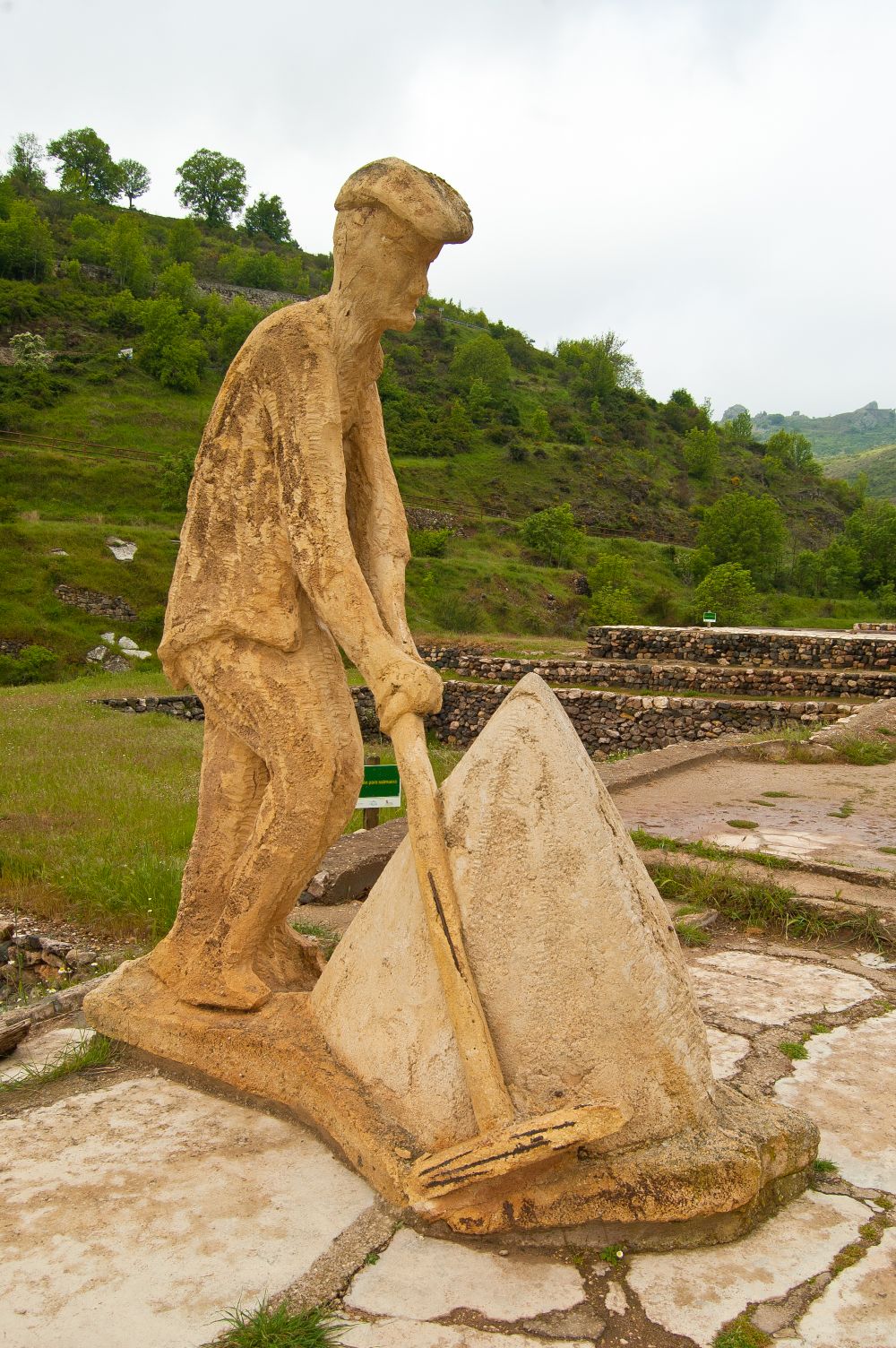
The House of Administration of the Royal Salt Mines, whose construction was promoted by the Royal Treasury of Charles III in 1786, was located at these salt mines. Until 1868, it oversaw the control and administration of the production, processing, storage and distribution not only of this one, but also of the Royal Salt Mines of Añana, Buradón and Herrera in Álava, and Rosío in Burgos. In later years it was used for various purposes and in the 1960s a new building was constructed. Today, the basement houses the Las Salinas Interpretation Centre.
Although today salt production has diminished greatly, these salt mines are a vestige of the traditional activities and culture of the area, as well as being a place of great tourist interest.