

Puntos de Interés

Municipality
Campo del Agua
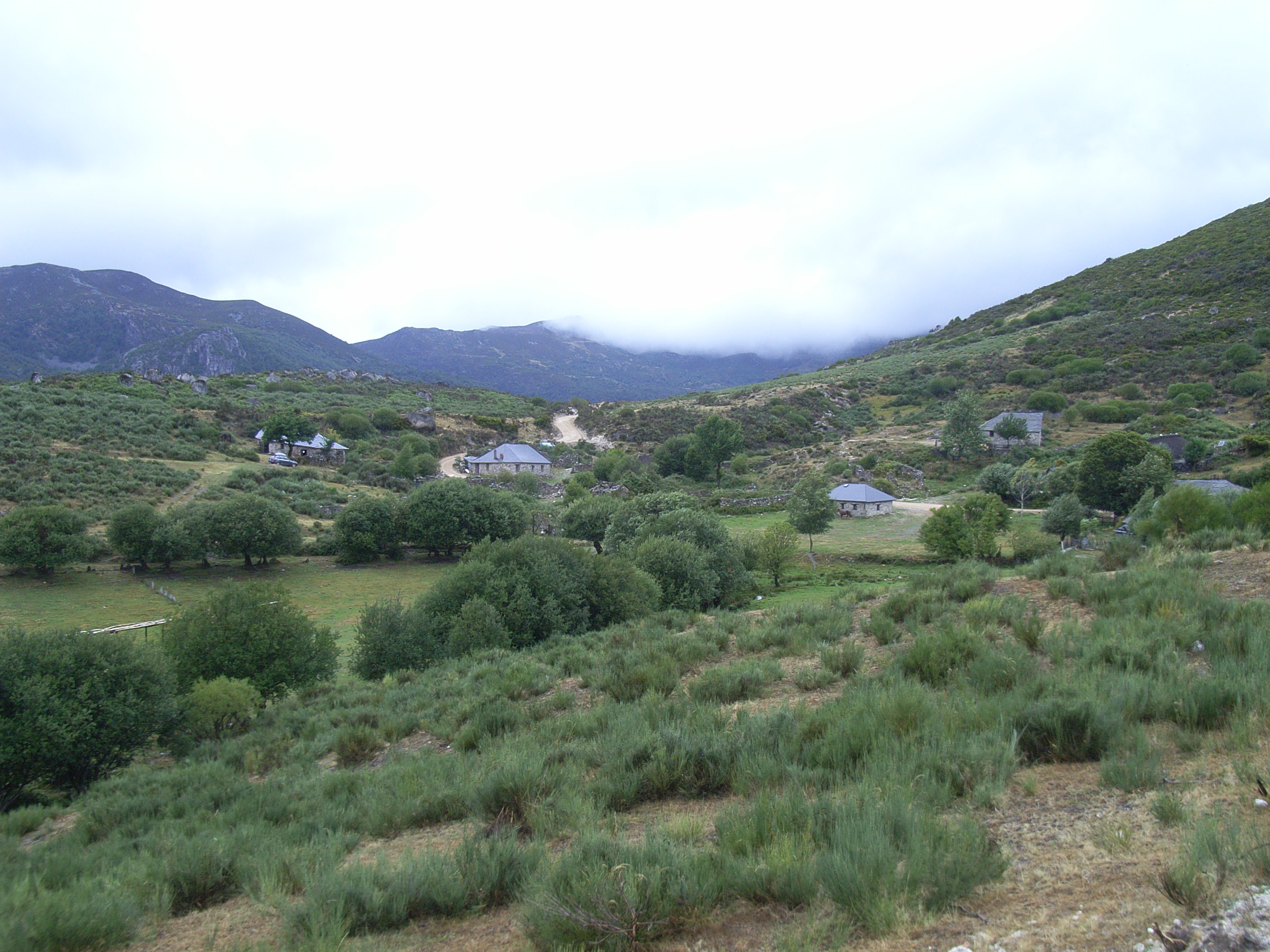
At 1,280 metres above sea level, at the northern extremity of Villafranca del Bierzo, lies Campo del Agua, a place steeped in history and traditional architecture. This small village, the most northerly in the municipality, was declared an Asset of Cultural Interest in 2002 for its value as an Ethnological Ensemble. It is an old summer braña (pasture settlement), that is, a settlement used only during the summer season when the population was transhumant. In spring and summer, people lived in Campo del Agua, taking advantage of the milder temperatures and the best pastures, returning to Aira da Pedra, located at lower altitudes, when the first snow fell. Today, although it retains the atmosphere of a mountain village, it has a small permanent population.
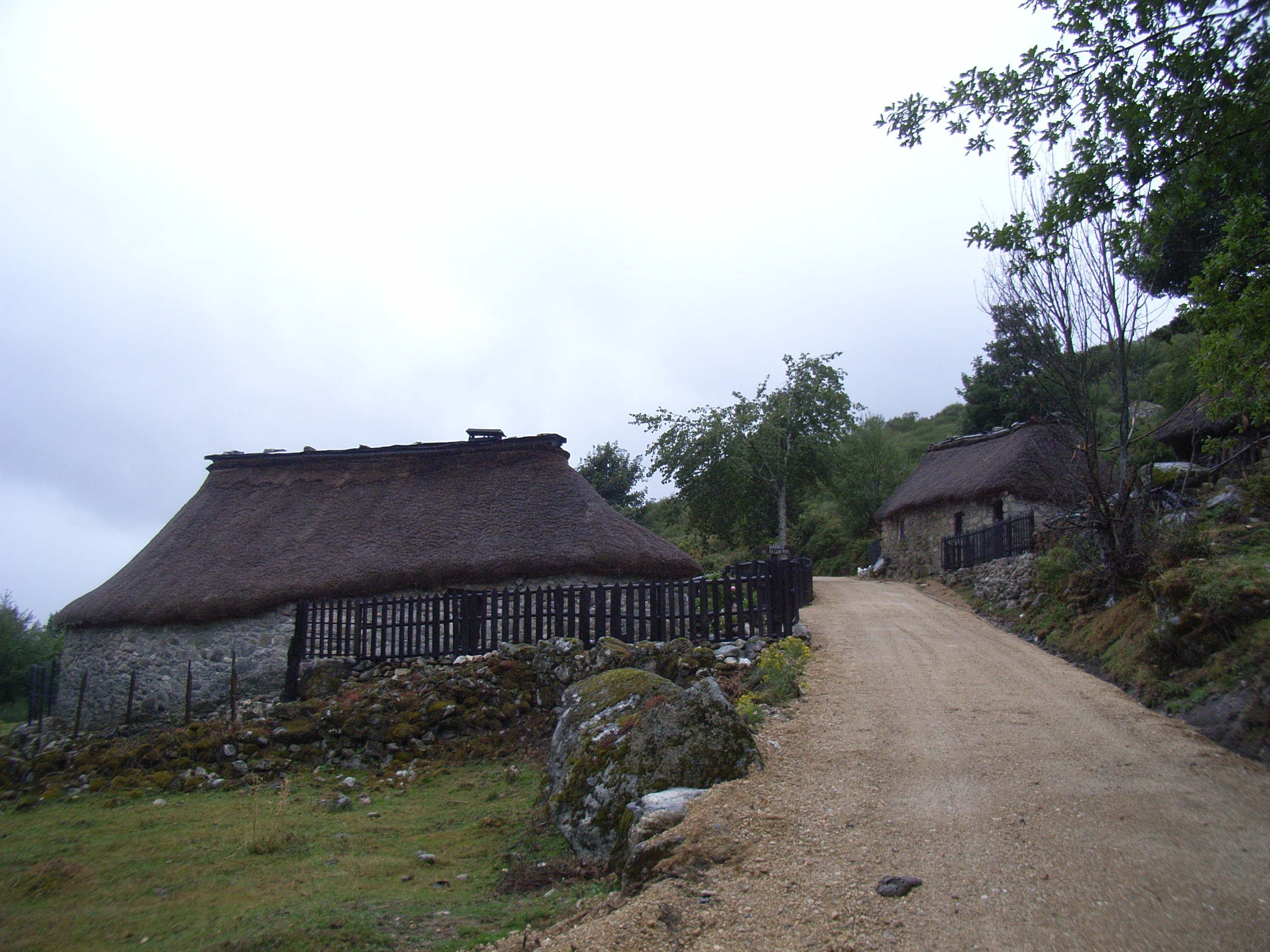
Campo del Agua was known for having one of the largest concentrations of pallozas, the traditional thatched roundhouses of the Ancares. In 1989, a fire destroyed much of the village, but some pallozas have been restored, while others have been rebuilt in a more modern style or converted into square houses with slate roofs.
Of the 22 pallozas originally constructed, there are two main types: circular and oval. Both feature stone masonry walls reminiscent of the hillforts (castros) found in the area. The walls have an opening for the door and, in some cases, small apertures serving as smoke vents. The most distinctive feature of these buildings is undoubtedly the teito, a conical roof made of rye straw. To construct them, the rye was first beaten to thresh it without breaking the stalks; then the straw bundles (colmos) were placed on the wooden tentemozos (beams) and, finally, they were fastened with bincallos (straw braids) to the wooden structure, which was sturdily supported by the load-bearing walls.
These houses sheltered both people and animals together. A simple wooden partition separated the stable area, which featured a slightly sloping floor for the drainage of animal waste. The hearth was in the centre of the room, and although the pallozas did not have a chimney, the smoke filtered through the thatch of the roof, leaving an impermeable layer of soot. The value of the pallozas is not only material, as their construction process also forms part of the intangible heritage of the Ancares.
The craft of teitar (thatching) encompasses all the work involved in the creation of the roof, from the preparation of the thatch to the laying of the straw with the teitar tool, and the creation of the bincallos (the straw braids that hold the thatch in place at certain points). Furthermore, within the local language, unique terms linked to the teiteros (thatchers) are preserved, such as tentemozos, cangos, ripias, cumio, colmo, bincallo or brincallo, and of course, the word 'teito' and all its derivatives. Unfortunately, this craft is in danger of extinction, and its continuation depends on passing the skills down to the next generation, which ensures the conservation of both tangible and intangible heritage, as the two are closely linked.
To see the different pallozas, one must explore El Regueiral and Las Valiñas, the other two neighbourhoods that complete the village. It is also highly recommended to visit the Church of San Bartolomé, whose feast day is celebrated on 24 August, and the source of the Bandeñas Stream.