


Puntos de Interés

Culture
Royal Cistercian Abbey of Santa María and San Andrés de Arroyo
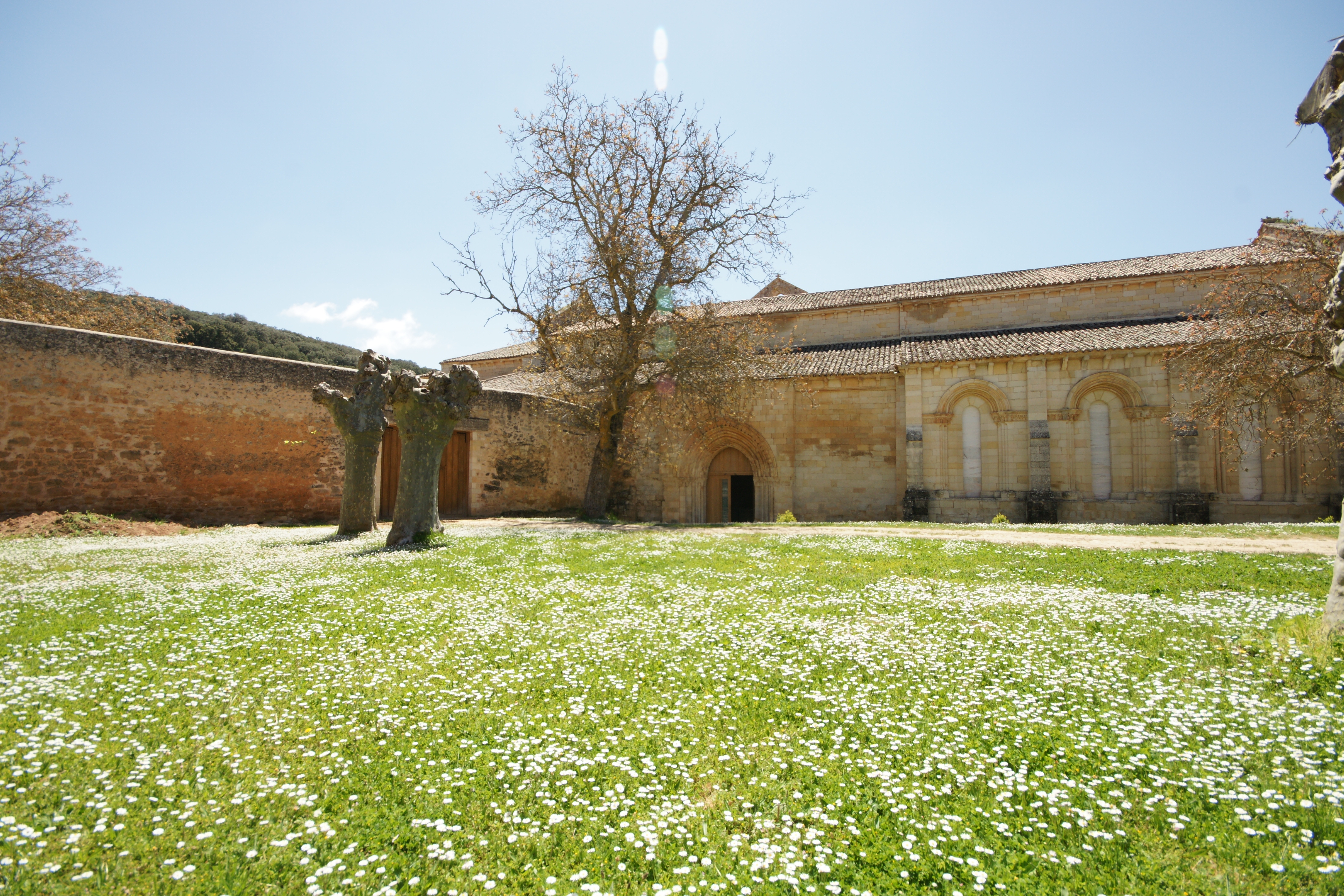
In the hamlet of San Andrés de Arroyo, which is part of the municipality of Santibáñez de Ecla, there is one of the most popular Romanesque monuments in Palencia: the Royal Cistercian Abbey of Santa María and San Andrés de Arroyo, commonly known as the monastery of St. Andrés de Arroyo.
This abbey is an exquisite example of rural Cistercian art and was declared a Site of Cultural Interest. It was founded in 1181 to house a community of Cistercian cloistered nuns. The first documentary references to this monastery are found in a privilege of Alfonso VIII, who continued to increase the monastery's heritage with numerous donations.
As was customary in medieval monasteries, the church and cloistered quarters are surrounded by a wall with a large gate. A very simple fifteenth-century justice roll is preserved at the entrance to the enclosure, a reminder that the Abbess of St. Andrew had civil and criminal jurisdiction over several towns in the surrounding area.
Undoubtedly, the cloister is the most spectacular part of the monastery, constituting one of the wonders of Hispanic medieval art. Among the cloistered rooms, the Chapter House is noteworthy for the remains of the former abbesses Doña Mencia and Doña Maria and the sculpture of St. Andrew.
The church has a single nave with transept and three apses with large windows. As was customary in women's monasteries, the main entrance is on one side and a side portico extends along the north wall, formed by a series of semicircular arches.
Today, the community of cloistered nuns who live in the monastery produce their own culinary handicrafts of tea pastries, puff pastries, and other baked goods that visitors can purchase. The monastery also offers a mixed lodging service with very limited capacity.