

Puntos de Interés

Municipality
Rambla del Lentisco Viaduct
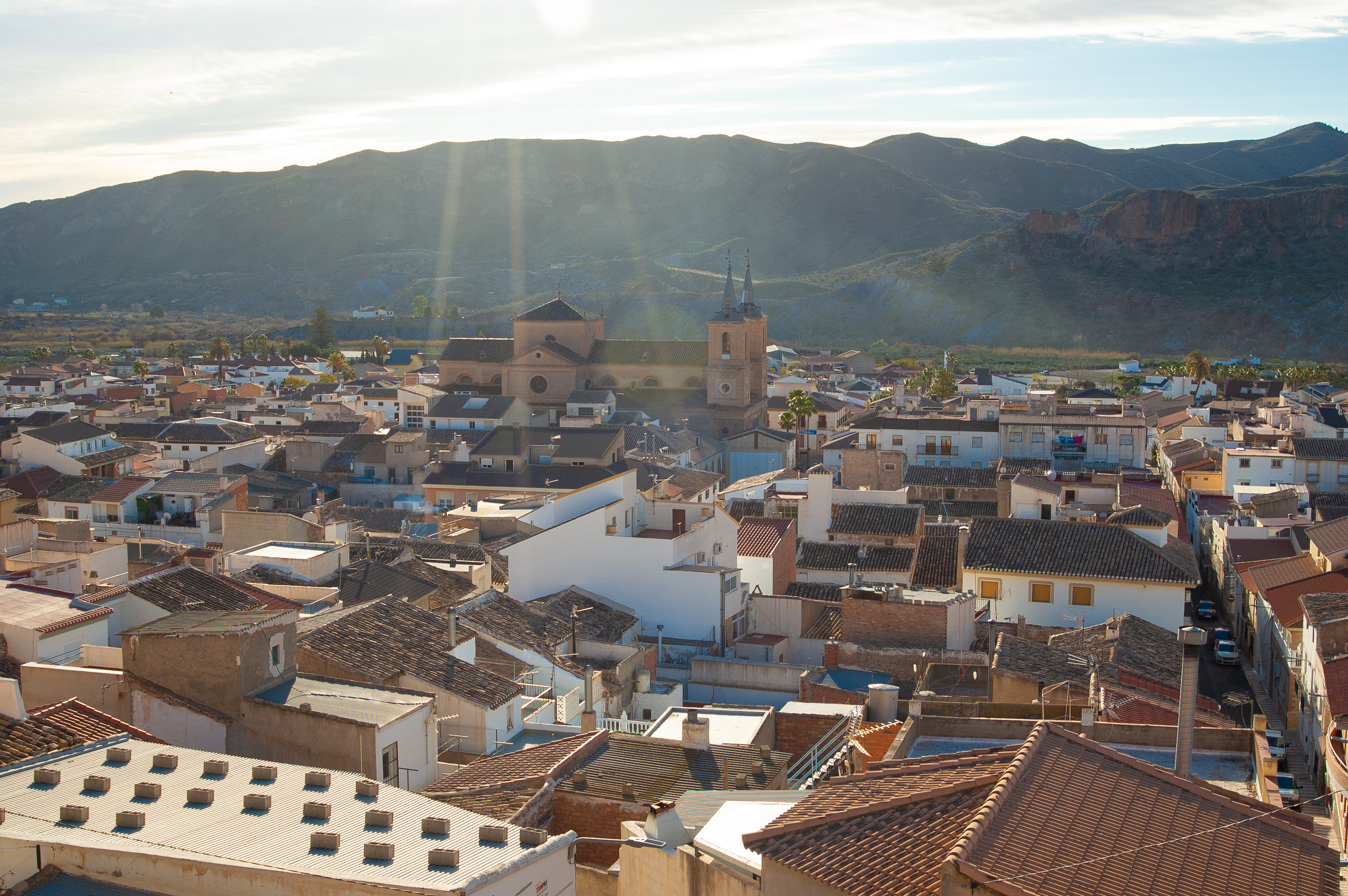
Located in the heart of the Almanzora Valley region in the northern half of the province of Almeria, Cantoria is a municipality whose origins date back to prehistoric times, as attested by archaeological remains from the Neolithic period found in the area.
Over the centuries, Phoenicians, Greeks and Arabs left their mark on these lands, giving rise to the primitive Arab Andalusian population as indicated by its name, which is believed to derive from the word "qantur", meaning "bridge" and the remains of the Lugar Viejo (Old Place).
After the Conquest of the Kingdom of Granada at the end of the 15th century, Cantoria came under the rule of the Catholic Monarchs, until 1515, when the Marquisate of Vélez acquired the town. During the War of the Alpujarras (1569-1571), Cantoria was a key location, and between 1570 and 1573 it underwent an urban reorganisation that has survived in its present-day street plan. However, undoubtedly, the greatest boom of the town took place during the first decades of the 20th century, thanks to the construction of the Guadix-Almendricos railway line, which boosted the economic development of the municipality.
Cantoria's architectural heritage is highlighted by the Parish Church of Nuestra Señora del Carmen, a neoclassical work from the 19th century. In addition, the town centre preserves treasures such as the Palace of the Marquis of Almanzora, the Chapel of San Cayetano and San Antón, the Turret, the House of the Marquis of La Romana and the Saavedra Theatre, as Cantoria has been a regional musical reference point for centuries.
In addition to its deep-rooted agricultural sector, the town has cultivated a centuries-old tradition in marble craftsmanship, from modest workshops to consolidate itself as the main company in the sector in the province. Although it does not boast any renowned protected areas, its extensive municipal area is home to a remarkable natural diversity, with plant species such as the Aleppo pine and the presence of emblematic animals such as the short-toed eagle and the black-headed turtle.
Notable festivities include Las Carretillas de San Antón in January, characterised by the use of cylinders filled with gunpowder that snake along the ground. This is followed by the vibrant Carnival, the solemn Easter Week and Las Meriendas on Easter Sunday, when a meal is shared in the countryside with friends and family. During the summer, the celebrations in honour of the Virgen del Carmen and San Cayetano take centre stage, while the November Fair completes the festive calendar with sporting, gastronomic and recreational events including stalls, orchestras, stands and attractions.
Cantorian gastronomy stands out for its migas (fried bread crumbs) accompanied by offal, beans, peppers or pomegranates. Other relevant dishes include gachas (grass pea flour porridge with fried pork slices), pucheros (stews), gurullos (pasta made from wheat flour, water and saffron), fideos (noodles), fritá de sangre (fried blood) and Cantorian gazpacho (cold tomato-based soup). In confectionery, almendrados (pastry filled with cabello de ángel and coated with ground almonds), roscos de naranja (fried orange doughnuts), suspiros de almendra (baked meringues with almonds), mantecados de miel (honey shortbread), among others, are part of the tradition.
SITES OF INTERES
Andalusian Regional Government Tourism Board
Almanzora Valley Tourism Board