

Puntos de Interés

Vegetation
Spanish juniper
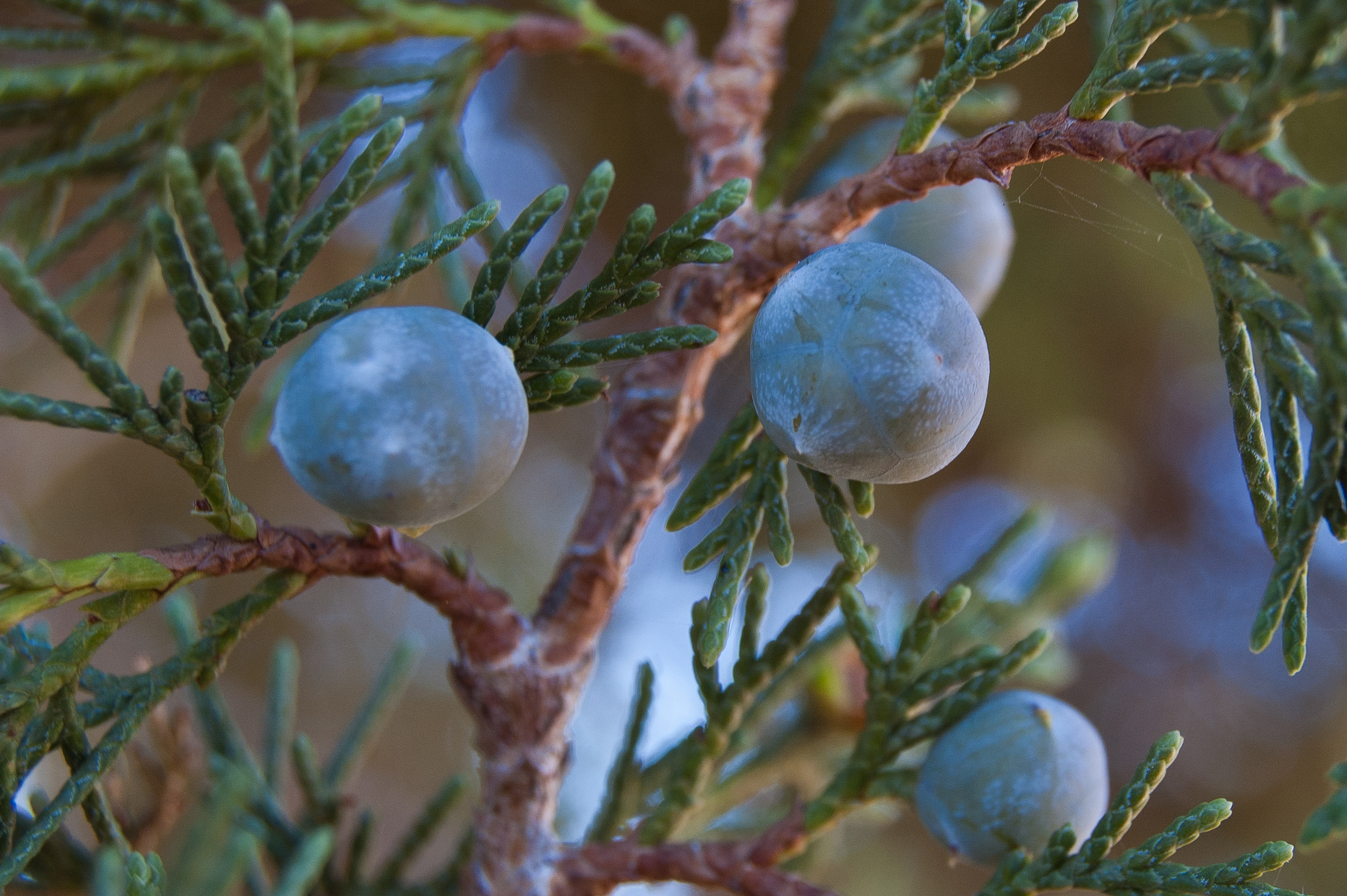
The Spanish Juniper tree is a species that can grow to a height of around 20 m, although it is usually around 10 m. Its leaves, which are scale-shaped and imbricate, have an intense green colour. Its fruit is a galbulus that is usually about 8 mm long and dark blue or purple when ripe and covered by a whitish layer.
The Spanish Juniper is mainly distributed in Mediterranean regions in Spain, France, Corsica and North Africa. However, in Spain the species is classified as protected or endangered flora in several autonomous communities: Andalusia, Aragón, Castilla-La Mancha, Catalonia, Madrid, Murcia and Valencia.
It is a species well adapted to continental climates, so it normally replaces specimens like holm oak in areas where temperatures are higher and droughts more intense. It has no major issues in terms of altitude of the terrain, as it can grow between 300 and 2,000 metres. Nor does it require a specific type of soil, although it tends to prefer limestone soils and adapts well to poor, stony soils.
In this part of Burgos province it is possible to visit a curious forest of junipers known as Sabinares de Arlanza, a space protected for its natural interest and biodiversity, where the vegetation is conditioned by the harsh climate of the region, with extreme temperatures where only hardy species such as the junipers are able to survive.
In relation to the exploitation of this species, the use of its wood stands out. It is a raw material that has a characteristic balsamic aroma thanks to the tree's essential oils, and is resistant to rotting. These features have made this wood much sought after for furniture and parquet flooring.