


Puntos de Interés

Vegetation
The holm oak
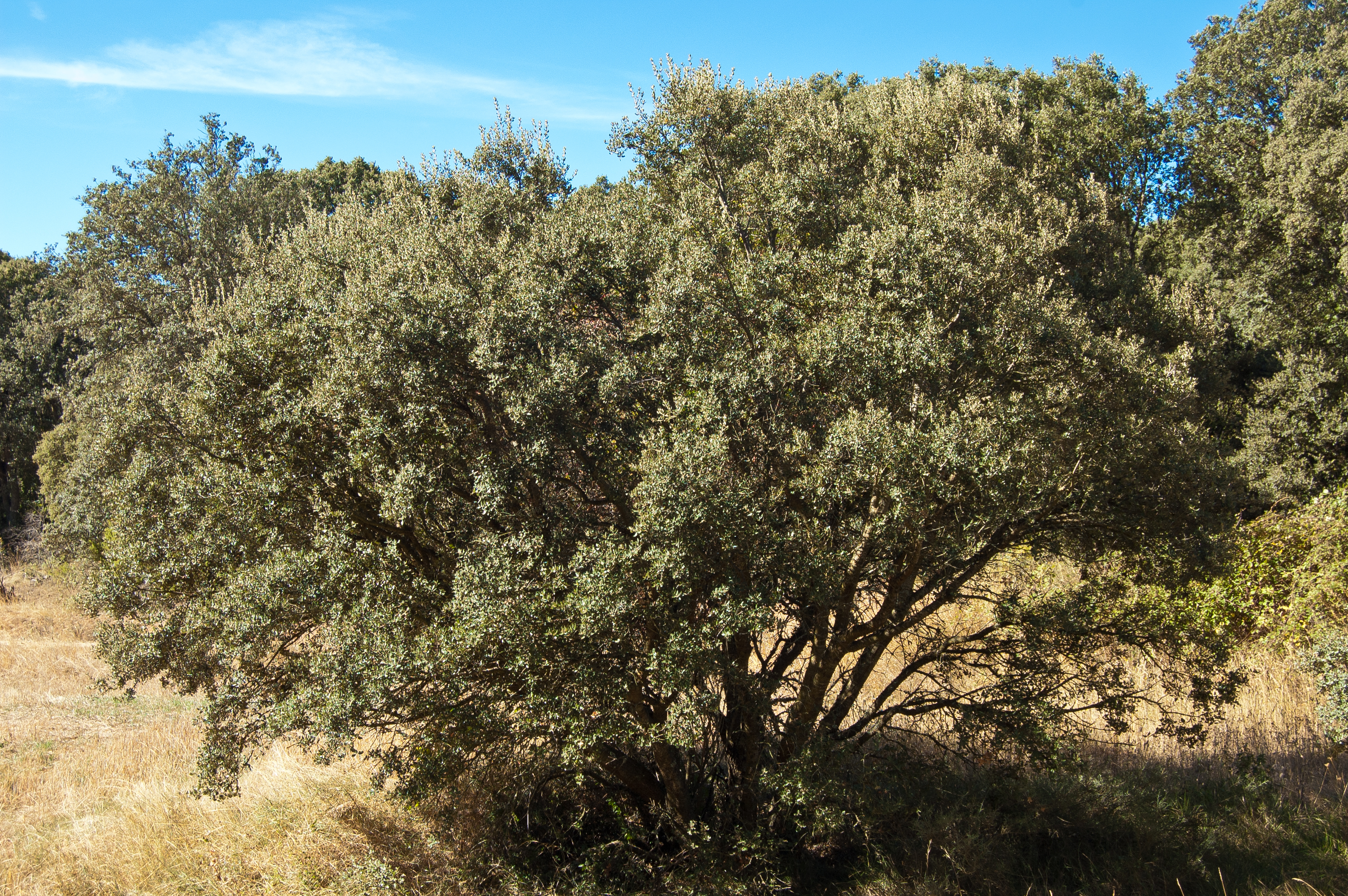
The holm oak is one of the most widespread species in southern Europe and, without doubt, the most common across the Iberian Peninsula. This tree, of the Fagaceae family, has developed impressive abilities to adapt to the changing meteorological conditions of Mediterranean countries such as ours, especially in inland areas, by extreme temperatures, as in the case of the province of Burgos.
One of the features that allows it to survive in climates like that here, where holm oaks dot wide expanses of the Burgos countryside, is its low stature. This allows it to develop a wide canopy that provides shade for its own trunk to lower the temperature during the hot summer months in this region. Holm oaks are also able to photosynthesise during the cooler hours of summer. But it is also prepared to survive the harsh winter temperatures of mountainous environments, as the holm oak ceases its activity from 0ºC.
With regard to the uses of the holm oak, it is a species with an endless number of uses, ranging from the production of wood, although without doubt the most recognised use is as feed for the star animal of Spanish gastronomy: the pig. In fact, the term "acorn-fed" in reference to this animal is an indication of quality. Moreover, although acorns are not widely consumed in the Spanish diet today, the fact is that for centuries - especially before the arrival of the potato from America - the fruit of the holm oak was a characteristic foodstuff due to its high nutritional value.