

Puntos de Interés

Municipality
Tuñón
Tuñón is a village in the parish of Santo Adriano.
The most important building in the village is the church of Santo Adriano de Tuñón, built in 891 by order of Alfonso III. It was later restored in 1108 and also in 1949. It was declared an Asset of Cultural Interets (BIC) and a Historic Monument in 1931.
The church was dedicated to Hadrian and his wife Natalia, and is divided into three naves, connected by semicircular arches. It has a large portico and a single side room. On the side opposite the room is the cemetery.
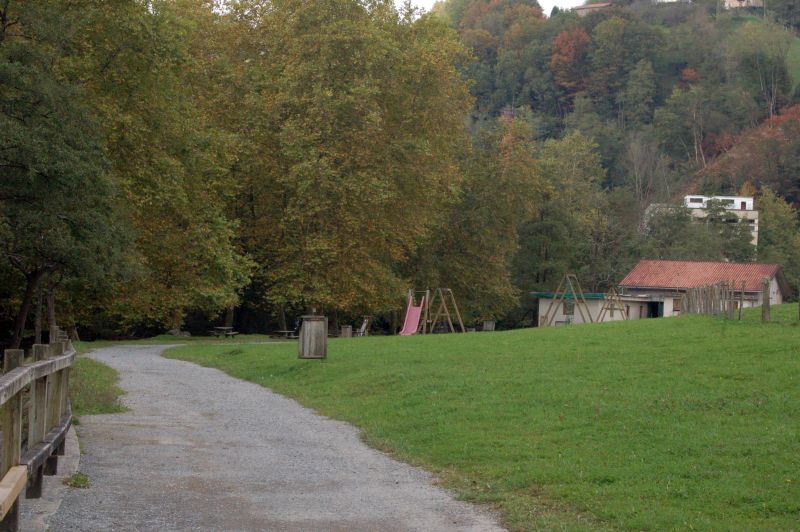
The Rozapín stream flows through the municipality of Tuñón, joining the Trubia River to the southwest of the village. This in turn continues its course to the west of the village, winding its way through the mountains. A few metres from Tuñón there is a recreational area on the banks of the river Trubia. The Esgarrada Bridge crosses the river and leads to the Senda del Oso Nature Trail, which passes through the area. A bronze sculpture of a bear can also be seen in the recreational area.
The municipality is home to the Cueva del Conde and the Santo Adriano caves, which are a group of caves formed by the Cueva del Ángel, Abrigo de Santo Adriano, the Cuevas de Los Torneiros and the Cueva de El Rebollal – all located in the Tuñón valley. In these caves, Palaeolithic cave paintings have been found, as well as the skeletal remains of different animals and hunting tools. Evidence has been found that there was a settlement in these caves and hunting was commonplace in the valley 40,000 years ago.
On 20th January, Tuñón celebrates the festivities of Los Mártires (the Marthyrs), dedicated to Saints Fabian and Sebastian.