

Puntos de Interés

Municipality
Tardobispo
Tardobispo, which also encompasses the uninhabited villages of Valcamín Alto and Valcamín de Abajo, is a locality belonging to the municipality of El Perdigón in Zamora, situated 10 km from the provincial capital in the Tierra del Vino region.
Its name comes from the Latin words otero, from altarium, meaning a small hill or isolated hill, and obispo, from the Greek espicopus.
The precise provenance of the town is uncertain, although several archaeological discoveries have been made which suggest that it was inhabited during the Roman period. These include the remains of an ancient Roman road and a Roman bridge, which are in the uninhabited village of Valcamín.
During the Middle Ages, Tardobispo formed part of the Kingdom of León. In the 19th century, the town's period of splendour, it became part of the Judicial District of Zamora. At that time, the population also included the uninhabited villages of Valcamín Alto and Valcamín de Abajo, as well as the neighbouring localities of Las Enillas and Tuda. This remained the case until 1976, when the municipality became part of El Perdigón.
The Parish Church of El Salvador, of Romanesque origin, stands out, although most of the preserved building dates from between the 15th and 17th centuries.
The structure is constructed from ashlar masonry and comprises a single nave, which is relatively small and rectangular in plan. It is supported by buttresses. The chancel is a later addition, with a larger section than the main nave. The belfry comprises two sections and three bays, with a bell.
The entrance to the church is situated on the side. The structure is formed by a semicircular arch with voussoirs and is covered by a roof, which is supported by the two buttresses that surround the entrance.
The interior of the edifice houses a Gothic Calvary, which is believed to have been constructed between the end of the 13th and the beginning of the 14th century.
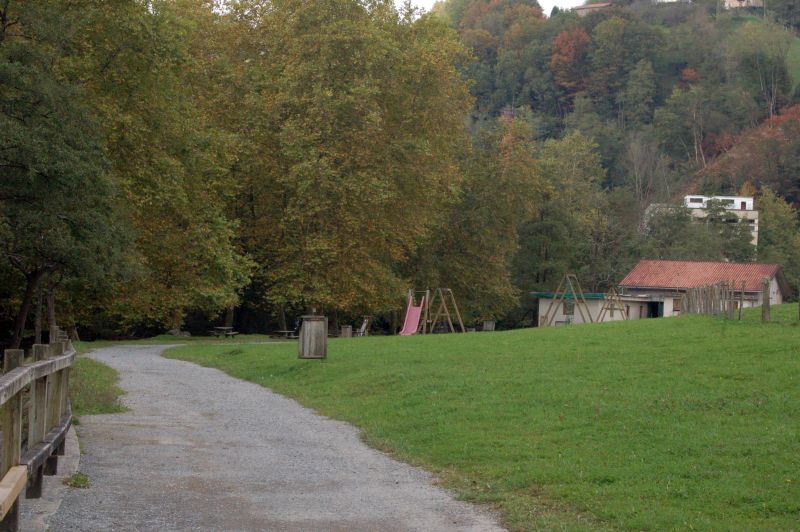
In the natural surroundings of Tardobispo, the fertile holm oak groves and pastures are particularly noteworthy. One such example is the Dehesa de Valcamín Alto, which had a cattle ranch for fighting bulls, run by the Tomé family. Holm oak charcoal was extracted in the mountains, and, in the vicinity of the village, there was the Fuente de los Casales, which supplied the nearby hamlets.
Regarding the celebrations, the first weekend of October is the Fiesta del Ofertorio, during which a procession of the Virgen del Rosario (Virgin of the Rosary) takes place. Furthermore, on 6 August, the feast of El Salvador is celebrated.