


Net of Nature
Trails

Stage 4: Vado-Jaén Station – Alcaudete Station







Description
Iron and olive trees.
This fourth stage of the Olive Oil Greenway Nature Trail links the railway stations of Vado-Jaén and Alcaudete, following the route of the historic Linares-Puente Genil railway. It is 11 km between iron and olive trees, where you will cross trenches dug out in hard rock, metal viaducts from the 19th century and endless landscapes of the sea of olive trees of Jaén.
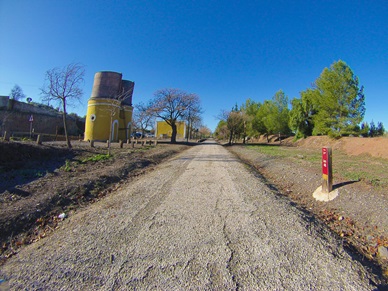
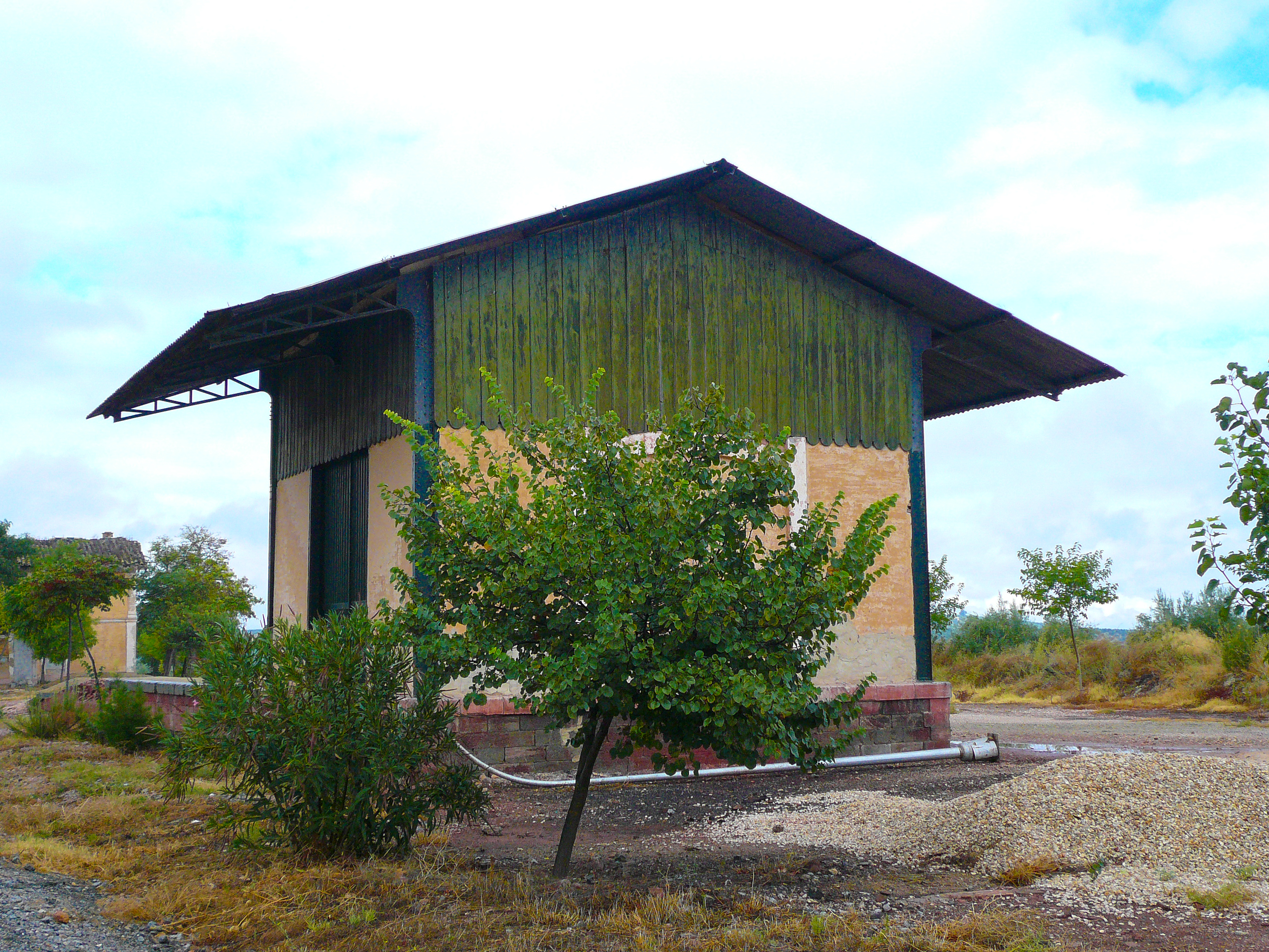
The stage begins next to the old Vado-Jaén station, 7 km from the nearest towns. Its unusual location, isolated among the olive groves, was no coincidence: its main function was to regulate train and freight traffic, a mission it fulfilled until the line was closed in 1984. There is a rest area for hikers just next to the station. At this point there is a recreation area with picnic tables under leafy trees, which offer shade and coolness before starting the walk. There is also equipment for working out outdoors, such as calisthenics bars and bio-health equipment.
After 150 m from the start, the route crosses the local road JA-3307; please walk with extreme caution at this point. After the crossroads, the road winds its way through centuries-old olive trees and the characteristic aroma of earth and oil permeates the air.
As the route progresses, the olive groves disappear and give way to artificial trenches that soften the unevenness of the route. On its walls sprout the native vegetation that once covered these lands:
yellow broom (Retama sphaerocarpa), wild olive trees (Olea europaea var. sylvestris), mastic trees (Pistacia lentiscus) and holm oaks (Quercus ilex), among other tree and shrub species. In spring, its flowering colours the path in shades of yellow and green, offering shade and a beautiful landscape full of life.
At kilometre point 38, the route enters a quiet area, where it is not unusual to see birds of prey or small mammals among the vegetation. Further on, the road crosses a country road and continues southwest, flanked by the outlines of the Sierras de la Grana and Caracoles.
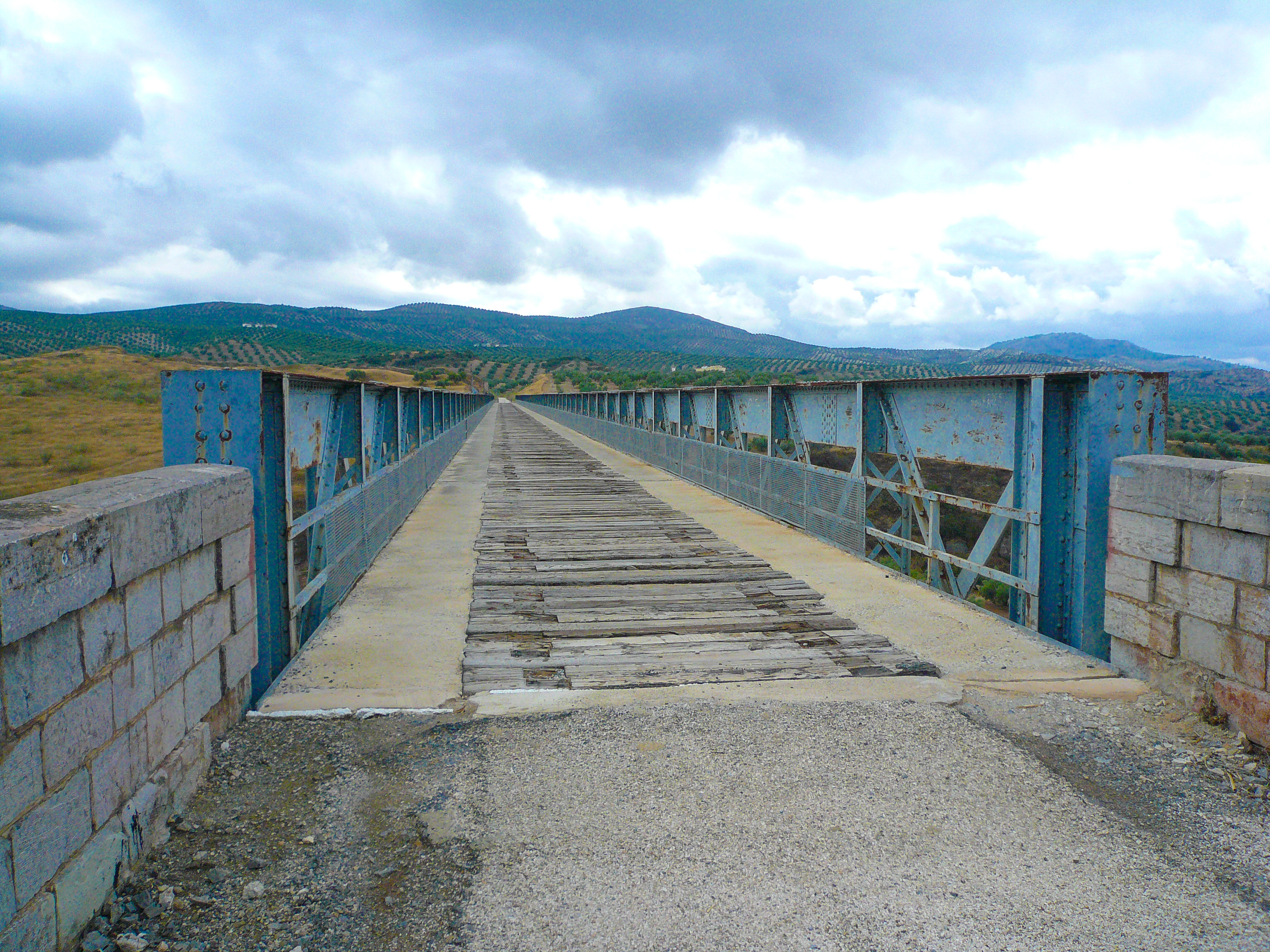
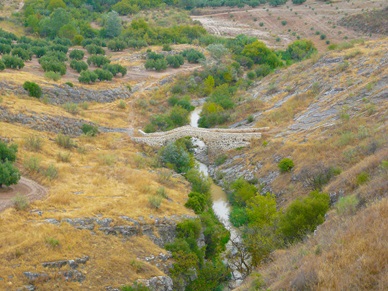
In the next section, the route crosses two farm tracks and passes over the Rosas stream, before reaching kilometre point 42, where an old railway infrastructure can be found. The viaduct over the river Víboras is one of the most spectacular views of the route. This 224 m long and nearly 80 m high metal structure - the work of the French engineers Daydé and Pillé, disciples of Eiffel - rises imposingly over the valley. Next to it is the El Pontón bridge, a medieval stone bridge that bears witness to the area's historical past.
After passing through the old quarry of La Muela, the path continues between gentle slopes, where you will find explanatory panels and a small rest area with picnic tables. The viaducts of Arroyo Chaparral and Esponela are reminders of the route's railway past, before the line was closed in 1985.
The path descends gently through ravine areas protected by wooden fences until it reaches kilometre marker 47, where it passes under a stone bridge and enters new trenches. On leaving them, the path climbs up to a final elevated area before reaching the final spot of the stage.
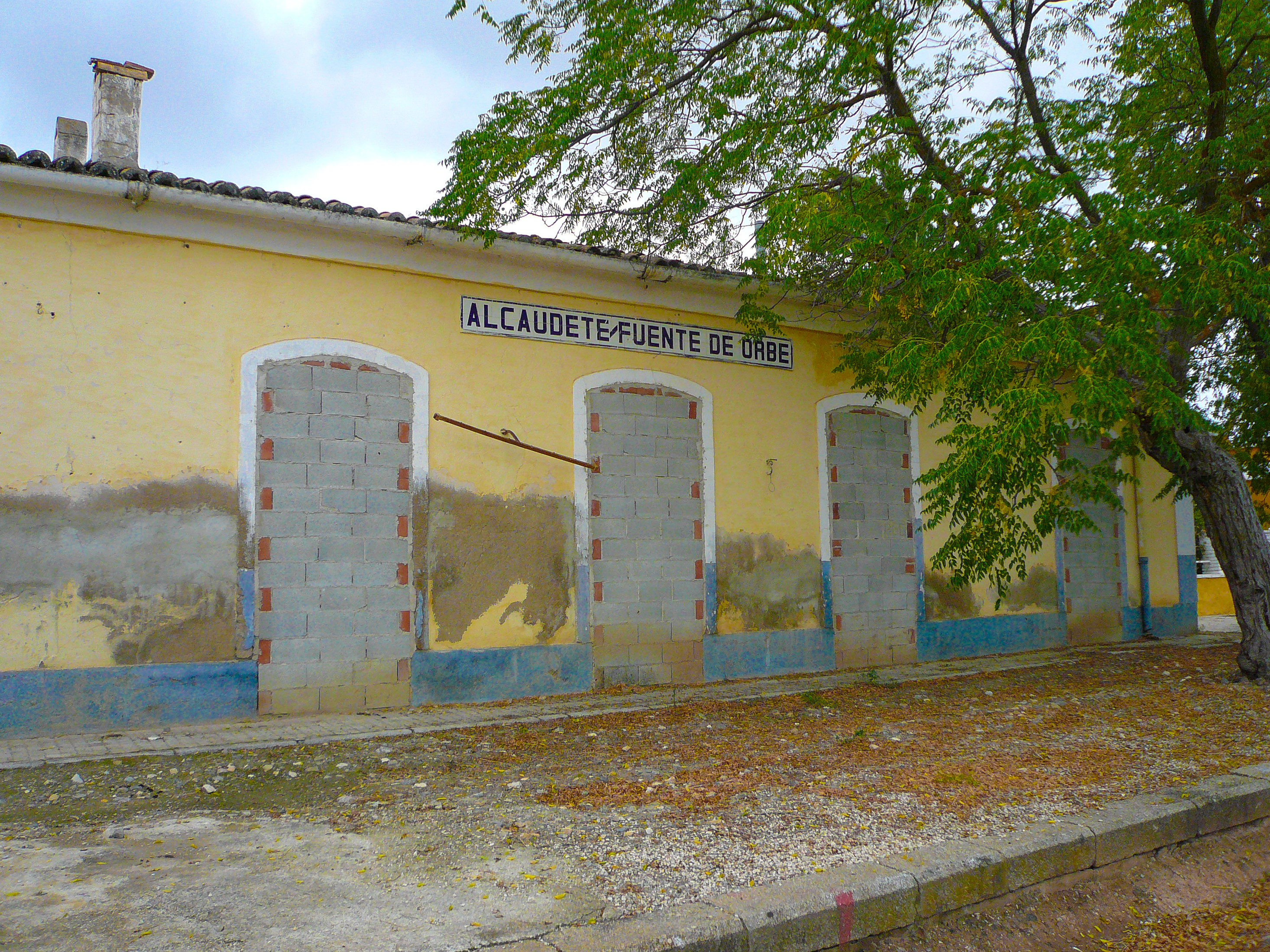
Next to a drinking water fountain and an old railway infrastructure, the route crosses a road, where we ask you once again to act with extreme action and, a few metres later, it reaches the old Alcaudete station, at kilometre point 48, the final point of the stage. Here, a rest area with picnic tables, sports equipment and a car park invites you to rest for a while and enjoy the surroundings.
Management entities
Sites of interest
Puntos de interés
Infrastructure
- Estación de Alcaudete
- Viaducto del Víboras
- Puente medieval "El Pontón"
- Viaducto del Arroyo Chaparral
- Viaducto del Arrroyo de La Esponela
- Estación de Vado - Jaén
Hostel
Profile
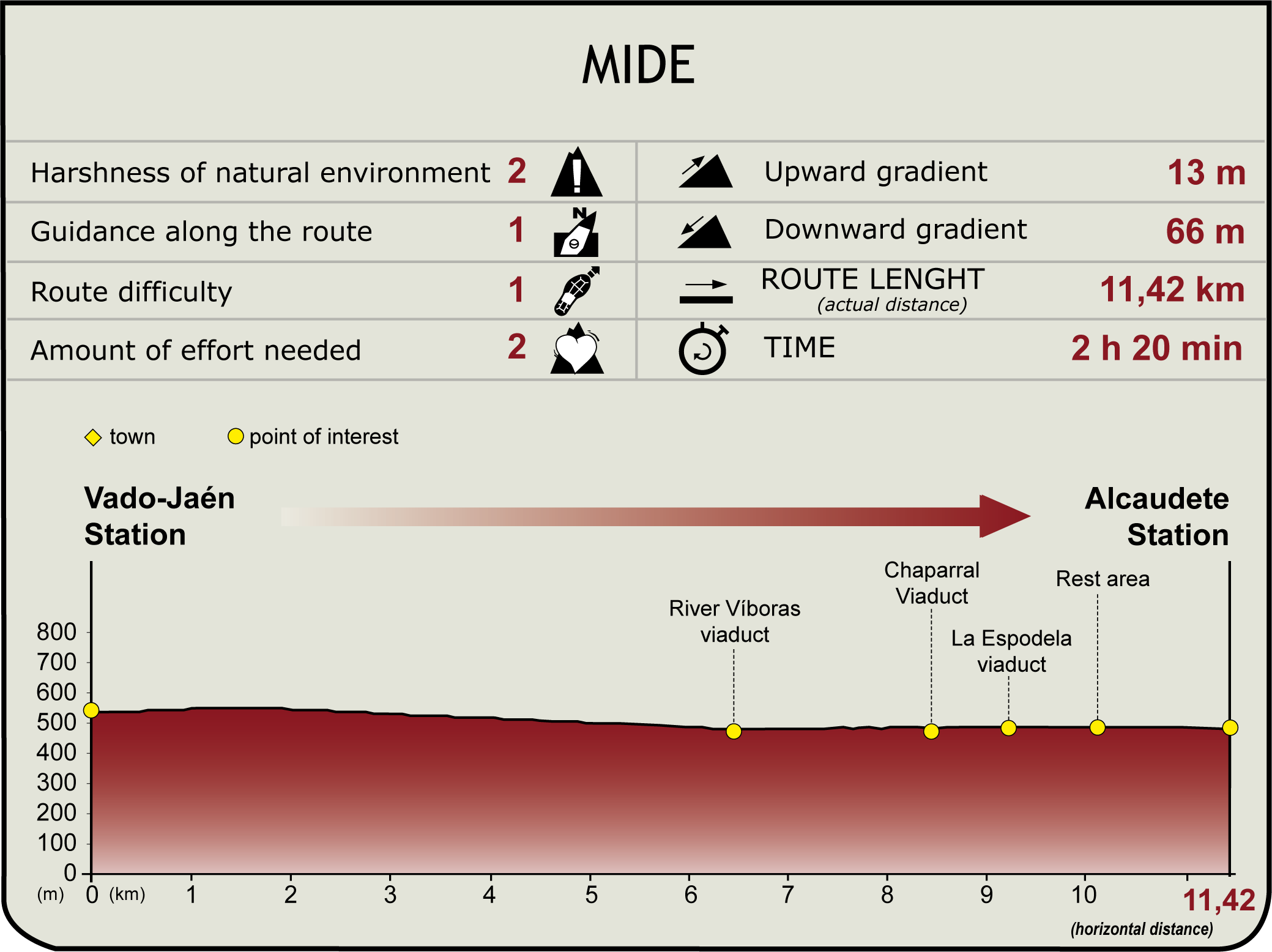
 Harshness of natural environment
- 1. The environment is not risk-free
- 2. There are more than one risk factors
- 3. There are various risk factors
- 4. There are quite a lot of risk factors
- 5. There are many risk factors
 Guidance along the route
- 1. Well defined trails and crossings
- 2. There is a clearly marked trail and signage
- 3. Requires the identification of geographic features and cardinal points
- 4. Requires off-path navigation
- 5. The trail is interrupted by obstacles that have to be gone around
 Route difficulty
- 1. Walking on a flat surface
- 2. Trails with different types of path
- 3. Walking on stepped paths or irregular terrain
- 4. The use of hands or jumping over the terrain is necessary
- 5. The use of hands is required to progress
 Amount of effort needed
- 1. Up to 1 hour of continuous walking
- 2. Between 1 and 3 hours of continuous walking
- 3. Between 3 and 6 hours of continuous walking
- 4. Between 6 and 10 hours of actual walking
- 5. More than 10 hours of continuous walking
(Calculated according to the MIDE criteria for an average excursionist with a light load)
Highlights
Further information
Vado - Jaén Railway Station
Also built by the Andalusian Railway Company, the Vado-Jaén station dates from 1891 and was the tenth stop on the Oil Train. Its design is very similar to that of other stations on the route, such as Torredelcampo, with a passenger building, loading bay and sidings for freight.
Its interesting location, isolated among the olive groves and far from any town, was no coincidence: its main function was to regulate train and freight traffic, a mission it fulfilled until the line was closed in 1984.
It is currently located in an area fitted out as a recreational and rest area and in the surrounding area, in addition to various ornamental trees, you can see the Loma de las Pilas farmstead, the course of the Salado stream and the landscape of large extensions of olive trees that are characteristic of the area.
Viaduct over the Víboras River
The bridge over the Víboras River is a 4.5 m wide metal viaduct, located at kilometre 42 of the Olive Oil Greenway Nature Trail. It used to be part of the now-dismantled Linares-Campo Real railway line, and it is located in the municipality of Alcaudete.
The viaduct has a length of 224.15 m and an estimated depth of 80 m. This construction consists of three metal sections with spans of 73.6 m, 76.9 m and 73.6 m respectively. The bridge rests on two truncated pyramid piers built in limestone masonry.
The work, financed by the Andalusian Railway Company, was constantly delayed and did not enter service until January 1893. The project involved Alessandre and Delapierre, and the workshop of French engineers Daydé and Pillé. When the railway line was discontinued, this viaduct was taken out of service in early 1985.
From this building you can enjoy some beautiful views, including El Pontón, a medieval bridge built in stone, 9 m long and approximately 7.5 m high. This infrastructure has a semicircular vault with sandstone ashlars and is made up of two pillars built with limestone ashlars quarried on the site.
Alcaudete
Sitting in the shadow of its 13th century Calatrava castle, Alcaudete preserves a charming old quarter, with cobbled streets, whitewashed façades and churches such as Santa María la Mayor, a jewel of Renaissance architecture in Andalusia, the Franciscan-founded convent of Santa Clara, and several ancestral homes that bear witness to the agricultural and commercial prosperity of past centuries.
Every summer, the town dresses up to celebrate its Royal Fair, which takes place in June, and in July, the municipality celebrates the Calatrava Festival, a recreation of the town's medieval splendour, with markets, parades, music and performances in the castle. Other outstanding celebrations are Easter Week, declared to be of provincial tourist interest, the traditional pilgrimage of the Virgen de la Fuensanta, the town’s patron saint, and each neighbourhood has its own lively street festival.
The town’s dining offer is another of its great attractions, and it stands out for its dishes made with extra virgin olive oil, the basis of the local cuisine. Among its most typical recipes are pipirrana (mashed tomato, garlic, green pepper and olive oil salad, sometimes served with tuna) , ajoblanco (a gazpacho-like soup made of bread, almonds, garlic and olive oil and served with grapes or diced melon), migas (sautéed breadcrumbs flavoured with garlic), gazpacho, andrajos (shredded flatbread dough stewed in a tomato and pepper sauce, sometimes with rabbit or salt cod) and lamb roast. The local typical sweets are the roscos de vino (doughnut-shaped wine biscuits) and pestiños (lemon and anise scented fritters dipped in honey or sprinkled with sugar). All of this can be paired with a bottle wine from the nearby Montilla-Moriles designation of origin or a traditional liqueur from the area.
Multimedia




Downloads

GPS Downloads


Documents

Cyclability
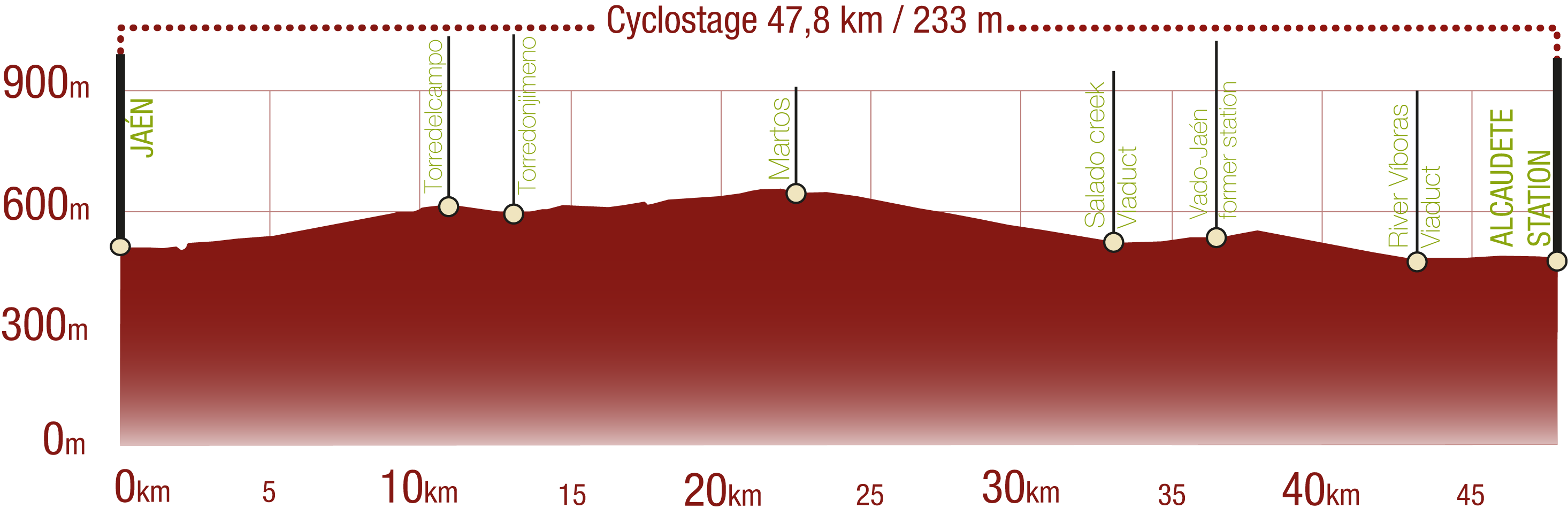
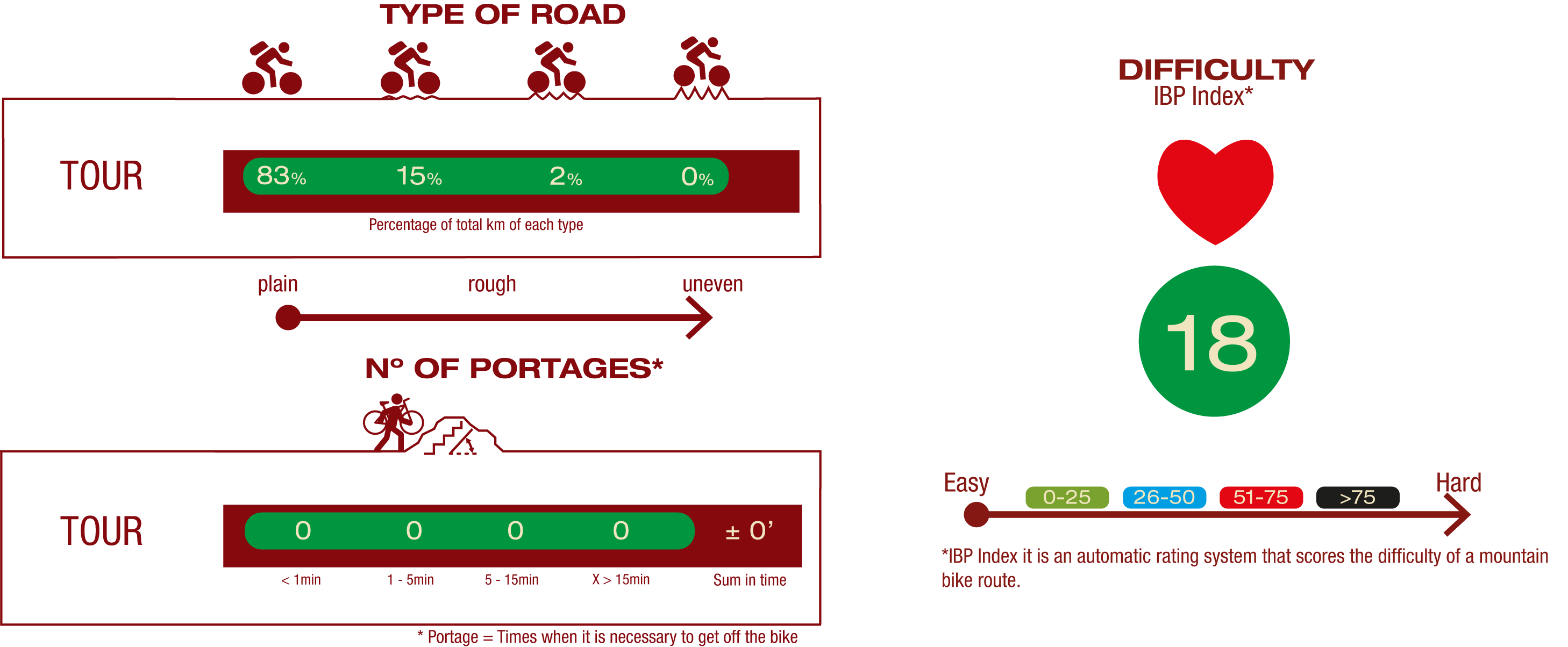
This cycling stage corresponds to the section between Jaén and Alcaudete Station
PROFILE
TYPE OF ROADS, PORTAGES & DIFFICULTY
TEST

GENERAL RECOMMENDATIONS
- Find out about the technical aspects of the route and the weather on the day.
- Take care of the environment. Take care not to disturb animals or damage vegetation. Respect private areas.
- You must give priority to pedestrians and comply with general traffic rules.
- The environment in which you will be riding is open, free to move around and an area where many activities are carried out (sporting, forestry, livestock and agricultural activities).
- Always have an understanding, prudent, responsible and respectful attitude.