


Net of Nature
Trails

Branch 3.1: Vallehermoso - Vallehermoso Beach






Description
Vallehermoso Beach, a place of great significance both in the past and today
A short branch trail linking the town of Vallehermoso with the beach of the same name. A coastal settlement inhabited since ancient times by the ancient Gomeros, and of great importance in the recent past as the island’s commercial hub, evidenced by the remains of the fishing pier located here.
From the centre of Vallehermoso, visitors can continue along the 3.7-kilometre path leading to Vallehermoso beach. After walking for about 400 metres through the town centre along the road towards the beach, the route turns right and crosses the Barranco del Valle ravine via a small footbridge. The next two kilometres follow the right-hand edge of the ravine, at the foot of Roque Cano, revealing a landscape characterised by terraced slopes and ravine floors dotted with Canary Island date palm trees, banana trees and numerous vegetable gardens.
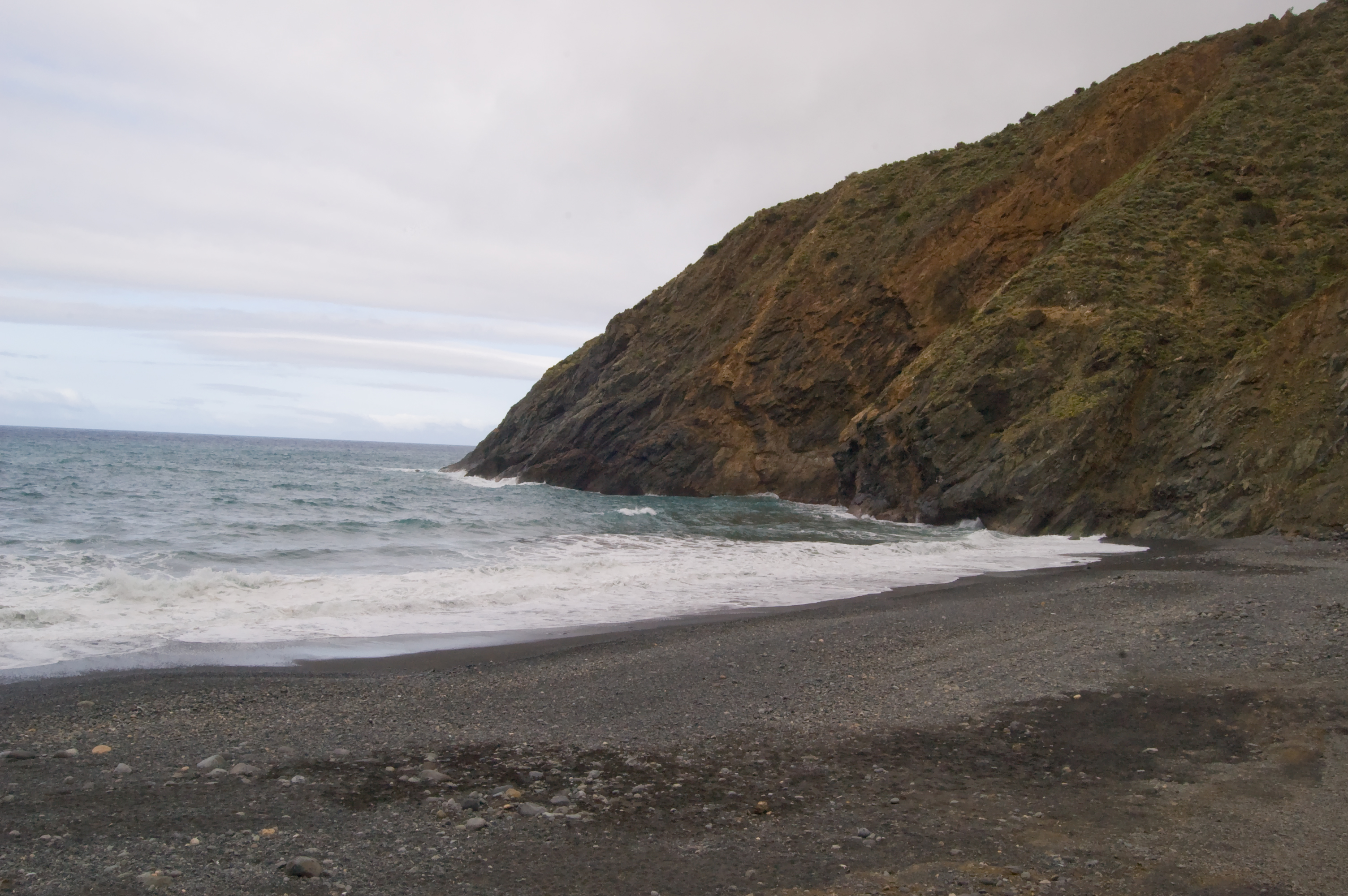
At the village of Valle Abajo, the path turns left to cross the ravine once more and follows the road for the final 1.1 kilometres until it reaches Vallehermoso Marine Park (Vallehermoso beach), which marks the end of the Cumbres de La Gomera Nature Trail. At this point, you can rejoin the Costas de la Gomera Nature Trail, which runs along the entire coastline of the island.
From here, you can see the remains of the old wharf, nestled beneath a cliff. Unfortunately, it can be extremely dangerous due to rockfalls, so any attempt to get closer is ill-advised. Like in other towns in the north of the island, it was built to facilitate agricultural exports.
Managing Entities
Sites of interest
Puntos de interés
Culture
Hydrography
Information
Municipality
Orography
Vegetation
Profile
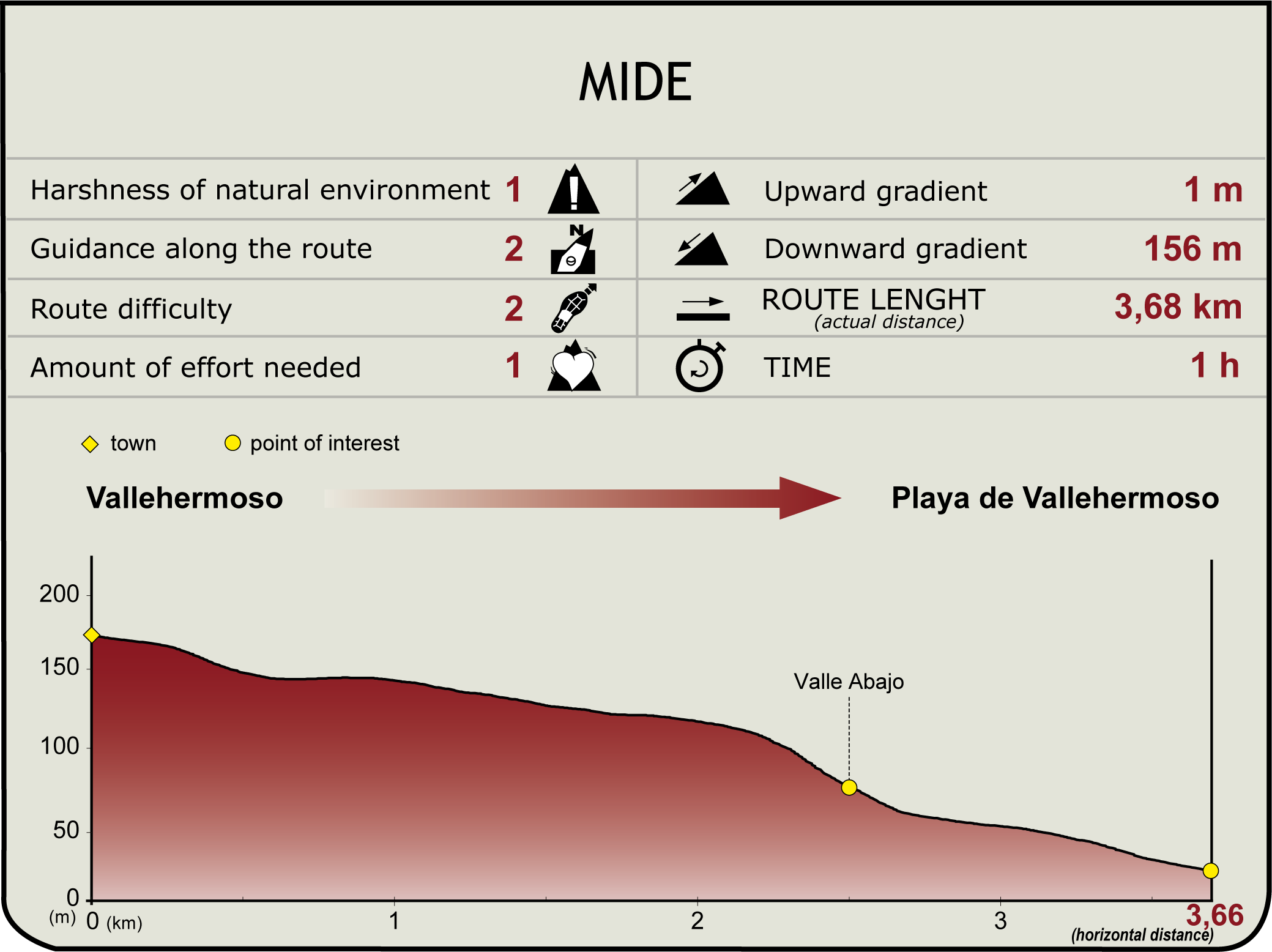
 Harshness of natural environment
- 1. The environment is not risk-free
- 2. There are more than one risk factors
- 3. There are various risk factors
- 4. There are quite a lot of risk factors
- 5. There are many risk factors
 Guidance along the route
- 1. Well defined trails and crossings
- 2. There is a clearly marked trail and signage
- 3. Requires the identification of geographic features and cardinal points
- 4. Requires off-path navigation
- 5. The trail is interrupted by obstacles that have to be gone around
 Route difficulty
- 1. Walking on a flat surface
- 2. Trails with different types of path
- 3. Walking on stepped paths or irregular terrain
- 4. The use of hands or jumping over the terrain is necessary
- 5. The use of hands is required to progress
 Amount of effort needed
- 1. Up to 1 hour of continuous walking
- 2. Between 1 and 3 hours of continuous walking
- 3. Between 3 and 6 hours of continuous walking
- 4. Between 6 and 10 hours of actual walking
- 5. More than 10 hours of continuous walking
(Calculated according to the MIDE criteria for an average excursionist with a light load)
Highlights
Further information
Vallehermoso
Vallehermoso, in the north-western part of the island, is the capital of the island’s second-largest municipality, with a population of almost three thousand as of 2013.
Particularly noteworthy are the stately buildings in the historic centre, which developed around the Church of San Juan Bautista. There are numerous two-storey mansions with hipped roofs and Arabic-style tiles, bearing witness to the region’s prominence and traditional agricultural wealth. It is no surprise that, as early as the 17th century, Vallehermoso was the island’s most prosperous town, thanks to the wine export trade. Towards the end of the 19th century, the introduction of new horticultural crops such as tomatoes, and especially bananas, which were grown in the valley floors and on the most favourable slopes, boosted the local economy, although the market eventually declined.
The municipality also has a rich tradition of craftsmanship, home to the finest traditional ceramic artisans and makers of musical instruments such as the chácaras, a local type of castanets, and the La Gomera drum.
Multimedia


Downloads

GPS Downloads