
Puntos de Interés

Vegetation
Carob tree (Ceratonia siliqua)
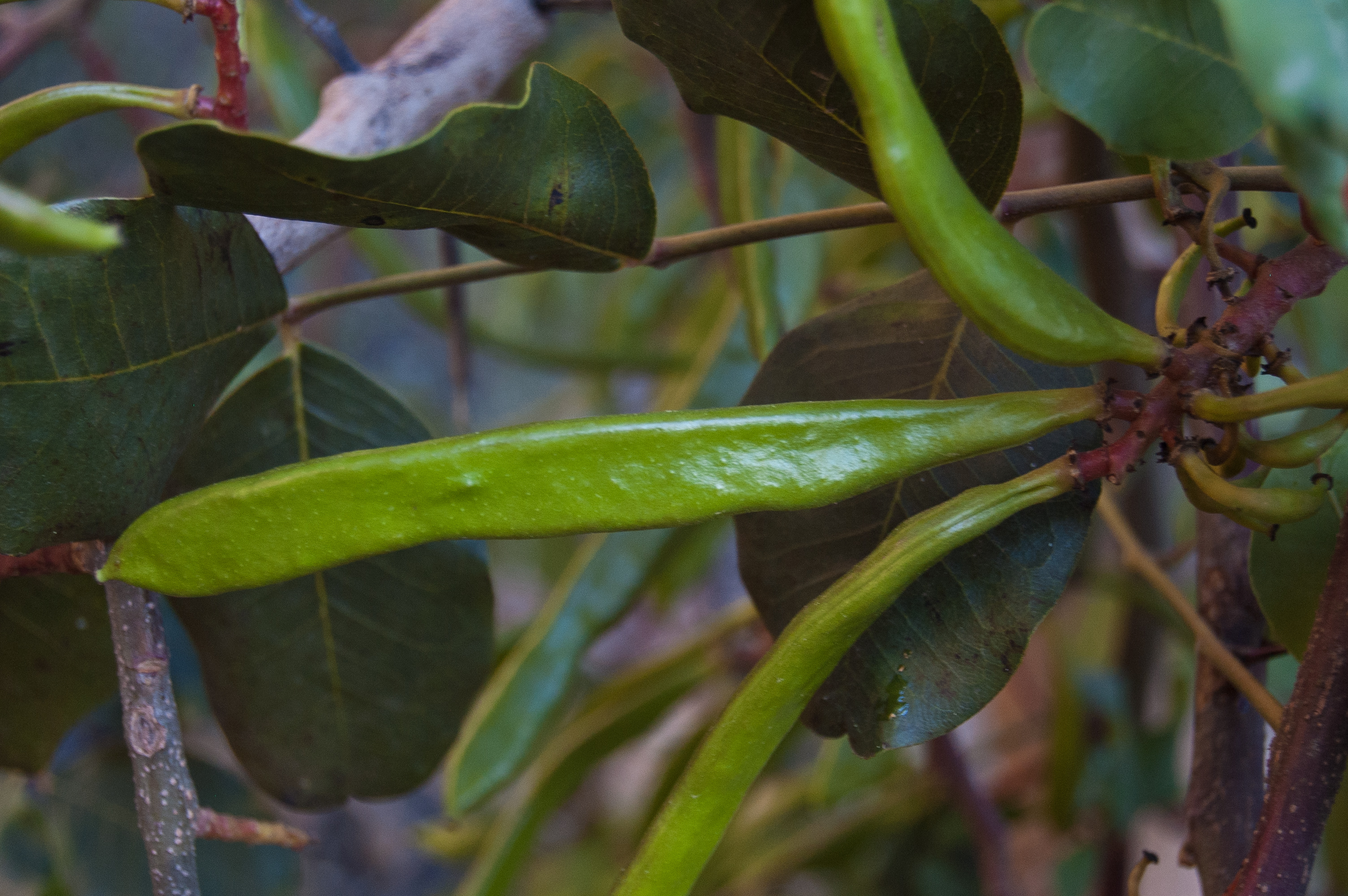
It is a tree species that can reach up to 10 metres in height, characterised by its brown, cracked bark and a more or less ovoid crown. The tree's leaves consist of one to five pairs of leaflets and feature triangular stipules. The youngest plants may have a light covering of fine hairs, which fades as they mature, leaving only a few hairs on the rachis and some veins on the underside. The inflorescences can be male, female or hermaphroditic. Its fruit has a linear-elliptical shape, is glabrous with flat, shiny, blackish-brown surfaces, and contains one to seven ovoid, shiny, chestnut-coloured seeds inside.
This tree, native to the Mediterranean, thrives in warm to moderate temperatures for cultivation and is intolerant of cold. It prefers coastal areas, typically not exceeding 500 metres in altitude. The tree also thrives in arid, calcareous soils that are not overly compacted, with good drainage, as it is sensitive to fungi and root rot. Irrigation is recommended during the first few years, but once established, the tree becomes highly drought-resistant. It grows slowly.
The carob tree has various uses, with its primary role being as a source of food. A flour is made from the seeds, which, while traditionally consumed by humans, is now primarily used in the production of animal feed. A less common use of the carob tree is medicinal, as its active components, particularly the high concentration of tannins in the bark, are used to treat diarrhoea. The fruit (or carob) is used as a laxative, to treat gastroenteritis, as a kidney stimulant, and to help combat obesity by facilitating weight loss.