

Puntos de Interés

Infrastructure
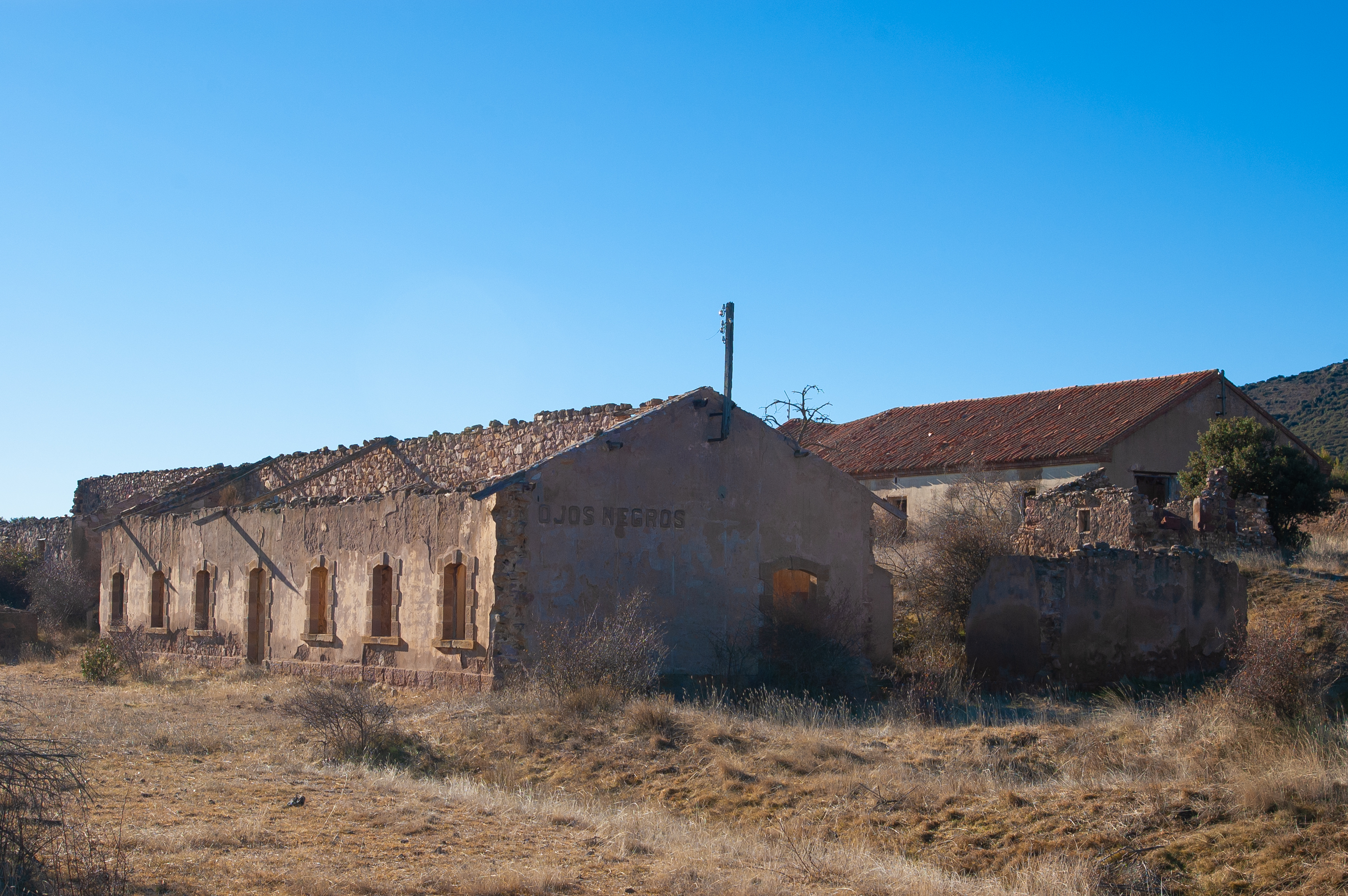
Old Ojos Negros station and depot
The Compañía Minera de Sierra Menera built its own railway line to carry the iron extracted from the Ojos Negros mines to the Port of Sagunto, whence it was exported.
Initially, negotiations were held with Central de Aragón, the owner of the Calatayud-Valencia railway line, to build a branch line linking the mines with this railway line, but the negotiations failed and the Compañía then decided to build its own railway.
It was a narrow-gauge railway line that ran parallel to the Teruel-Sagunto route and was strictly for mining and private transport, and thus it avoided towns. 204 km long and costing 38 million pesetas, it was among the longest lines of its kind in Spain.
This railway line went into operation in the summer of 1907, breaking its transport record in 1913, when it carried a total of 948,999 tonnes of ore.
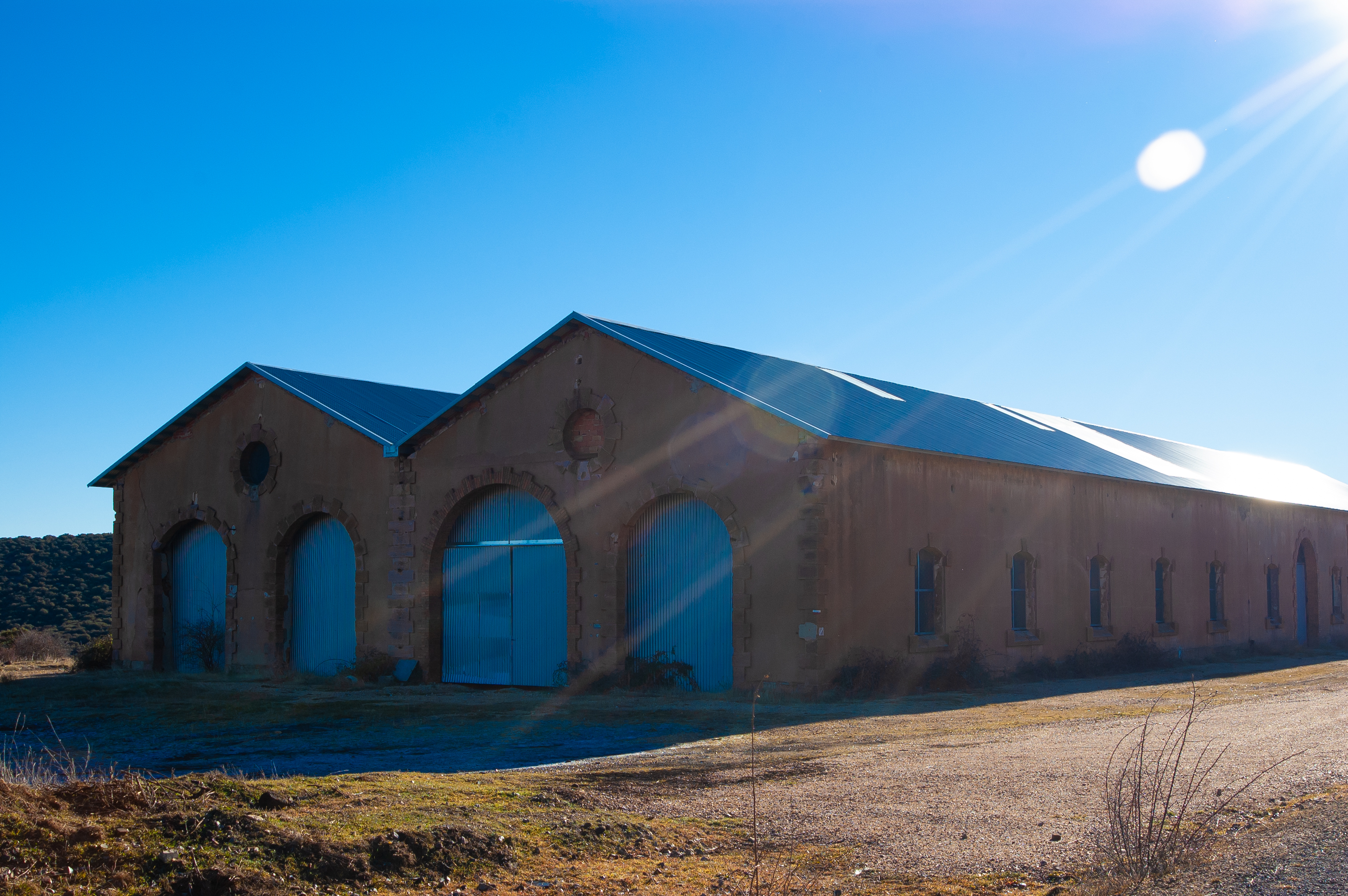
The initial station was in Ojos Negros, specifically in the area known as Barrio de la Estación, where workshops and various sheds were also built, which were used to store and maintain the company’s fleet of 27 steam locomotives and 600 wagons, each of which could carry 20 tonnes of ore. From 1962 they would also house the Henschel diesel-hydraulic locomotive.
The whole complex is currently in ruins and abandoned. However, it is still possible to make out some significant elements, such as the sign advertising the Ojos Negros station on the main building. It was a sturdy, plain, single-storey building with a gabled roof, the openings of which are lightly decorated with voussoirs. The sheds, on the other hand, were somewhat taller constructions, also with a gable roof, and longer.
Within the same complex, albeit somewhat further away, there is a series of dwellings built to house the railwaymen responsible for carrying the ore to Sagunto, as well as some of the company’s workers.
The Civil War not only led to the mines closing, but also inflicted significant damage on the mining railway infrastructure. Several kilometres of track were lifted to build trenches and bridges and viaducts were destroyed, hence work began in 1941 to rebuild the railway and return it to service.
Although it operated for a few more years, it declined with the arrival of the 1970s. In 1972, the Company reached an agreement with RENFE that the latter would take responsibility for carrying iron to Sagunto. Two years later, the Altos Hornos del Mediterráneo was closed because of the major world crisis affecting the metal industry. This would mark the beginning of the end of what was once one of the most important mines in Spain, and it would cease its extraction work in April 1987.