

Puntos de Interés

Municipality
Daroca
The origins of the village of Daroca, the capital of the district of Campo de Daroca, can be traced to the Celtiberian period, when there was a settlement in this area called Darek. The Romans also participated in the development of these territories by founding the city of Agiria, which is famous for its imposing castle, which defended the Via Laminitana, which linked Zaragoza with Valencia.
In the Muslim period, this village changed its name to Calat-Darawca, and continued to enjoy some importance until Alfonso I of Aragon conquered it in 1120. In the 12th century it became the capital of the Comunidad de Daroca, thanks to the privileges granted by Ramón Berenguer IV, and retained great social and military importance during the Middle Ages.
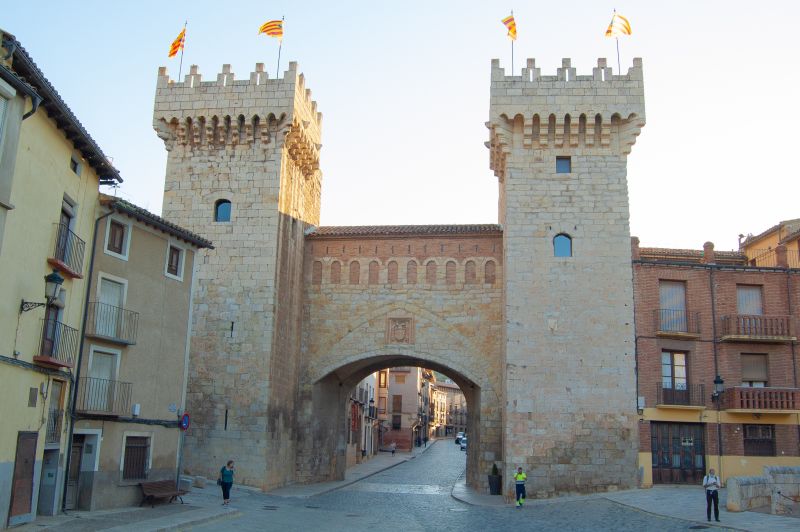
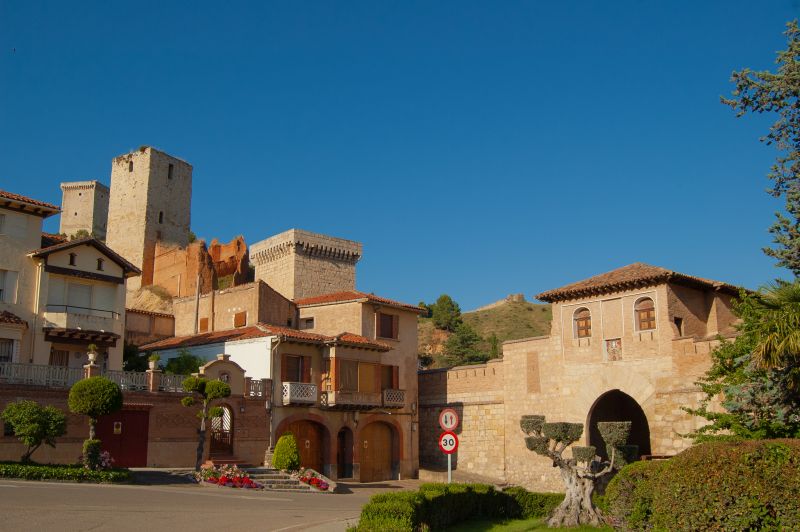
The narrow-cobbled streets of Daroca take us back to these periods, where we can find reminders of its glorious past. An example of this is found in the two entrance gates, both built in the 16th building, which are responsible for welcoming visitors arriving from different parts of the peninsula. The Puerta Baja was the first thing travellers from Levante and Castile saw, and they still retain their robust towers and solid ashlars, and the Puerta Alta bears the city’s shield. The Valencia gateway with its ashlar tower and the Puerta del Arrabal or San Valero wicket gate are also preserving, offering beautiful views of the hamlet and its most important church: the collegiate church of Santa María, whose interior preserves the baldachin of the main altar, which is dedicated to the Assumption, as well as the magnificent 14th-century organ.
However, one of the greatest gems of this municipality are its more than 4 kilometres of walls. Its walls run as far as the castle, from where you can enjoy a panorama of the whole village and where some ruins of the Muslim citadel are still preserved. Daroca has always been a defensive city, which has meant that it features several structures that made it impregnable, as well as beautiful stately homes and a great number of churches, specifically ten parish church, of which seven remain standing today. These include the Parish Basilica of Santa María de los Sagrados Corporales, which has been declared a National Monument, the Church of San Juan and Santo Domingo, whose tower is considered the first construction of Mudejar art in all of Aragon, and the Romanesque Church of San Miguel, which has an impressive apse.
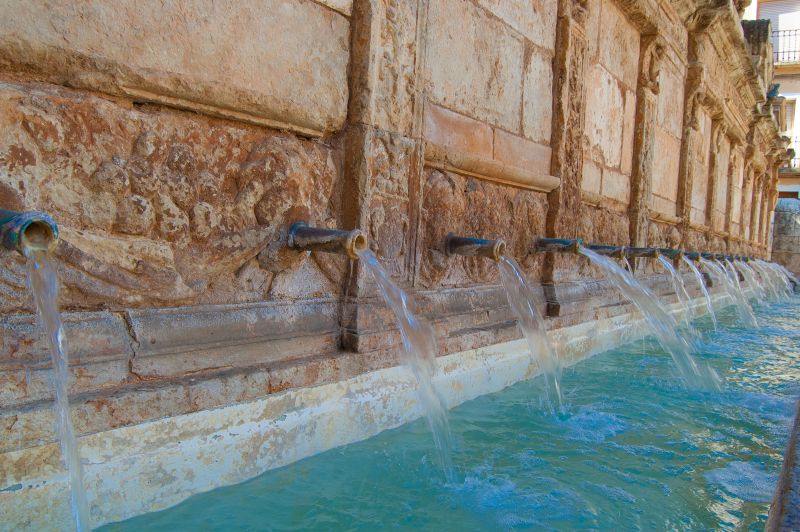
Another heritage gem in Daroca the portentous Fountain of the 20 Spouts, which was built in the 17th century to show off the wealth the city enjoyed and which is one of the few examples of a monumental fountain still preserved in Aragon.
Finally, mention ought to be made of some stately buildings such as the Casa de los Luna, a 14th century mansion with abundant Mudejar decoration of panelled ceilings and windows, and the 15th century Casa Diablo, which is richly adorned with ornate windows and gratings.
All this heritage surely explains why Daroca was declared a Historic-Artistic Site in 1931.
Besides these iconic places, visitors can use their stay in the village to visit one of its three museums: the Museo de los Corporales, in the collegiate church of Santa María, the Museo de la Pastelería, where they can discover the exquisite pastries of Daroca, and the Museo Comarcal, which is housed in the 16th century Santo Domingo Hospital.
This municipality’s economy is based on the service sector - as the capital of the district, it is the main service centre for the surrounding villages - culture and heritage.
Daroca also hosts a number of music-related events, such as International Ancient Music Festivals and Courses, and for several years it has hosted the leading instrumentalists and scholars of Renaissance and Baroque music, making it a major national and international musical capital.
This municipality’s main festivities are Corpus Christi, in late May, during which a procession leads from the collegiate church of Santa María to the Tower, near the Puerta Alta.
On 7 March, the feast day of Santo Tomás is celebrated to commemorate the date on which the Eucharistic miracle of The Corporals occurred in Daroca, in 1239, and the saint is borne in a procession.
In late July, a Medieval Fair is held, in which many of the residents participate to recover the splendour of old Daroca. The medieval market and the street entertainment are among the weekends that attract the most visitors.