

Puntos de Interés

Municipality
Murero
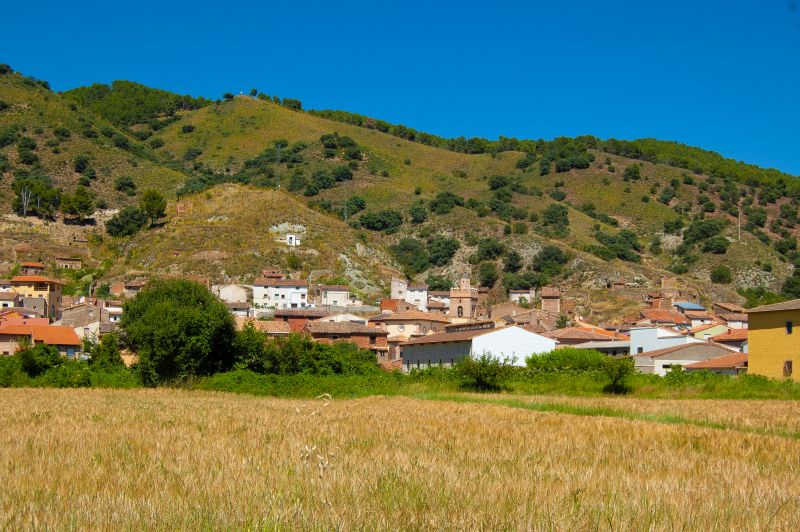
The municipality of Murero belongs to the district of Campo de Daroca. Located about 90 kilometres from the capital, Zaragoza, it is 707 metres above sea level.
Murero lies on the right bank of the River Jiloca, it has an area of 18.2 square kilometres and a population of under 200 inhabitants, known as “mureranos” or “murereños”, although they are more popularly known as “ratoneros”.
If this small village is known for anything, it is for its great number of palaeontological sites. These sites have brought it international fame and have made it a focal point for research. The best known of them, the Valdemiedes ravine site, is visited by hundreds of scientists and palaeontologists who study its strata and trilobite fossils, of which approximately eighty different species have been recorded to date.
On reaching the village, visitors will find a large number of small irrigation ditches, since the orography of the land makes it impossible for water to reach much of the cultivated land. The architectural elements related to the liquid element include, in the heart of the village, an ashlar fountain.
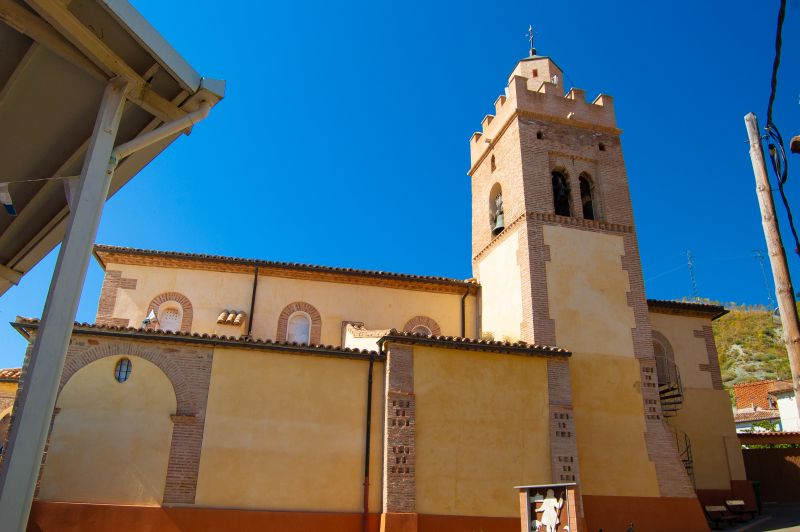
As for its heritage, it is worth highlighting various buildings including the parish church of Santa María La Mayor and the San Mamés hermitage. The latter features 18th century frescoes and 16th century panel paintings.
It is worth noting that there are several wayside crosses in the area, small mounds built with flat stones of different sizes used to mark the boundaries of a plot of land or to indicate a path. In this case there are six of these structures: the San Cristóbal wayside cross, on the track leading to the Nuestra Señora de los Mártires hermitage; the San Gregorio wayside cross, on the old Altea road; the San Mamés wayside cross, on the right hand side of the old Altea road; the Virgen del Carmen wayside cross, on the Manchones road; the Virgen del Rosario wayside cross, on the Altea road and the Las Almas wayside cross, beside the road that connected the upper neighbourhood with a quarry and the rambla (ravine).
It is noteworthy that the Camino del Cid extends around the river; it is a cultural tourist itinerary which crosses Spain from northwest to southeast following in the literary and historical footsteps of Rodrigo Díaz de Vivar, the Cid Campeador, the renowned 11th century medieval knight.
Wine lovers will also be able to enjoy the wines of the old Murero vineyards, whose qualities derive mainly from the age of the Garnacha vines and their sloped slate soils.
One of the festivals held in this village is the San Gregorio pilgrimage, which takes place on 9 May. The inhabitants proceed from the village in procession to the San Gregorio wayside cross, before holding a mass, after which the brothers and their companions eat together as a brotherhood.
On 17 August, the villagers honour the patron saint of Murero, San Mamés, with a large procession that leaves from the village square and follows a country lane, while the pilgrims sing the San Mamés bolero together. After the procession, the traditional mass is held in the saint’s farmhouse. These week-long events attract a great number of visitors from the district.
In both events, as tradition dictates, the villagers ring the bells.
Finally, the “fiesta del mondongo,” is held on 6 and 7 December, and honours the feast of the slaughter of the pig. Once upon a time, several pigs would be slaughtered over these days and the tasks required for the mondongo would be performed. Today, women, the main participants in this festivity, receive the prepared meats and other ingredients to prepare different foods. Afterwards, all the products made, mainly black pudding, sausages, chorizos, figatells and balls, are eaten by all the attendees.
Mycological Days are also held annually during in October or November.