

Puntos de Interés

Culture
Visigothic Church of Santa María de Mijangos
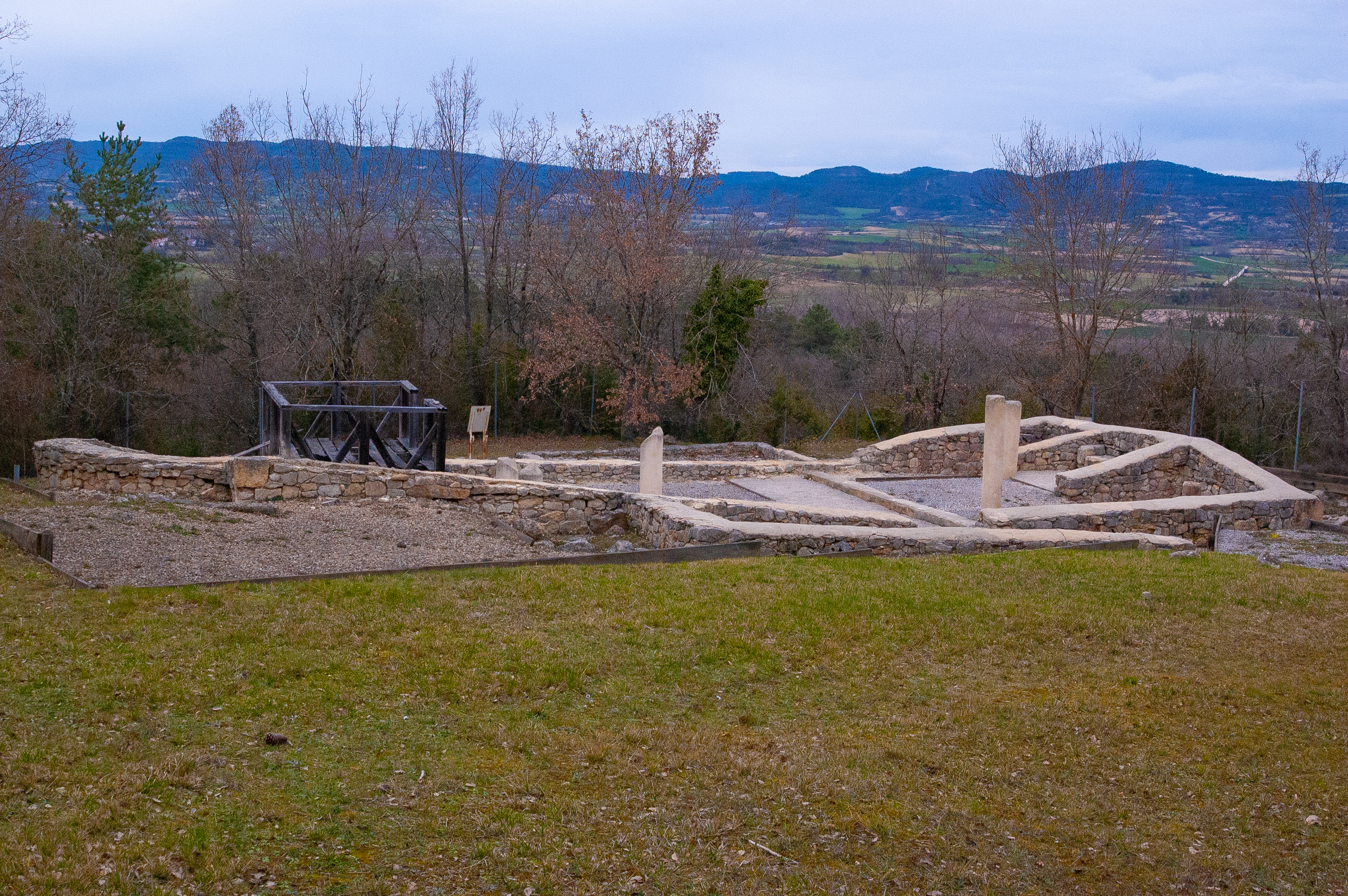
The site of Santa María de Mijangos is located on the outskirts of the town of Mijangos. It consists of three easily distinguishable areas: the church, the necropolis and a mysterious underground structure. All these elements were built between the 7th and 10th centuries.
The origins of the Visigoth church of Santa María de Mijangos date back to the 7th century, which suggests that it dates from the Late Roman period. Before the excavations began, a foundation stone dated 601 had already been found, which can be seen in the museum of Medina de Pomar.
The church has a basilica-style ground plan with three distinct naves, each with a different type of tiling. In addition, its head, which is somewhat higher than the rest of the rooms, is structured in three different parts. There used to be a doorway with a portico to access the church.
There is also a counter-abdess which experts believe may have been added later in the early Middle Ages in order to increase the size of the church. In this space there is a kind of mausoleum in which two slab tombs have been discovered. These tombs were built with large flat stones placed vertically and date from the 9th century, making them the most modern of the entire site.
Next to the church, excavations uncovered a strange structure dug into the rock and covered by a barrel vault made of tufa stone. The walls of this chamber had some kind of plaster on them. To access this area, it was first necessary to go through the church using wooden stairs. Although it has not been possible to determine the purpose of this structure, which seems to indicate that it could have been a cistern or a crypt, it has been discovered that the fill contained a mixture of human bones and fauna.
Finally, the site is completed by a cemetery with different types of tombs, corresponding to different cultural periods.
These burial sites are simple rectangular-shaped tombs dug into the rock, with slightly curved edges. They have a trapezoidal body and a straight tub interior. Some of them have some degree of decoration on the outside with linear incisions. The oldest ones date back to the 5th century.
It is worth noting that none of the tombs were found to contain grave goods, weapons or other offerings, as was customary in Christian burials.