

Puntos de Interés

Culture
Church of St.Cornelio and St.Cebrián
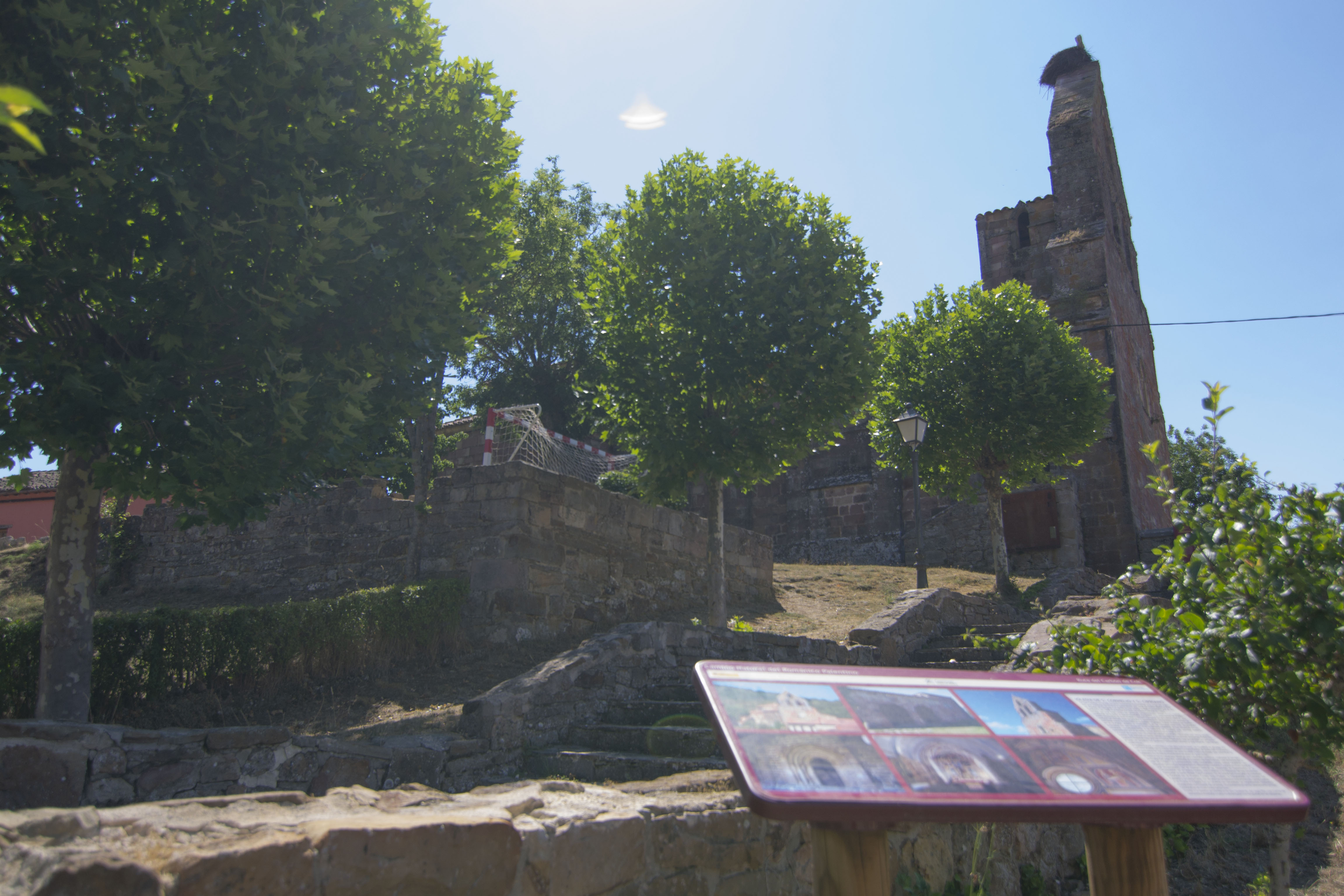
On a promontory overlooking the town of San Cebrián de Mudá, is the last of the churches along the Coke Coal Route. In 1993, the church of St. Cornelio and St. Cebrián was declared a Site of Cultural Interest.
It is a Romanesque catholic church built in the 13th century with a reformed chancel and an adjoining sacristy, both from the 15th century, and a portico added in the 18th century.
According to documents found belonging to King Sancho IV, in the 13th century it served as a small monastery that would be ceded to the monastery of Santa María la Real in Aguilar de Campóo.
Located in the centre of the town, its belfry has three levels with four semicircular openings that house a window with an archivolt and a decorated archivolt both with diamond points on crests and columns with capitals with plant-decorated patterns, two bells and a belfry.
The doorway has a pointed arch and archivolts, half-rounded, and a diamond-tipped archivolt, over a plain crest with small heads at the corners and capitals with plant-decorated patterns.
The nave is covered with a pointed barrel vault over five barrel arches supported by columns attached to the walls with Romanesque capitals, including three with figurative designs.
The chancel is square with a starred ribbed vault, decorated with medallions with busts of prophets, and is where most of the mural paintings of the late 15th century by the master of St. Felices can be found, as well as the main altarpiece with paintings of the Adoration of the Kings and the Annunciation, and the sculptures of St. Cebrián and St. Cornelio.
It also has a 13th century Romanesque baptismal font and Gothic ironwork.