


Puntos de Interés

Culture
Chapel of la Virgen de Paúl
To the south of the town of Langa de Duero, near the confluence of the Valdanzo stream and the Inés canal, stands the Chapel of la Virgen de Paúl.
The exact date of construction of this religious building is uncertain. However, a popular legend suggests that the Virgin for whom the chapel was built appeared to a shepherd in the 17th century.
The chapel has a single rectangular floor plan, with a sacristy attached to the apse. The entire church is constructed using ashlar and ashlar masonry. The building's robust appearance is a result of the buttresses on its sides, a typical feature of Romanesque architecture. The exterior of the building features a gabled roof, except for the front and the sacristy, which have four and three pitched roofs, respectively. This robust construction is enhanced by an attractive belfry, which is topped by a cross with two openings, bells inside and pinnacles that ornament the whole. The voussoir door, which leads to the interior, is located beneath the entrance.
The interior is minimalist in design, with a large, central light source that illuminates the chapel. The interior of the structure houses a wooden carving of the Virgin of Paúl. The figure of the Virgin is the first thing that can be seen upon entering the sanctuary, located in the apse that is separated from the rest of the nave by a semicircular arch.
On the day of Corpus Christi, a floral offering is made to the patron saint, followed by a solemn mass. The event features traditional attire and performances, as well as a procession of floats. The festivities are accompanied by a proclamation, a verbena and the village orchestra.
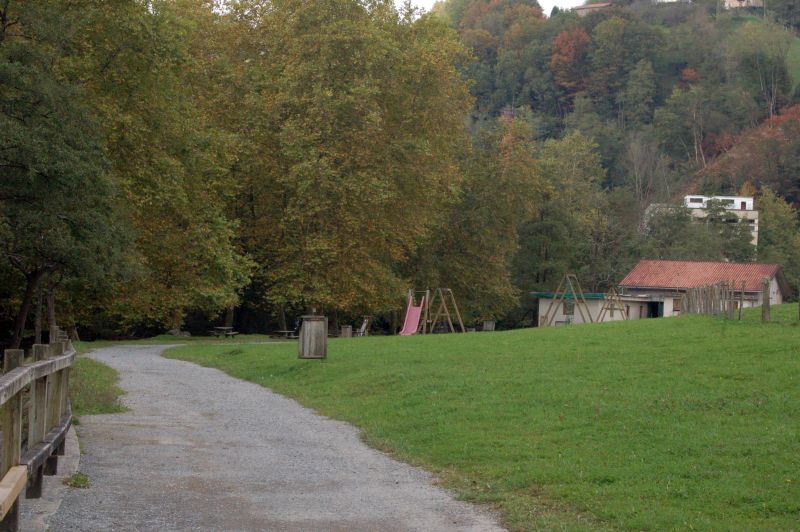
The chapel also marks the anniversary of the patron saint, the Virgen de Paúl, on 8 September. On the specified date, a pilgrimage is held in the vicinity of the church. This includes a plain with willows and tables, as well as a mass and procession to the venerated Virgin.