
Puntos de Interés

Culture
Archaeological site of La Edrada
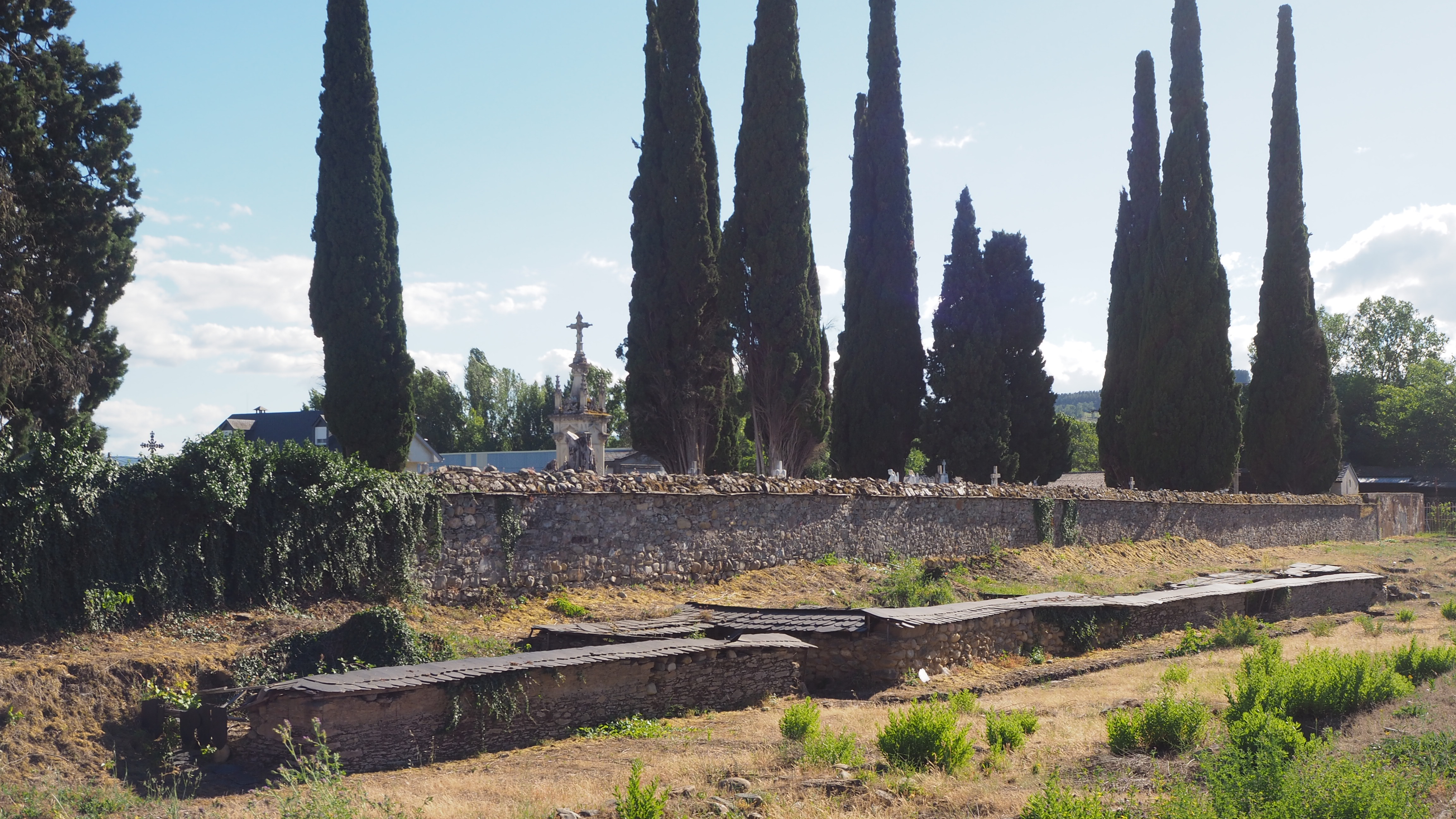
The archaeological site of La Edrada is one of the most important sites for learning about the Roman past of Cacabelos and the entire region of El Bierzo. Situated to the north of the town, between the River Cúa and the Argentiñe irrigation channel, it occupies a strategic position on a wide plain which, in ancient times, was an important transport hub. Many researchers identify this settlement with the ancient Bergidum Flavium, a Roman town mentioned in the old Roman register, the Antonine Itinerary, as a waystation between Asturica Augusta (Astorga), Lucus Augusti (Lugo) and Bracara Augusta (Braga), although this identification remains a subject of archaeological debate.
Excavations carried out since the late 20th century have unearthed a significant collection of remains from a settlement dating from the High Imperial period. Notable among the finds are the foundations of dwellings, streets and, above all, a complex network of sewage drains, considered to be one of the best-preserved of this period in the north-west of the Iberian Peninsula. This drainage system served both domestic buildings and a nearby thermal bath complex, reflecting the high level of urban planning achieved by the Roman city.
The many artefacts recovered — pottery, coins, utensils and everyday objects — enable us to reconstruct the intense commercial activity and the importance of this site within El Bierzo. Many of these artefacts can now be seen at the Cacabelos Archaeological Museum, where the main finds from La Edrada and Castro Ventosa are preserved and exhibited.
La Edrada thus complements the nearby archaeological site of Castro Ventosa and helps us to understand the evolution of settlement in El Bierzo between the Iron Age and the Roman period. Its location, alongside the Cacabelos-Quilós Nature Trail, makes this a must-visit spot for discovering the historical legacy of one of the areas with the greatest archaeological wealth in the north-west of the Iberian Peninsula.