
Puntos de Interés

Hydrography
Lagoa de Pedras Miúdas (Pedras Miúdas Lagoon)
The Lagoa de Pedras Miúdas is a natural space born of human intervention, demonstrating the convergence of human landscape modification and nature's regenerative capacity. What used to be a 105,000m3 void in the ground, the result of granite extraction, has been transformed into a lagoon thanks to its proximity to the River Ulla, whose waters filtered through the rock to fill the quarry basin.
Although its ecological value is evident today, its preservation was the subject of significant local controversy. After years of abandonment, a proposal was made to convert this space into a landfill site. However, in Catoira, a signature collection campaign was organised, which successfully halted the project. Consequently, the City Council and the citizens' group that drove the petition faced legal challenges. Finally, the appeal was dismissed by the High Court of Justice of Galicia. The arguments presented in this process were key to fostering greater awareness of nature conservation and the human impact upon it. The quality of the space was valued not only for its present state but also for its long-term ecological potential.
The lagoon, as it stands now, has created a new habitat favouring biodiversity, allowing the colonisation of new flora and fauna species in the area. This process would not have been possible if, instead of allowing water to fill the quarry, it had been filled with rubble, covered with earth and replanted with trees without considering the unique natural and landscape values of Monte San Miguel.
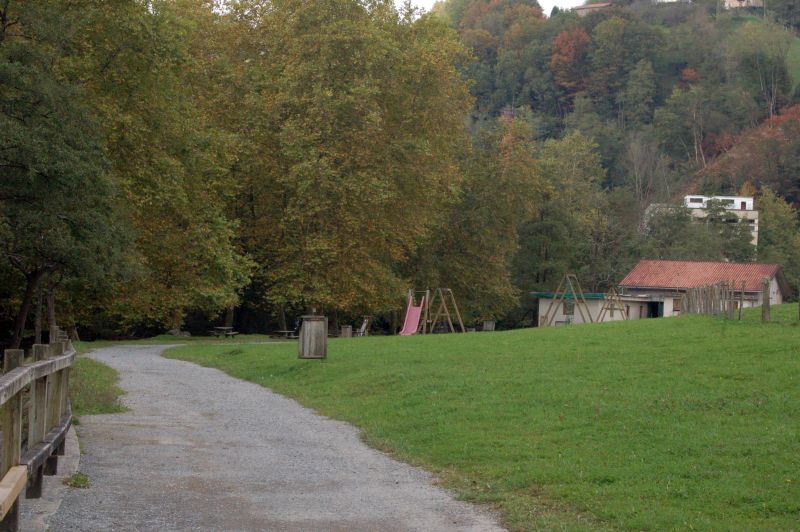
Subsequently, in 2015, the Ministry of Public Works, in compensation for the construction of the Atlantic Axis High-Speed Train that passes a few metres from the lagoon, carried out works to improve accessibility. Wooden walkways with viewpoints for safe visiting, an environmental education building, a carpark, a rest area and a small replanting of local chestnut trees were undertaken.
Today, the lagoon has become a perfect place for rest and observation, but swimming is not authorised by the local authority due to the inherent dangers of accessing the water, as the quarry features steep edges and considerable depth within a confined space.