

Puntos de Interés

Municipality
Sant Joan de les Abadesses

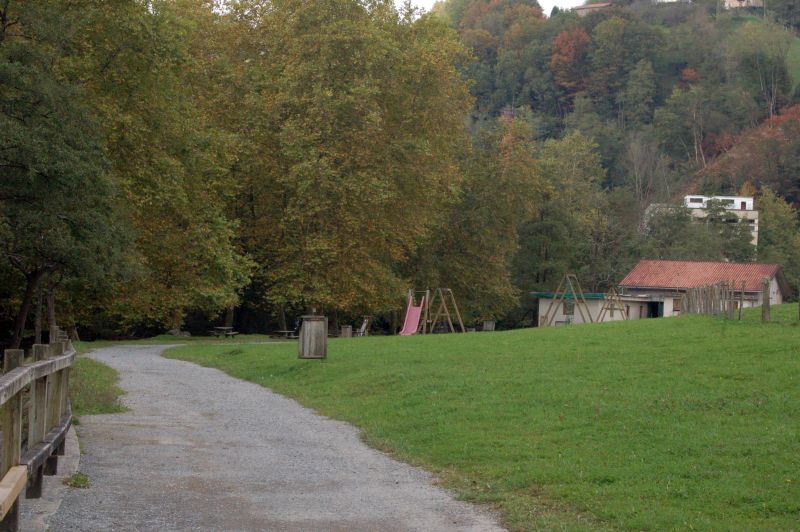
Located in the Ripollés region, the Girona town of Sant Joan de les Abadesses lies in a pre-Pyrenean valley covered in pastures, pine trees, oaks and beech trees, through which the River Ter flows. The town follows the layout of ancient Roman cities, with a network of streets running parallel and perpendicular to the Plaça Major, situated in the centre of the Vila Vella or old town.
Its history dates back to the Lower Palaeolithic, although, as in the case of Ripoll, it was the founding of its monastery in the 9th century that sparked its rise to prominence. Guifré el Pelós also undertook this project to repopulate the region, and the monastery of Sant Joan de les Abadesses became the first women’s monastery in Catalonia, with his daughter Emma becoming its first abbess.
Life in the town, which in the 13th century depended on the activities of the furriers’ and dyers’ guilds, revolved around the monastery. During the industrialisation era, Sant Joan de les Abadesses became a hub for textile factories thanks to its use of the River Ter, and went on to become one of the first municipalities to produce cement. Today, its economy is based on industry and, to a lesser extent, on livestock farming.

The monastery is, without a doubt, the town’s main cultural attraction and, within its Gothic cloister, it houses treasures of great value such as the sculptural group depicting the Descent from the Cross, which dates from the 13th century. The Gothic altarpiece of Santa María la Blanca, the tomb of the Blessed Miró and the Baroque-style Chapel of Els Dolors are among the other treasures housed within the complex. However, while in the town, you must visit the 14th-century Abbey Palace, which houses the Tourist Office; the Plaça Major and the Vila Vella, where you can sample sweets such as the Coca del Ripollès and Birba biscuits; the remains of the city walls; the Old Bridge, rebuilt in 1976; the 12th-century Church of Sant Pol; and the Molí Petit Ecomuseum, which illustrates life at a flour mill in the Middle Ages.
The festival calendar for Sant Joan de les Abadesses features the Count Arnau Festival in July and August, which aims to revive the legend of this figure through a range of cultural and recreational activities, and in September, its main festival, dedicated to the Holy Mystery, among many others.