
Puntos de Interés

Vegetation
Gall oak (Quercus faginea)
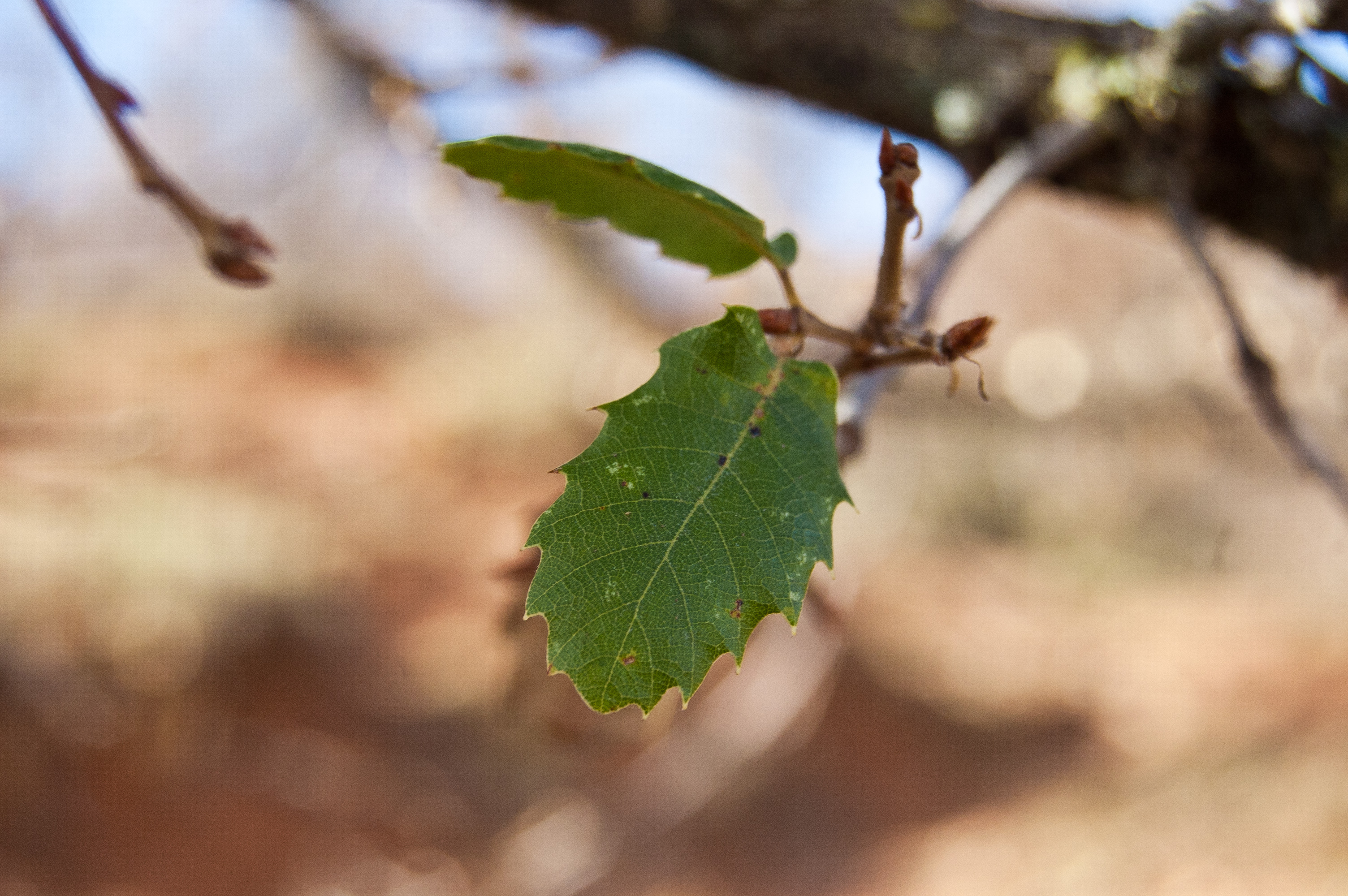
This is a large tree species with a wide canopy that can reach a height of 20 m, although it can also appear as a shrub if the environmental conditions are very adverse. The bark has a brownish colour with some greyish tones and is scaly-cracked. One of its main characteristics is that, although its leaves are deciduous, some of them remain on the plant when they are already dry until the sprouting of new leaves the following year causes them to fall off, in a process known as marcescence. The gall oak also flowers in spring and its fruits are yellowish-brown, sessile acorns that are usually bitter.
In terms of distribution, this species is only found on the Iberian Peninsula and in North Africa, as it requires relatively humid climates where it is not too cold, although its greater or lesser tolerance to certain types of climate depends on the specific subspecies.
As for the uses of the gall oak, in general it has been used for very similar purposes to those of other species of the same genus such as holm oak and oak, i.e. its firewood has been used as fuel, as well as for the production of charcoal and the manufacture of construction elements such as sleepers and beams. Its acorns have also been used as fodder for livestock.