


Puntos de Interés

Infrastructure
Cañada Real Soriana Oriental
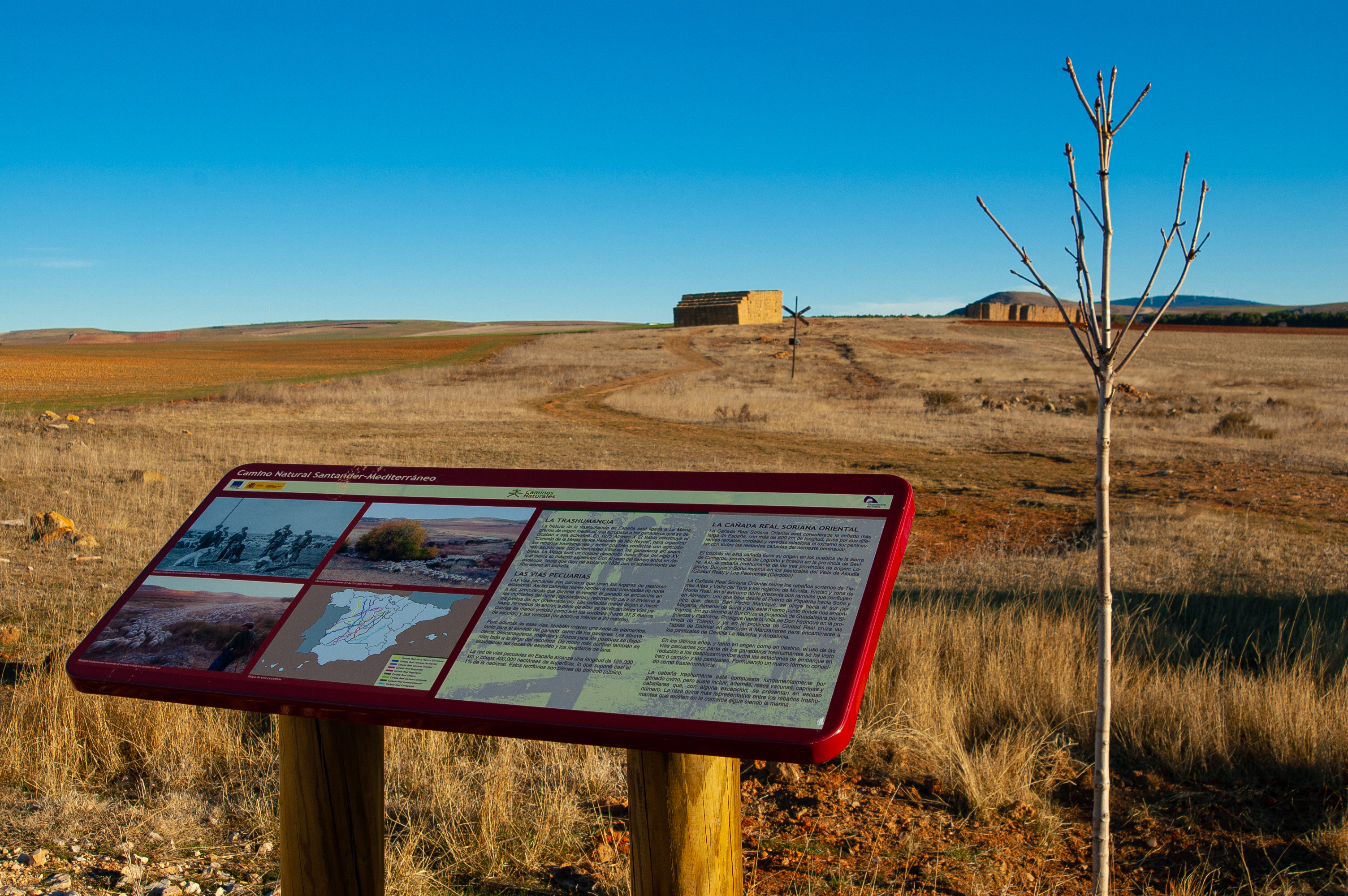
With a length of more than 800 kilometres, the Cañada Real Soriana Oriental livestock trail is considered the longest such trail in Spain. Formed by a network of different branches, cattle tracks and paths, it links the extreme south of the Iberian Peninsula with all the other trails in the north-west of the Peninsula.
Transhumance in Spain has its origins in a medieval guild of livestock farmers known as La Mesta. Alfonso X the Wise who created the Concejo de la Mesta de los Pastores de Mio Reyno for the shepherds of the kingdom, with the aim of organising the transhumance of herds and avoiding possible conflicts that might arise with farmers during their journey along the trails linking the seasonal grazing sites.
Today, the country's network of livestock trails totals 125,000 kilometres and covers an area of 400,000 hectares. The route of this cattle track originates in the villages of the Sierra de Cameros mountains, in the province of Logroño, and ends in the province of Seville. The transhumant livestock of the three provinces of origin (Logroño, Burgos and Soria) spend winter on the pastures of Valle de Alcudia (Ciudad Real) and Los Pedroches (Córdoba).
Along the route there is an infrastructure built both for the use of shepherds and for the service of livestock, such as watering troughs, resting places, sheepfolds and huts.
In this case, the Cañada Real Soriana Oriental brings together the Soria herds of Tierras Altas and Valle de Tera and the La Rioja herds of Munilla, Enciso and the Monte Real area.
While these trails were once very busy, today new methods are used, both at origin and destination, and the use of livestock trails by transhumant shepherds livestock farmers has been reduced to shorter journeys between train or lorry loading stations and pastures, coining a new term; trasterminancia or "transterminance".
Transhumant herds consist mainly of sheep, but usually also include cattle, goats and horses, which, with some exceptions, are present in small numbers. The most common ovine breed among the transhumant herds in this region is still the Merino.