

Puntos de Interés

Municipality
Soto de Aller
In the centre of the parish of Aller stands the historic town of Soto. The village is located in the fertile plains of the river Aller and surrounded by high mountains. There, the visitor is awaited by a marvellous historic-artistic ensemble and an urban centre considered a Site of Cultural Interest (BIC).
Soto is considered of historical importance due to its ancient structures that evidence the region’s past. The main landmark is the Tower or Castle of Soto de Aller, dating back to the 12th century and declared a Historic-Artistic Monument in 1975. It was originally part of a noble castle which, due to collapses and alterations, has changed its appearance throughout the centuries. Nowadays it boasts imposing square battlements and fragments of what was once its masonry walls, dating from the 14th and 15th centuries. The fortress, currently in a state of ruin, is a nostalgic beauty. The first owner was Pedro Díaz de Aller, the chief knight of Aller and mayor who received the property as a gift from the king. However, the most emblematic history of Aller Castle is that it is said to have been the site of the romance between Alfonso VII and Doña Gontrodo and it is even thought to have been the birthplace of the first queen of Asturias, Doña Urraca.
Leaving the village along the road that leads to the local cemetery, we come across a beautiful church called the Sanctuary of Our Lady of Miravalles. First documented in the year 860, none of the original structure remains. The present church was built in the 18th century on top of the previous from the 15th century, of which some elements such as the vaults are still preserved. It is based on a single rectangular floor plan that is divided by toral arches separating the chancel, central nave, sacristy and choir. Its exterior has a tall bell-gable with two arches – typical of Asturian architecture. The interior is accessed through an entrance decorated with a semicircular arch. Inside, the masonry can be admired, with a ribbed vault at the front, a portico featuring geometric shapes in the floor, and an elegant 18th century altarpiece in a Baroque style built in polychrome and gilded wood.
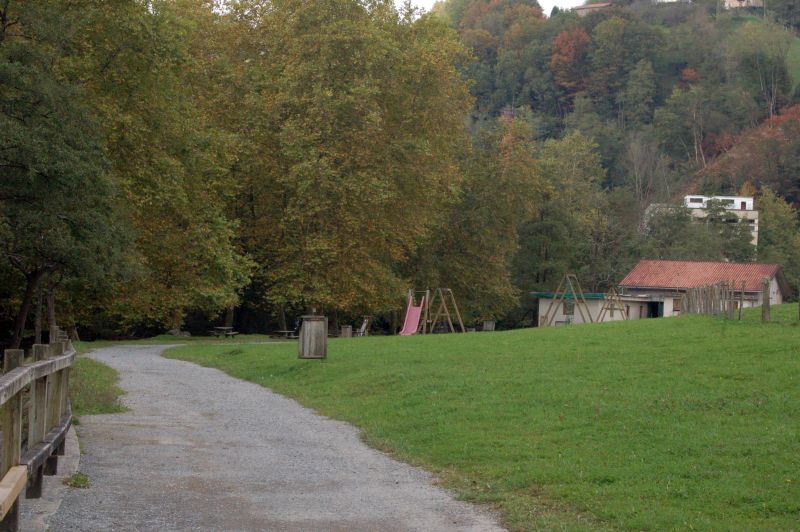
There are some oddities surrounding the construction, such as the various legends that speak of how the church was built and the appearance of the virgin, or that this same hermitage was the meeting point for the inhabitants of Soto for their uprising against the French invasion in June 1808. This church also hosts the Festivities of Our Lady of Miravalles from 8th to 10th September, with a procession in honour of Our Lady, masses and wonderful festivities held in the surrounding fields.
In addition, in the centre of the village is the church of San Martín de Soto, which houses the image of the Virgin Mary, estimated to date from the 6th to the 13th century. As part of the village’s festivities, there is a procession leading to the chapel. Elsewhere, to the south of the village is the 17th century Christ Hermitage and a chapel next to the castle of which there is no longer any trace.
Soto de Aller also treasures splendid hórreos and paneras (granaries on stilts) that hark back to the village's agricultural activity. There are also fountains and large, traditional Asturian houses.