

Puntos de Interés

Municipality
Murias
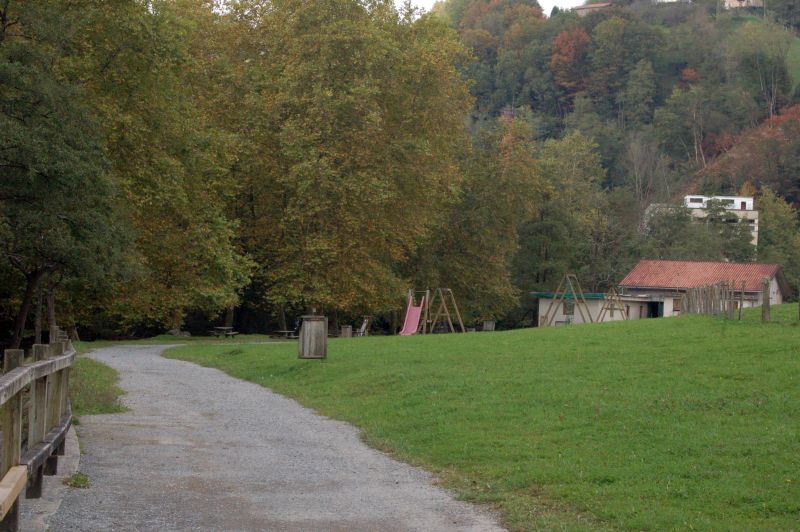
The village of Murias sits on the slopes of the leafy mountains next to the Negro River in the parish of Aller. The village is steeped in agrarian and mining legacy and preserves a beautiful natural and ethnological heritage.
This mountain village is a place that has values its legacy, preserving four old public washing places. These were not only a place to wash clothes, but also a meeting place for the residents of Murias, mainly women. The number of washing places in the village is also an indication of the prosperity of the village, which peaked at a population of one thousand inhabitants. However, due to migration and the ageing population, this number has since decreased. Today visitors can still stroll through such memorable sites that meant so much to so many people, where they would wash their clothes in the freezing cold water.
Another example of Asturian tradition, which also gives us an insight into the farming past of Murias, are the hórreos and paneras (granaries on stilts) of the village. In addition, the Asturian farmhouses create a welcoming and friendly atmosphere.
Within the town centre is the 16th century Chapel of Our Lady of the Snows. It is located to the south of the town and was of certain notoriety since it was founded by a noble family of the time, the Álvarez de la Torre family. In addition, it was a crossing point on the Pilgrim's Way to Santiago de Compostela. In 1936, during the Civil War, the church ceased to be used for worship and mass was not celebrated there again until 1999.
In addition, to the north of the town is the Church of Santa María de Murias, built in 1761. This church honours Our Lady of the Assumption and holds the status of Collegiate Church due to its having been a place of worship on the Pilgrim's Way to Santiago de Compostela. Inside there is a Baroque altarpiece made of walnut wood that originally belonged to the Hermitage of Saint Andrew.
The town's most outstanding features are the incredible scenery and the nature that surrounds it. For this reason, it is the starting point for many routes that are sure to impress walkers. One such route is the Xurbeo route, where visitors can see spectacular waterfalls. The route is short and suitable for beginners, although it is steep in places. Another enjoyable route is to the Renorios Peak, from where the incredible natural protected landscape of the Cuencas Mineras( Mining Basins region) can be seen.
Another attraction of the town is the Traditional Market, a festival that takes place on the last weekend of June or the first weekend of August. Murias is filled with bagpipers, shows, regional craft products, street parties, children's games and much more. Prior to this, a mass is held in the village chapel with the offering of a bouquet of flowers. Finally, the market is rounded off with an Ethnographic Exhibition that honours the river Negro valley.
On 22nd May, Saint Rita is also celebrated with a solemn mass, the drinking of vermouth and an open-air dance.