

Puntos de Interés

Infrastructure
Puente de los Urrietas
Of the numerous ancient bridges that surround Pereruela, the Puente de las Urrietas is arguably the most significant. This bridge has endured the greatest burden over the centuries due to the high volume of traffic on the Mirandesa road, which runs parallel to the Duero River.
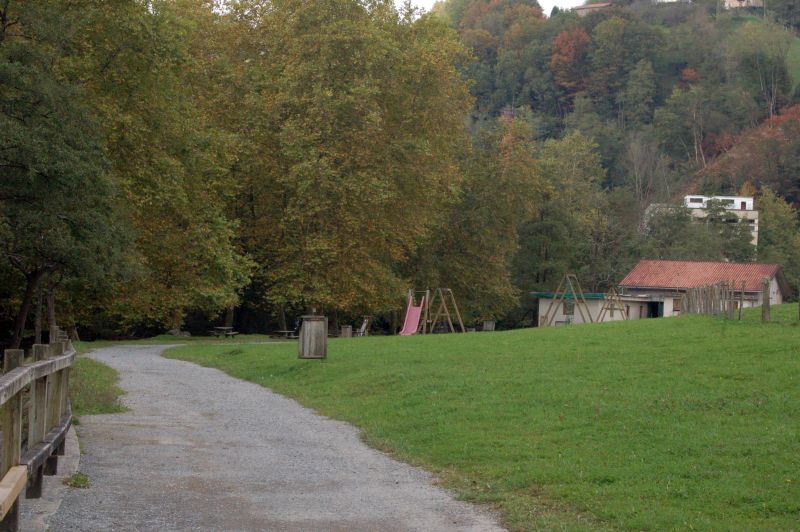
Because of the continuous use of the Urrietas Bridge, a series of reconstructions were undertaken with the objective of mitigating the effects of wear and tear. At least three reconstructions are known to have been carried out. The original work was followed by a second remodelling between the 15th and 16th centuries, and a third at the end of the 18th century. The recent restoration project, which saw the installation of a public picnic area adjacent to the bridge.
The precise date of construction is not known with certainty. It has been postulated that the Urrietas Bridge may have originated during the rule of Emperor Caesar Augustus during the first years of the era. If the Roman road did indeed pass through this area, it is reasonable to assume that a bridge must have spanned the river. However, a series of documents unearthed in 2002 revealed that each renovation involved a new reconstruction, with the intention of emulating the previous one. This resulted in the current composition of the bridge, where Roman and medieval styles are juxtaposed.
It is evident that the bridge was constructed with the specific purpose of enabling the crossing of the Sobradillo river, a small stream that only rises during continuous episodes of rain. To circumvent the seasonal limitations of the river, the engineers designed a stone crossing, 20 metres in length, measured from the abutments (structural elements on which the bridge rests at its ends). The Urrietas Bridge is a structure comprising three arches, the largest of which is in the centre, and four cutwaters (basal structures between the spans of the bridge that redirect the water towards them). It displays some indications of abandonment, including the presence of vegetation and the accumulation of debris.
Of note is the vegetation that emerges between the crevices, particularly during the flowering months, when the marsh grass (Anunculus trichophyllus) gives the riverbed a thick white mantle.
It can be argued that this marks the point at which a natural frontier is established in the landscape of the route, with the typical cereal steppe of the Castilian plateau giving way to the first glimpses of Mediterranean pastureland, where livestock and holm oak (Quercus ilex) forests predominate. These changes are the consequence of a more abrupt orography, which has led to a transition from sedimentary plains of fluvial deposits to rocky granite outcrops. Many of these outcrops exhibit rounded shapes, which are known as "bolos".