


Puntos de Interés

Infrastructure
Former Valencia de Don Juan railway station
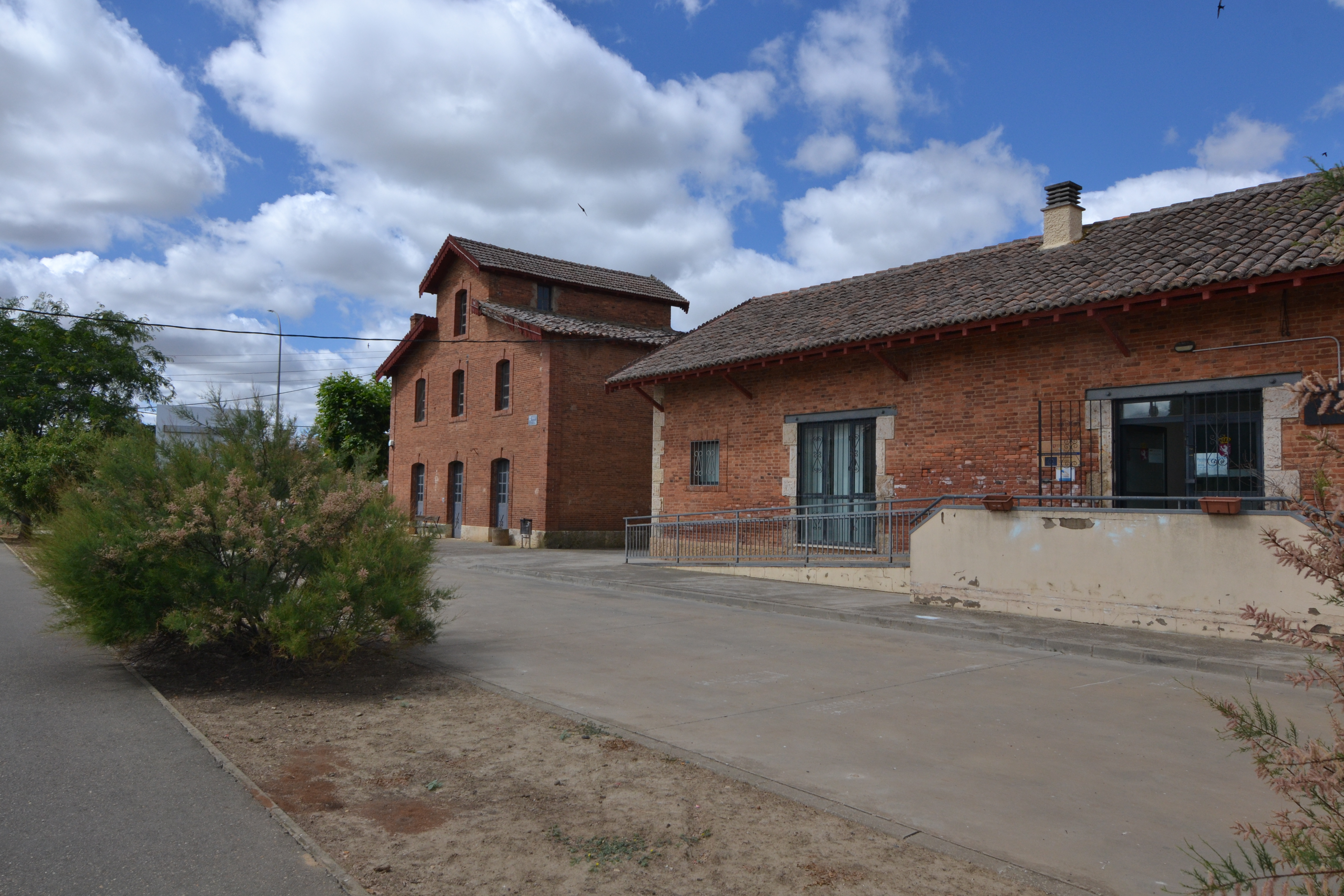
The former Valencia de Don Juan railway station is one of the main reminders of the region’s railway heritage. The building formed part of the historic Palanquinos–Medina de Rioseco narrow-gauge railway line, which opened on 30 April 1915 and, for more than half a century, linked numerous towns in León and Valladolid. Popularly known as the tren burra, this railway reached a top speed of around 35 km/h, but it marked a genuine revolution in the transport of passengers and goods in the south of the province of León. The line remained in service until 1969, when it was definitively closed.
The passenger terminal retains the characteristic architecture of early 20th-century railway stations. It is a two-storey building with a rectangular floor plan, constructed of rendered brick, with a gabled tiled roof and a simple, functional design. The main façade features a symmetrical arrangement of doors and windows framed by exposed brick surrounds, while the wide eaves shelter the platform, evoking the bustling railway activity that brought this place to life for decades. Next to the main building, a number of old ancillary buildings – such as warehouses and coach houses – which formed part of the railway complex, have been preserved.
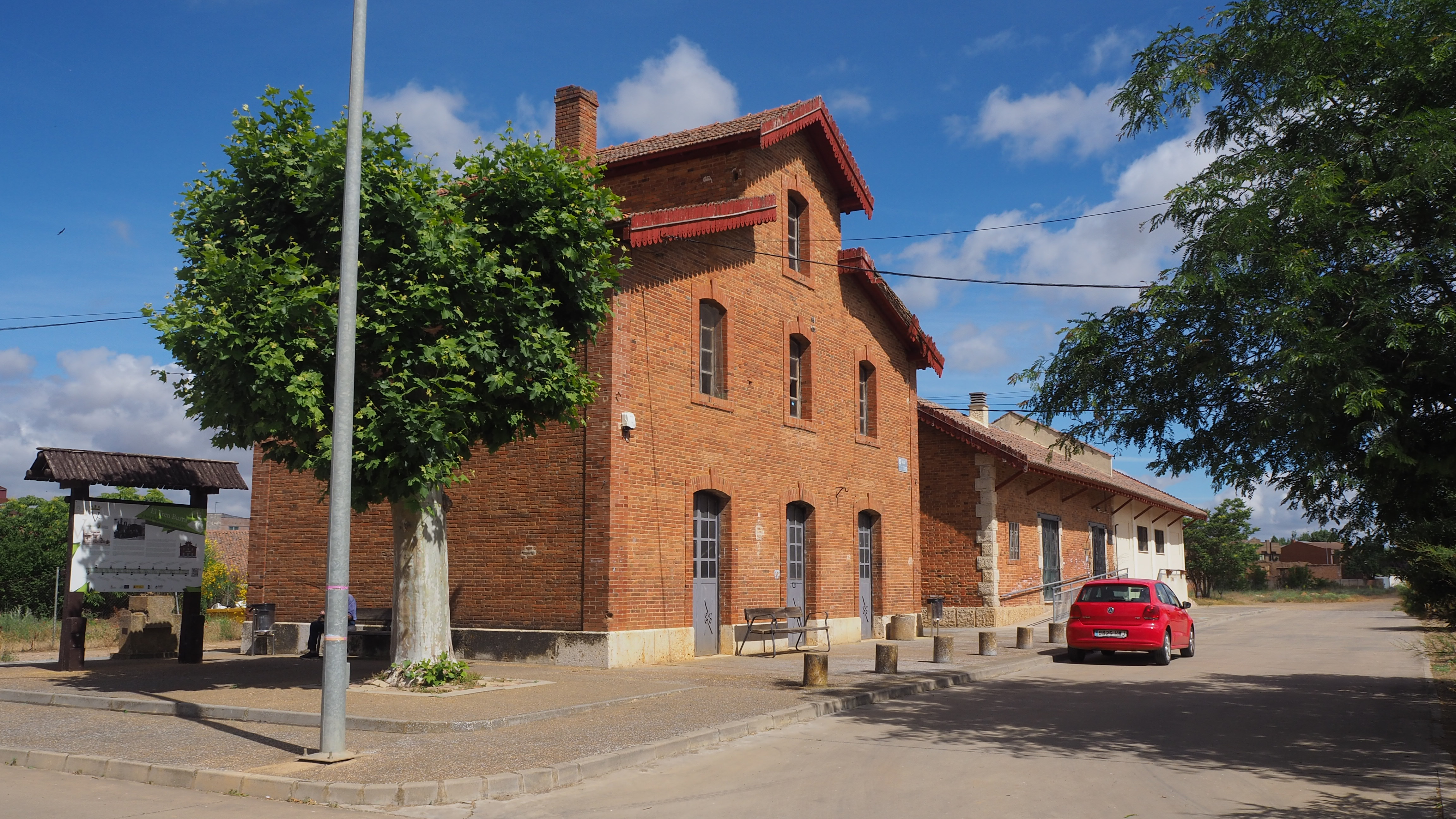
The arrival of the railway profoundly transformed life in Valencia de Don Juan. It facilitated the transport of agricultural produce, livestock and goods, improved communications with other regions and promoted the town’s economic development. The popular nickname tren burra, or “donkey train,” referred to its modest speed, although for several generations it was an essential means of transport and a symbol of modernity.
Following the closure of the line, the railway facilities were acquired by the local council and refurbished for new municipal uses, helping preserve this valuable industrial heritage. These days, the old station keeps the memory of the railway alive and is one of the main historical landmarks along the Esla Greenway, allowing visitors to imagine the bustling activity that, for more than fifty years, made this place an important hub for people and transport in the region.