

Puntos de Interés

Hostel
Parador de León
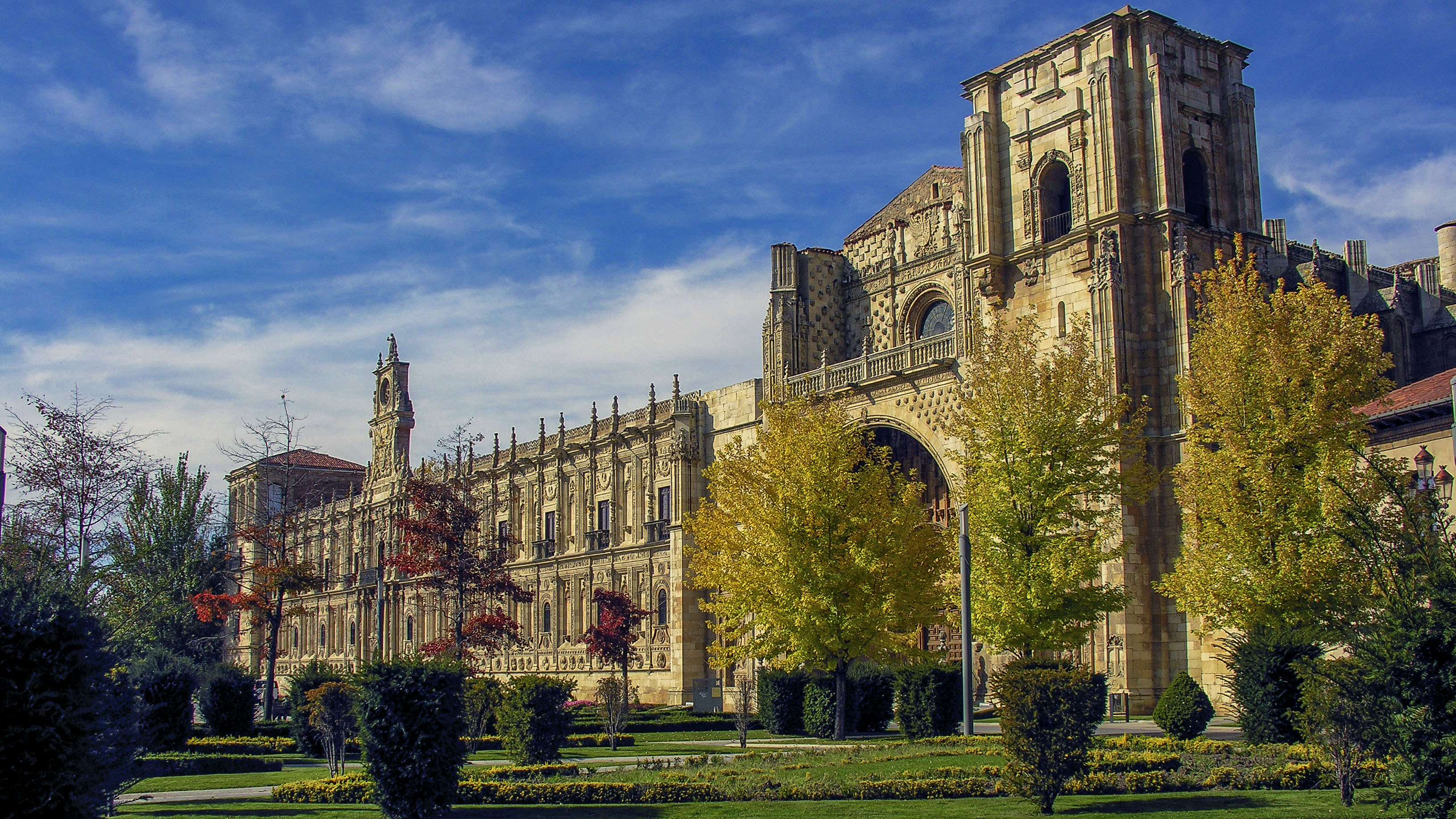
The historic Hostal San Marcos
The Hostal San Marcos, a former emblem of the influential Order of Santiago and one of the most representative monuments of the Spanish Renaissance, has been home to the Parador de León, a living museum of history and modernity, since 1986.
Refurbished in an avant-garde style that cleverly combines past and present, the Hostal San Marcos is packed with incredible spaces, such as its cafeteria located under an impressive ceiling by the painter Lucio Muñoz, the terrace on the banks of the Bernesga River, or the Chapter House, with regal Mudejar coffered ceilings.
Today, San Marcos houses an art collection that combines tradition and modernity. Inside, it houses an exceptional antique collection, including figures by Juan de Juni and the 16th-century choir stalls, along with a contemporary art exhibition that includes works by Fernando Zóbel, Eduardo Chillida and José Caballero, as well as an exclusive collection of 32 oil paintings by the painter José Vela Zanetti.
San Marcos, witness to historical memory
Conceived in the 12th century as a convent and hospital for pilgrims, San Marcos ended up being one of the main headquarters of the Order of Santiago, and one of the most representative buildings of the Plateresque style in Spain.
It is a building with centuries of life, a multitude of uses and historical episodes, many with lights, but also some with shadows. During the Civil War and the first years of the dictatorship, the building was used as a concentration camp, becoming one of the harshest prisons in the northwest of Spain. Thousands of prisoners passed through its walls, people of different profiles: intellectuals, politicians, military personnel and even women.
Over time, the memory of those who suffered in San Marcos has been rescued thanks to research and testimonies. At Paradores we want to defend and protect historical memory and the dignity of the victims. Historical memory is the heritage and guarantee of democracy.