


Puntos de Interés

Hydrography
River Porcarizas
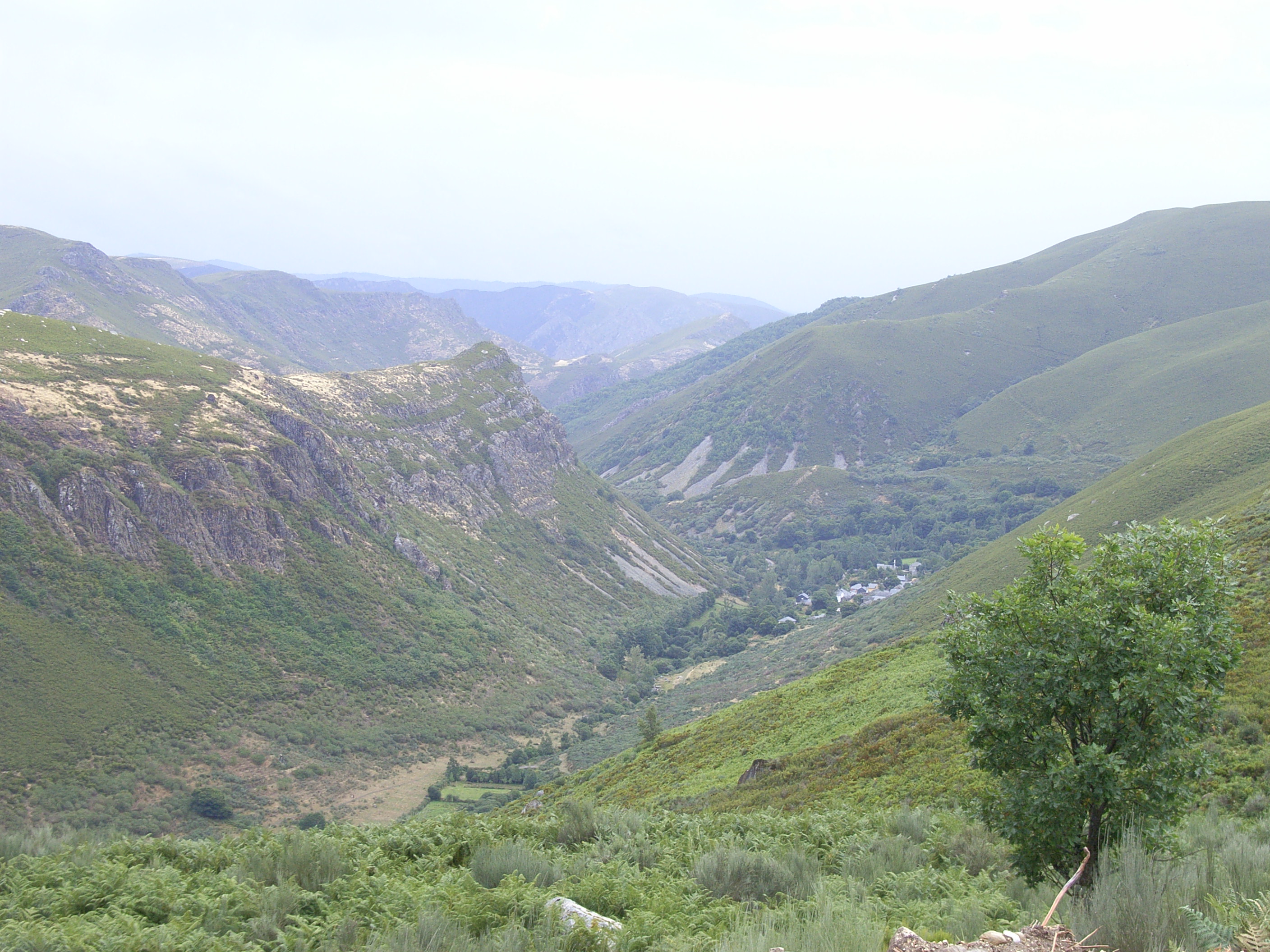
The River Porcarizas rises at an altitude of 1,663 metres above sea level, sharing its name with the valley through which it flows and the first village through which its waters pass. The toponym 'Porcarizas', derived from porquerizas (pigsties), is the subject of two popular theories. The first suggests that, although the area is too cold to keep domestic pigs, it may have been inhabited by a large population of wild boar, also known as wild swine, which would have given the valley its name. The other theory stems from the testimony of a porcaricego (a local from Porcarizas) who recounts the story of some porquerizos (swineherds) who were trapped by the snow on their way to Asturias or Galicia and had to build pigsties in the area to take shelter. Although these swineherds departed, their buildings remained, and with them, the name.
The River Porcarizas is one of the tributaries of the River Tejeira, which flows into the River Burbia. Together they form part of the River Burbia I Natural River Reserve, a protective designation that guarantees the good state of conservation of these rivers, which are authentic ecological treasures.
This is a typical siliceous wet mountain river, meaning it rises in high and steep areas, with a permanent flow all year round thanks to the rainfall of the oceanic climate. Furthermore, its bed runs over rocks with a high silica content, such as quartzite and slate, which endow it with a very characteristic structure. In its upper section, it has a narrow, steeply sloping riverbed, but as it descends, it widens and begins to form floodplains in certain stretches.
The vegetation along the river is composed of riparian woodland, consisting mainly of alder groves with ash and willow trees. This green belt provides shelter and food for a wide diversity of fauna. In the water, hidden among plants and rocks, are the otter (Lutra lutra) and the Iberian desman (Galemys pyrenaicus), which is very sensitive to pollution and whose presence is an indicator of the river's environmental quality. The presence of brown trout (Salmo trutta) is another indicator of the water's purity, and despite some obstacles limiting their movement along the river, they continue to maintain healthy populations.
Additionally, this river is a paradise for amphibians, hosting several species such as the common frog (Rana temporaria), the Iberian frog (Rana iberica), the Iberian tree frog (Hyla molleri), the common midwife toad (Alytes obstetricans), the natterjack toad (Epidalea calamita), the Iberian painted frog (Discoglossus galganoi), the Iberian newt (Lissotriton boscai), the palmate newt (Lissotriton helveticus), the marbled newt (Triturus marmoratus) and even the vulnerable long-tailed salamander (Chioglossa lusitanica).