


Net of Nature
Trails

Stage 9: Navas del Selpillar-Lucena Station – Campo Real Station







Description
Tracing the route of the Olive Oil Train
The last stage of the Olive Oil Greenway Nature Trail runs between the old railway station of Navas del Selpillar, in Lucena, and the Campo Real railway station in Puente Genil. A route that follows the route of the historical Puente Genil-Linares railway line, which played a key role in the agricultural development and industrialisation of this area. Although the railway was built to provide service to the nearby mines, the main product it transported was olive oil, thus receiving the popular name of “Olive Oil Train”
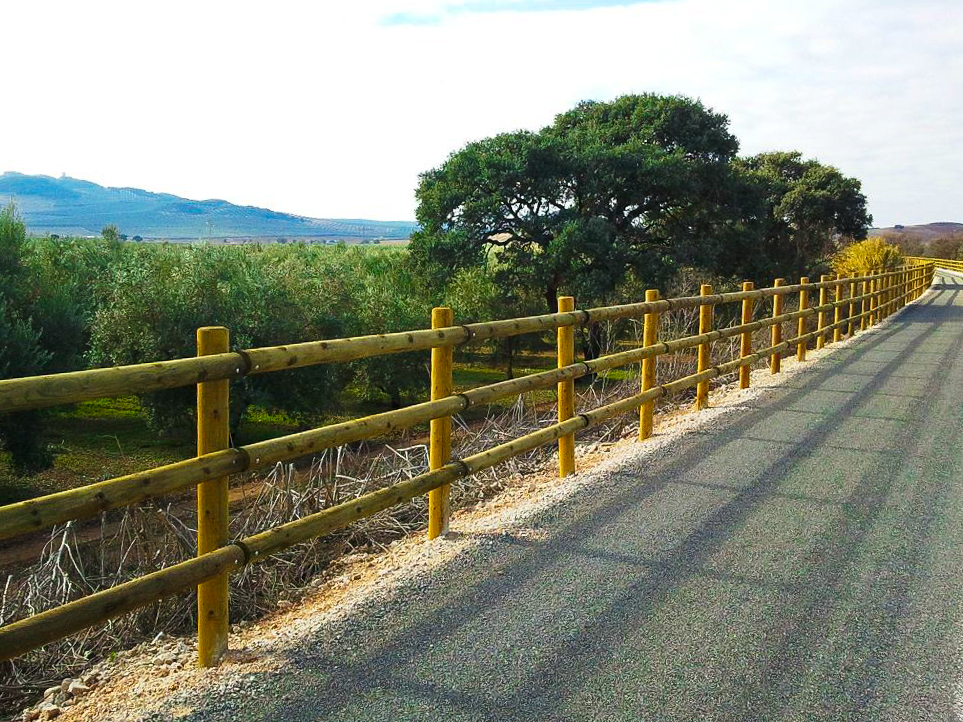
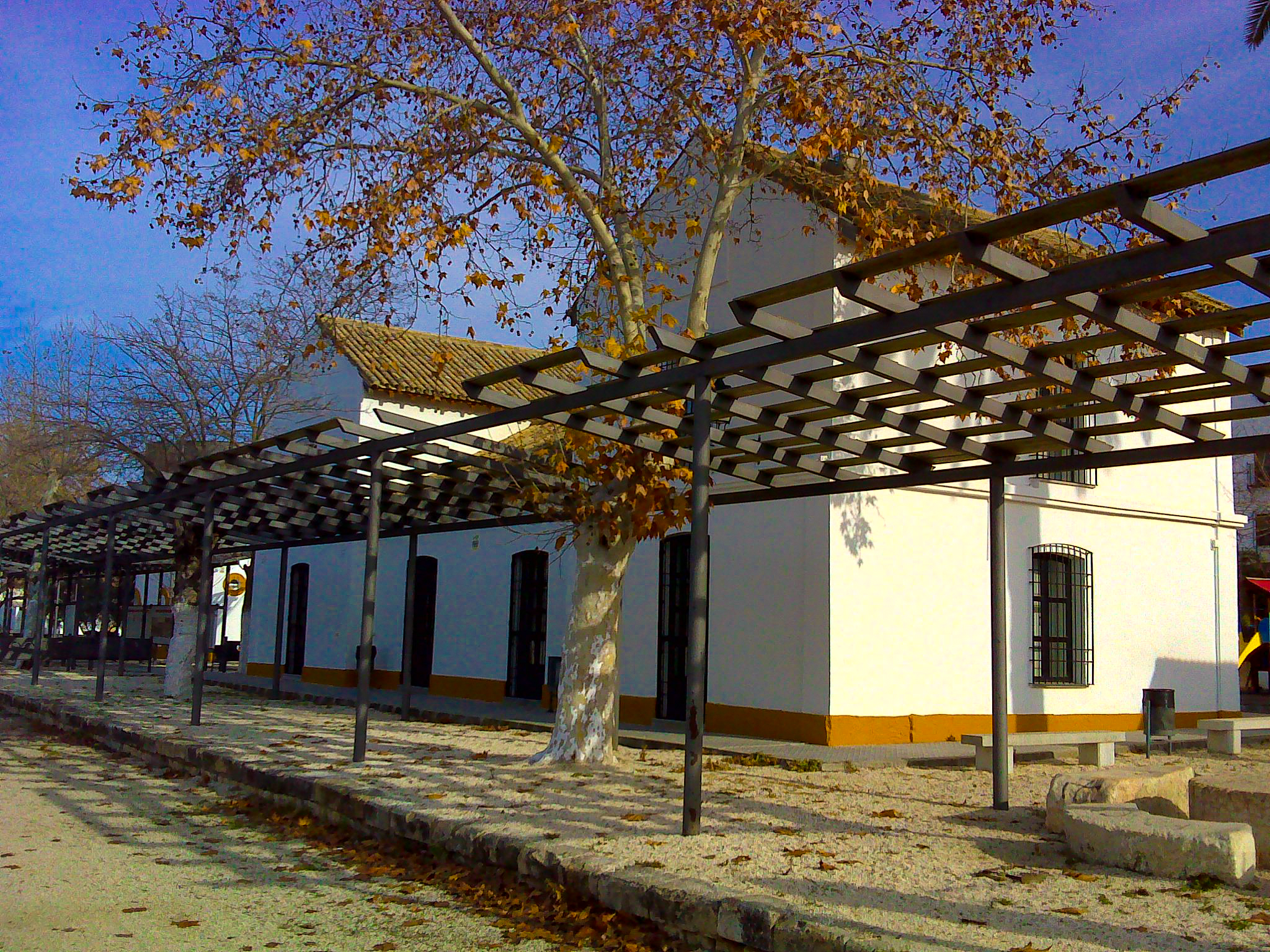
The starting point is at the old Moriles-Horcajo railway station in Navas del Selpillar. Today it has been refurbished as a museum and retains the charm of heritage railways. In the surrounding area there is a parking area for motorhomes, a rest area and a drinking fountain. From here begins an 11.8 km route through extensive olive groves, mainly of the hojiblanca variety, of the Lucena Protected Designation of Origin.
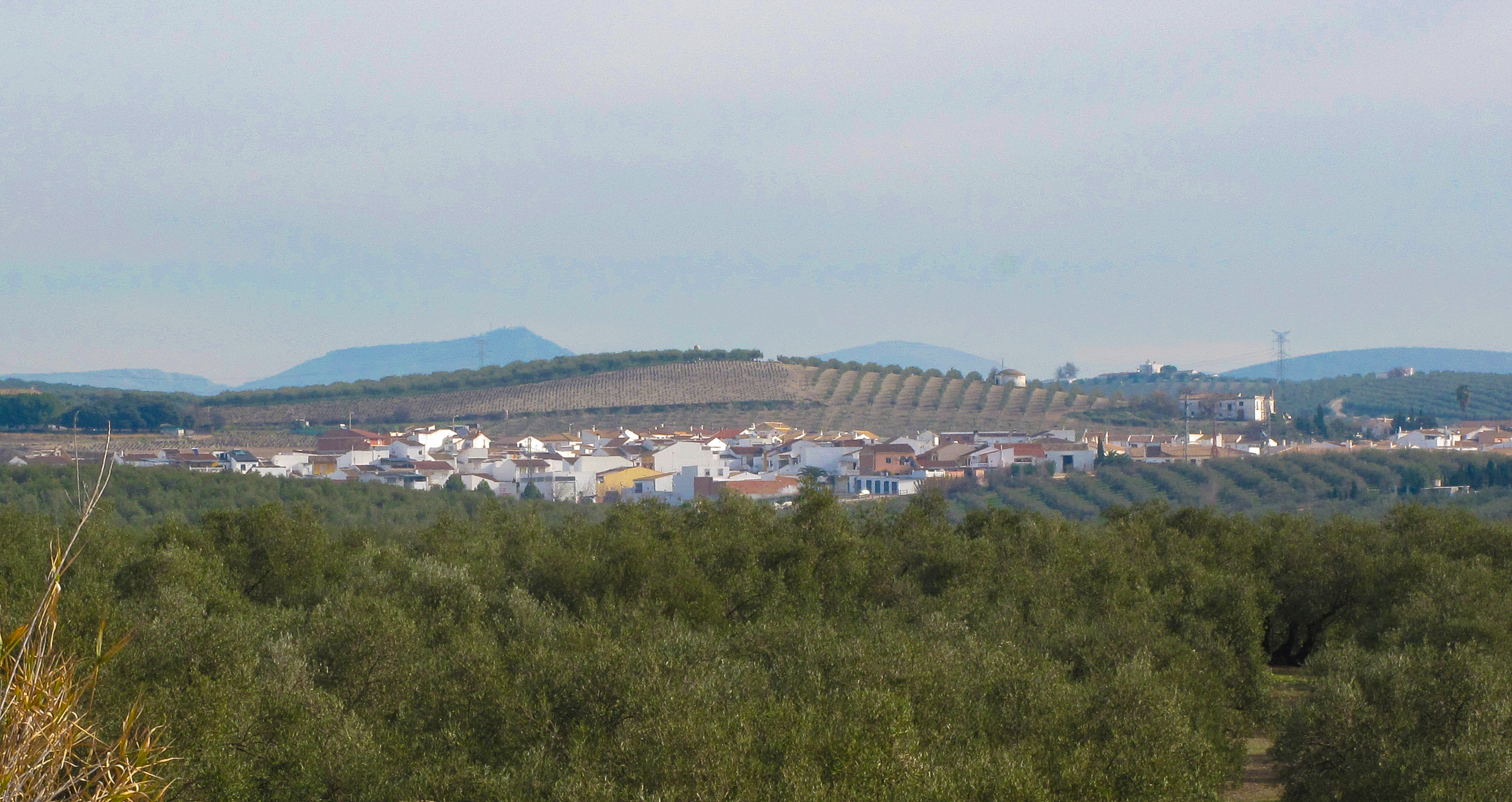
The road winds gently through the Córdoba countryside, where the silvery hues of the olive groves blend with the green of the vineyards that produce the Montilla-Moriles wine. The vines of the Pedro Ximénez variety dominate the landscape, producing the grapes that give rise to this dark and aromatic wine, so characteristic of the area. Along the way, the traveller crosses country roads, passes by centuries-old farmsteads and wineries surrounded by vineyards, while the horizon opens up between rolling hills.
At one of these crossroads the Camino de San Antonio branches off, where there is a small rest area. This road is also known as La Mojonera and will allow you to visit Moriles, with its famous vineyards and wine presses protected under the Montilla-Moriles Denomination of Origin, the perfect excuse for a stop along the way.
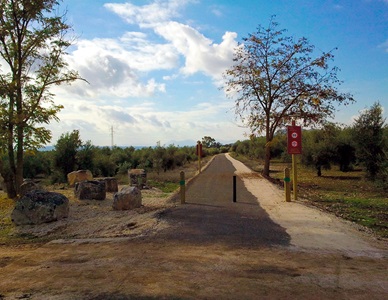
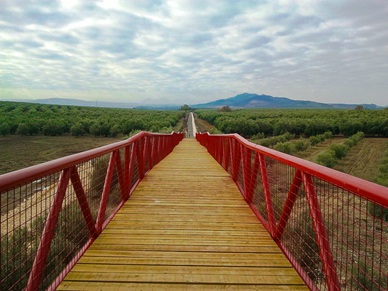
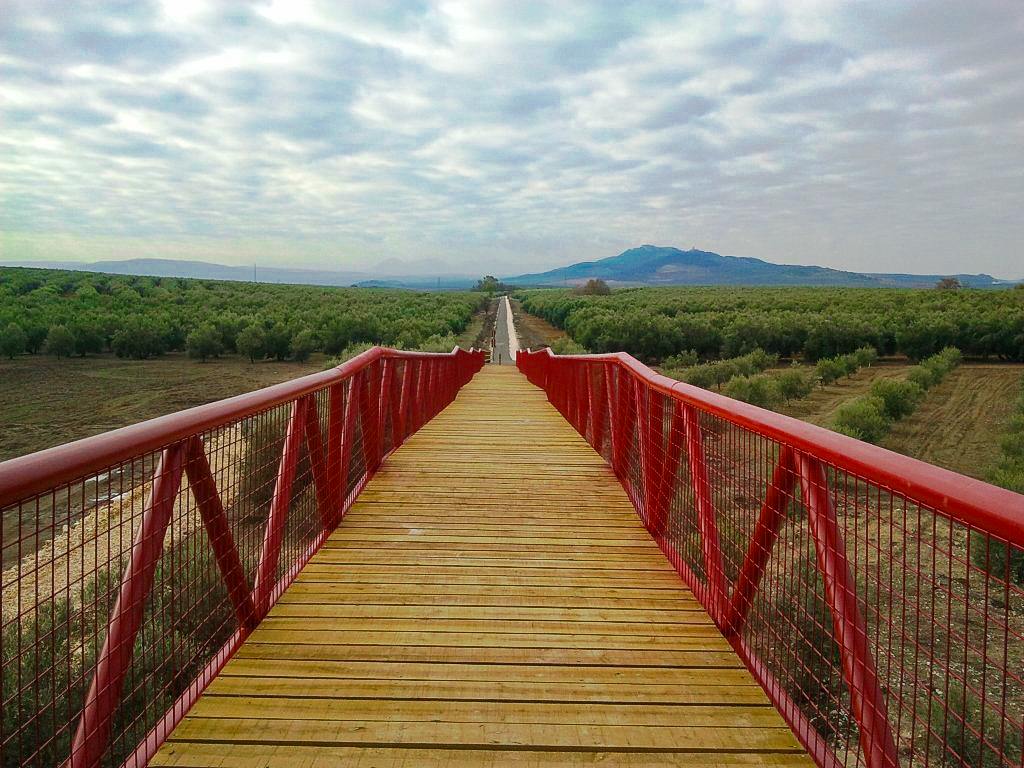
This stage is simple and well signposted. At the crossroads, just go straight ahead, and when you reach the A-318 "Autovía del Olivar" road, a large pedestrian walkway allows you to continue safely. In the distance, the sierras of El Castillo, named after the remains of an ancient Arab castle, and El Niño, outline the landscape, providing a backdrop that recalls the natural and cultural richness of this Subbética area of Córdoba.
After crossing the Navaluenga creek, the route approaches the end of this long journey, leaving the Jardines de Santa Elena farmstead to the left, which provides services for tourists on bikes, and soon after reaching the old halt of Campo Real, barely 2 km from the Cañada de la Plata, one of the suburbs of Puente Genil. In its days of railway splendour, the section between Puente Genil and Campo Real was part of the Córdoba - Málaga railway line. With the closure of the line, the station lost its bifurcation and was converted into a simple halt which ceased service in 1984 and which marks the end point of this unforgettable route between olive trees and iron vestiges.
Managing Entities
Sites of interest
Puntos de interés
Culture
Hydrography
Information
Infrastructure
Municipality
Hostel
Passport
Profile
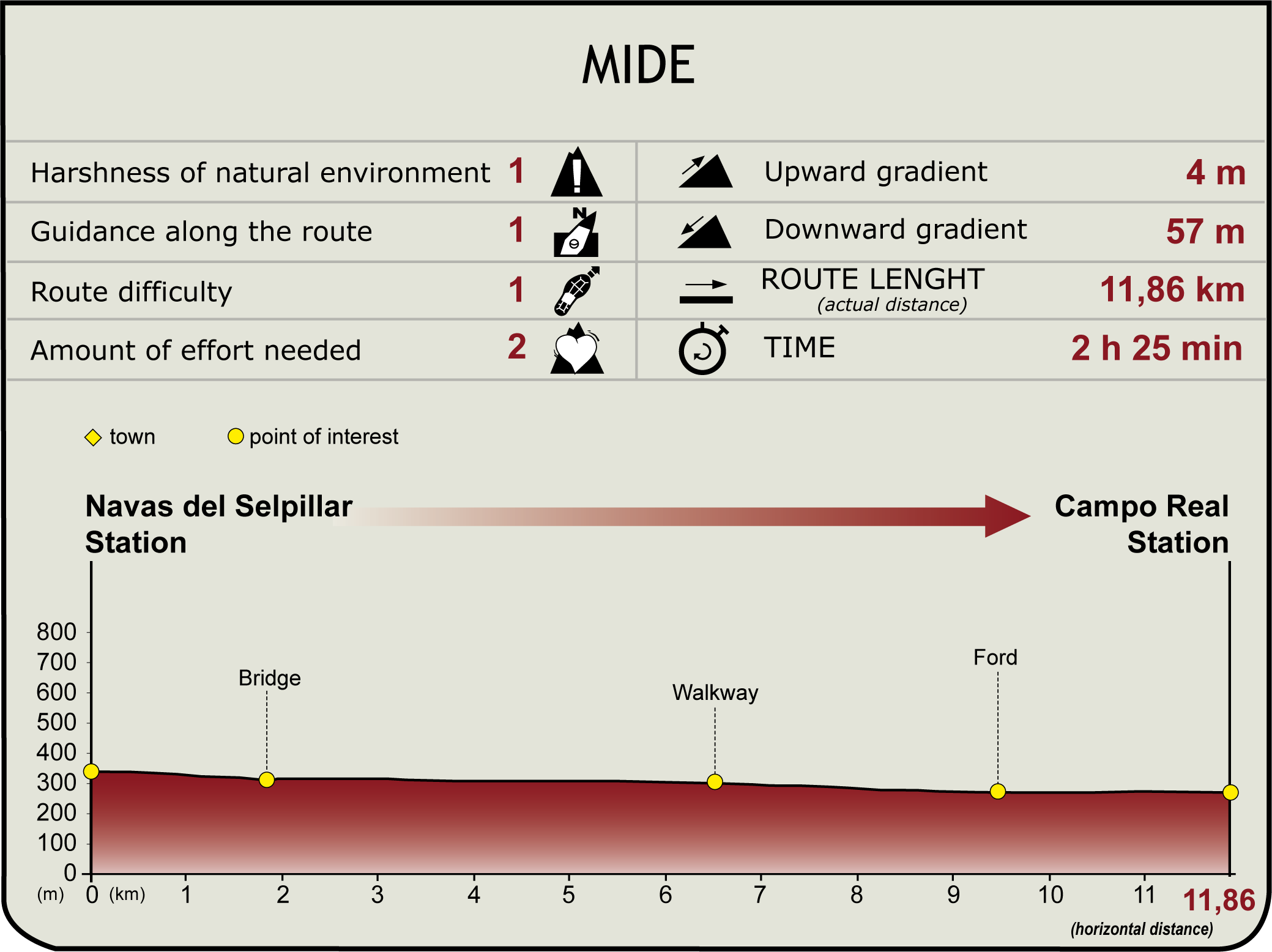
 Harshness of natural environment
- 1. The environment is not risk-free
- 2. There are more than one risk factors
- 3. There are various risk factors
- 4. There are quite a lot of risk factors
- 5. There are many risk factors
 Guidance along the route
- 1. Well defined trails and crossings
- 2. There is a clearly marked trail and signage
- 3. Requires the identification of geographic features and cardinal points
- 4. Requires off-path navigation
- 5. The trail is interrupted by obstacles that have to be gone around
 Route difficulty
- 1. Walking on a flat surface
- 2. Trails with different types of path
- 3. Walking on stepped paths or irregular terrain
- 4. The use of hands or jumping over the terrain is necessary
- 5. The use of hands is required to progress
 Amount of effort needed
- 1. Up to 1 hour of continuous walking
- 2. Between 1 and 3 hours of continuous walking
- 3. Between 3 and 6 hours of continuous walking
- 4. Between 6 and 10 hours of actual walking
- 5. More than 10 hours of continuous walking
(Calculated according to the MIDE criteria for an average excursionist with a light load)
Highlights
Further information
Puente Genil
The Campo Real railway station, the final destination of this stage of the Olive Oil Greenway Nature Trail, belongs to the town of Puente Genil, in the province of Córdoba, in the geographical heart of Andalusia, within the Campiña Sur region and very close to the province of Seville. Its privileged location makes it an important communications hub, just a short distance from the main Andalusian cities: Córdoba 69 km, Málaga 110 km, Seville 120 km and Granada 150 km.
The origins of the town go back to the union of two historical villages: Pontón de Don Gonzalo, founded under King D III by the 2nd Lord of the State of Aguilar, Gonzalo Yañez Dovinhal II, and Miragenil, on the opposite bank of the river Genil. This merging of these two villages was formalised in 1834 by means of a Royal Decree during the regency of Queen Maria Christina giving rise to the current name of Puente Genil, in reference to the bridge that joins the two banks.
Navas del Selpillar Railway Station
Also known as Zapateros-Horcajo or Moriles-Horcajo, the Navas del Selpillar railway station was put into service in 1891, when work on the section of the line between Puente Genil and Cabra was completed. It was a fourth category station, with a sober and functional design, very similar to that of Campo Real station (Puente Genil), which was designed as the head of the line.
Nowadays, this space has been restored as a Wine Interpretation Centre, with an open-air exhibition that shows, through panels, the traditional processes of olive and grape harvesting. It also preserves one of the most characteristic elements of the old steam stations: the tanks for supplying water to the locomotives, large metal structures mounted on masonry or brick bases that are a reminder of the importance of the railways in the area.
Multimedia




Downloads

GPS Downloads


Documents

Cyclability
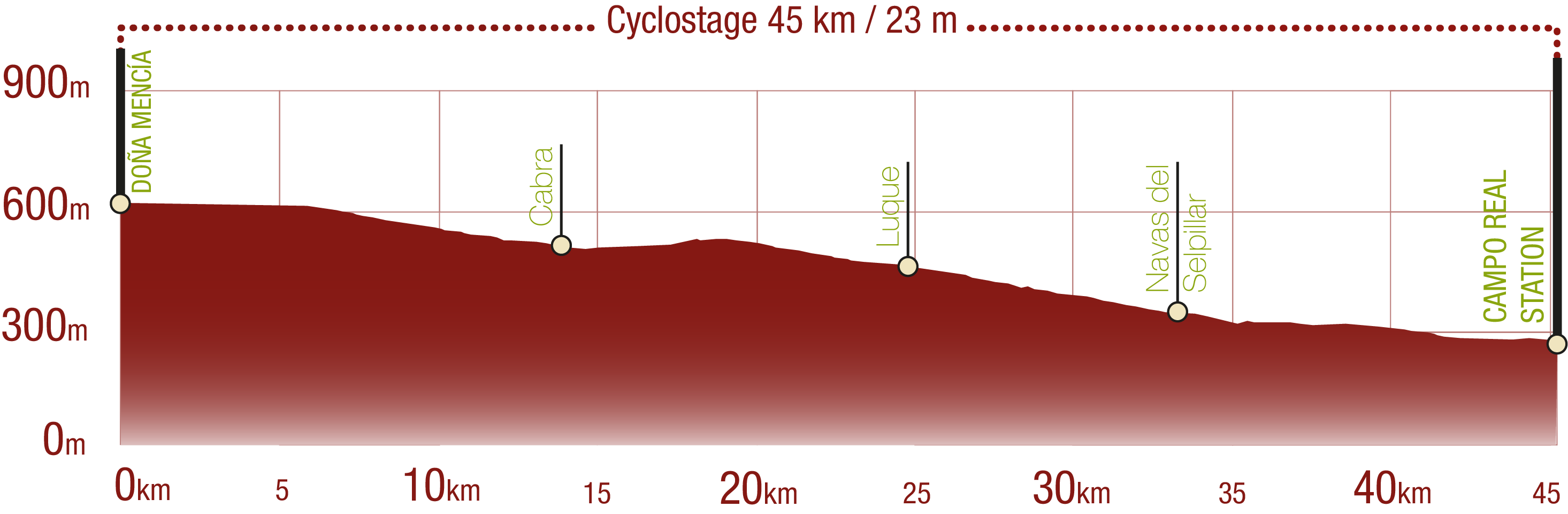
This cycling stage corresponds from Doña Mencía Station to Campo Real Station.
PROFILE
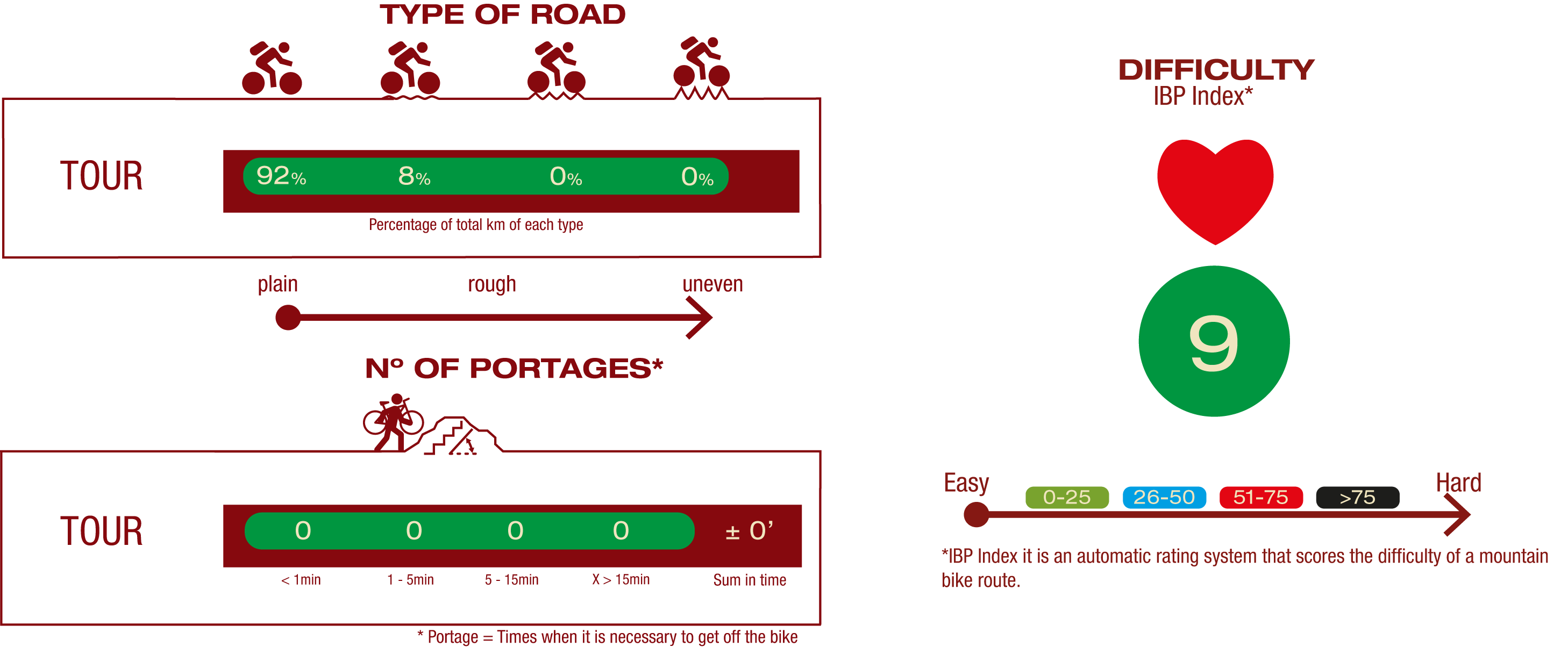
TYPE OF ROADS, PORTAGES & DIFICULTY
TEST

GENERAL RECOMMENDATIONS
- Find out about the technical aspects of the route and the weather on the day.
- Take care of the environment. Take care not to disturb animals or damage vegetation. Respect private areas.
- You must give priority to pedestrians and comply with general traffic rules.
- The environment in which you will be riding is open, free to move around and an area where many activities are carried out (sporting, forestry, livestock and agricultural activities).
- Always have an understanding, prudent, responsible and respectful attitude.