


Net of Nature
Trails

Stage 5: Alcaudete Station – Luque Station







Description
Discovering the surprises of Jaén and Córdoba.
Between endless olive groves, unique wetlands and vestiges of the railway past, this stage of the Olive Oil Greenway Nature Trail will take you from the historic station of Alcaudete to the station of Luque, through a landscape full of contrasts and surprises. The route crosses viaducts, trenches and olive groves, approaching unique lagoons such as La Honda and El Salobral, real treasures for endangered birds and nature lovers.
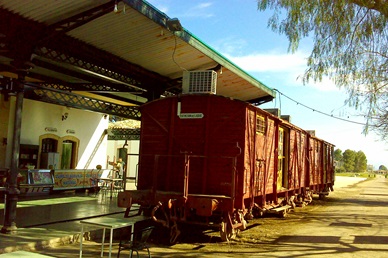
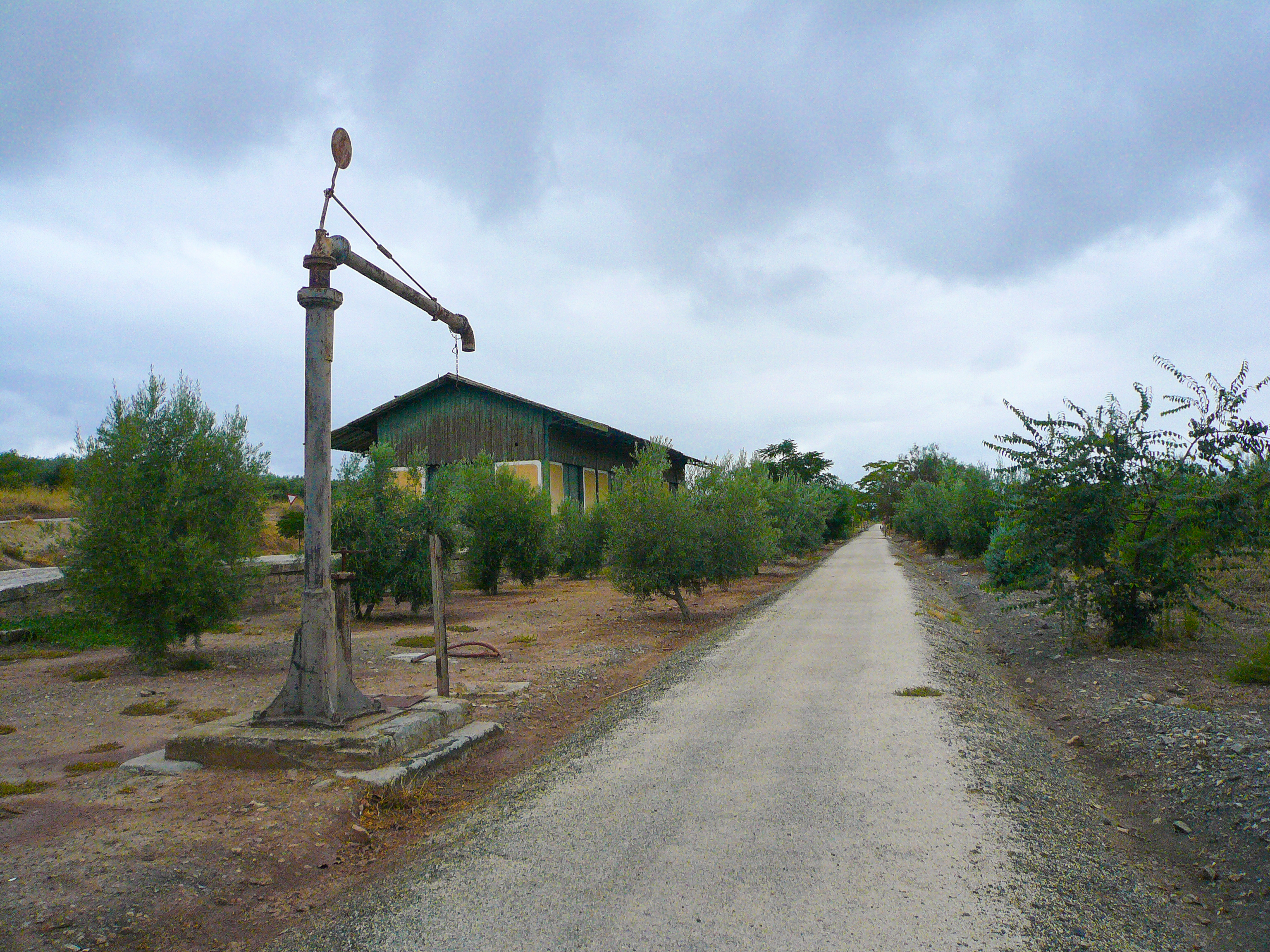
The stage starts at kilometre point 48, at the old Alcaudete railway station, number 14 on the Linares-Campo Real railway line, built at kilometre point 72.047 of the old railway line in a spot known as Fuente del Orbe. Put into service in 1893, some vestiges of the old railway line can still be seen, such as a water tank, loading bays and an old warehouse, which has now been refurbished. Here you will find a rest area equipped with picnic tables and sports equipment welcomes us before we start walking. Just a few metres further on, the path crosses a metal footbridge over the A-316 road and as it descends, you will come across the remains of an old railway structure in ruins, evoking the times when trains used to run in the area. Shortly afterwards, extreme caution is necessary when crossing the JA-4309 road.
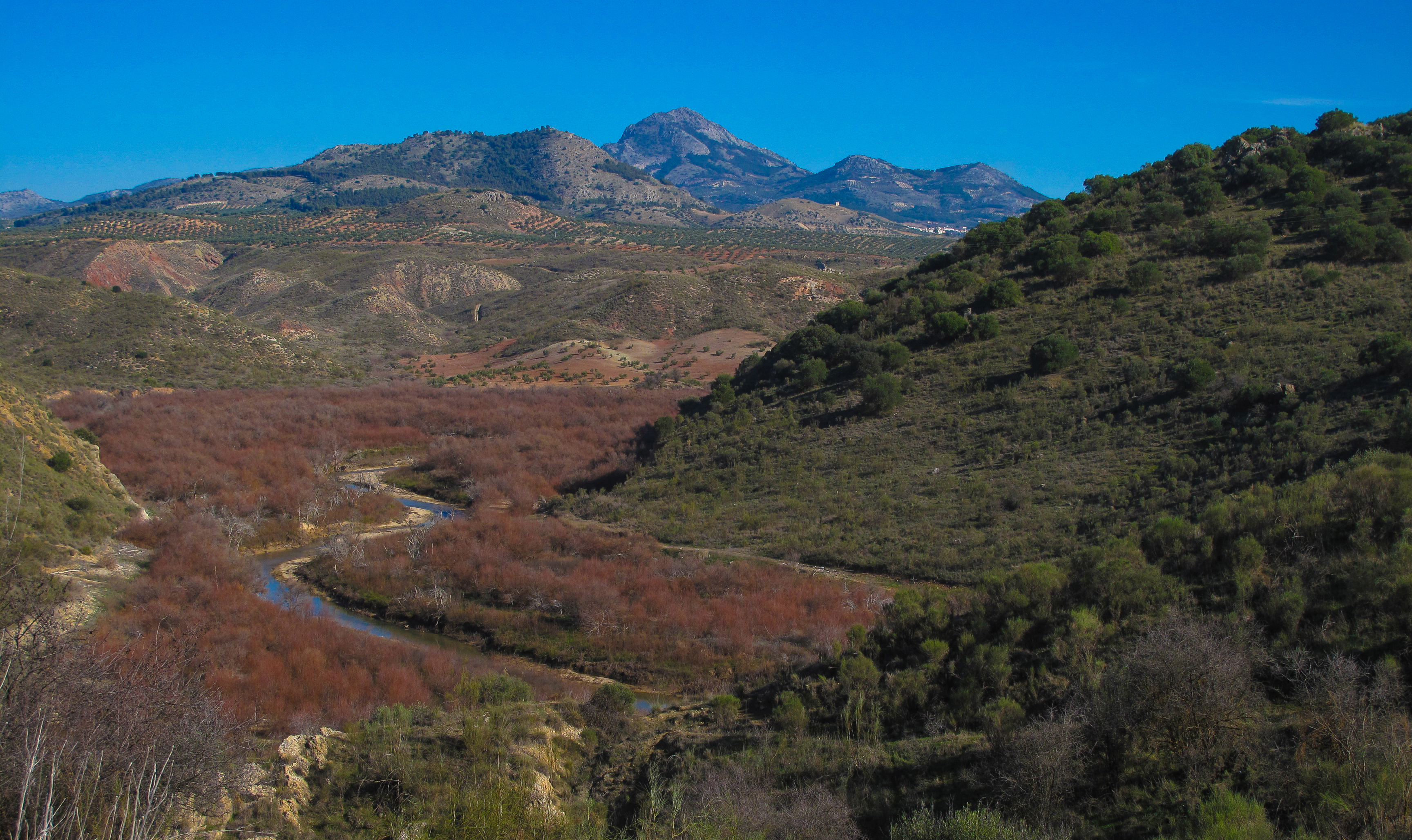
The route continues towards the south-east, winding through country roads before approaching two natural gems: the Laguna Honda Nature Reserve and the Laguna del Chinche Nature Reserve, two of the best-preserved wetlands in the province of Jaén. Although the water levels of these two wetlands change depending on the season, they are home to endangered species such as the white-headed duck (Oxyura leucocephala) or the Eurasian teal (Anas crecca), along with more frequently seen but equally attractive birds for ornithology, such as the Northern pintail (Anas acuta), the Eurasian coot (Fulica atra), the common shelduck (Tadorna tadorna) or the Western marsh harrier (Circus aeruginosus).
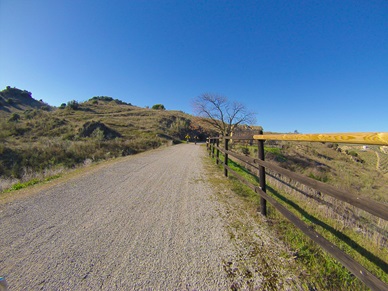
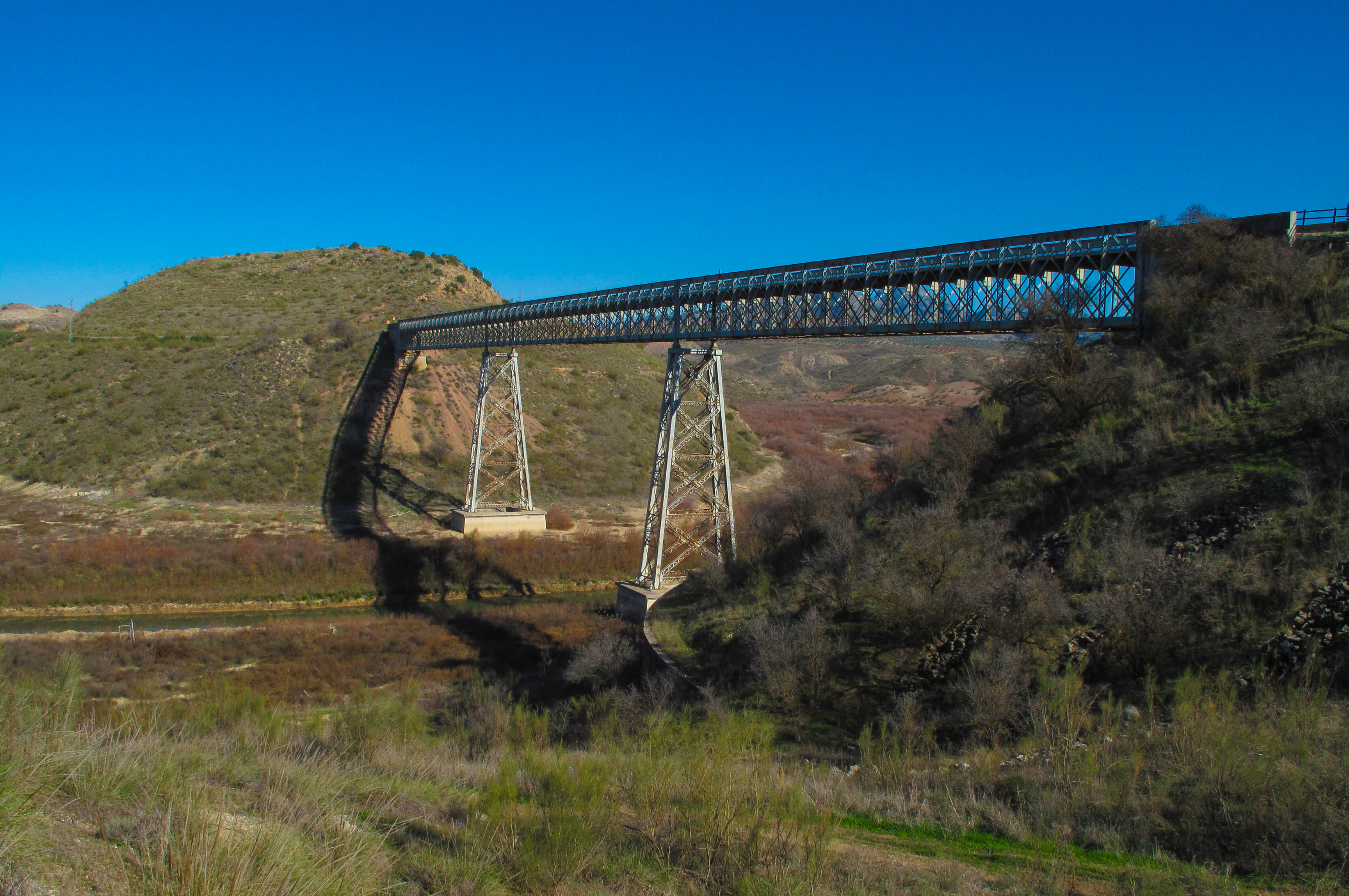
Shortly after, the path skirts the Soto creek and enters a more mountainous area, where it runs between trenches that soften the slopes until it reaches the viaduct over the La Jamputa stream. After crossing a forest track, the route heads back into the trenches until it reaches a rest area with views of the Guadajoz River shortly before kilometre marker 54. Here we find another emblematic viaduct, the viaduct over the Guadajoz River, which marks the boundary between Jaén and Córdoba. Very close by are the remains of an old halt, a silent witness to the route's railway past.
Between olive trees and trenches, the route continues, interrupted only by the occasional well-marked country road. Further on we reach the Laguna del Conde or Salobral Nature Reserve, a shallow, temporary, karstic wetland that forms part of the Southern Córdoba Lagoon System. Due to the growing interest in birdwatching, an observatory has been installed from which birds such as mallards (Anas platyrhynchos), northern shovelers (Anas clypeata), red-crested pochards (Netta rufina), Eurasian coots (Fulica atra), great cormorants (Phalacrocorax carbo) and even a flock of flamingos (Phoenicopterus roseus), can be spotted, as they all are species that thrive in these salty waters. Next to the car park there is an old disused railway warehouse, a reminder that the origins of this route are in an old railway line, and in front of it, a road that should be crossed with caution.
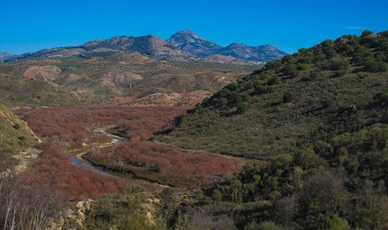
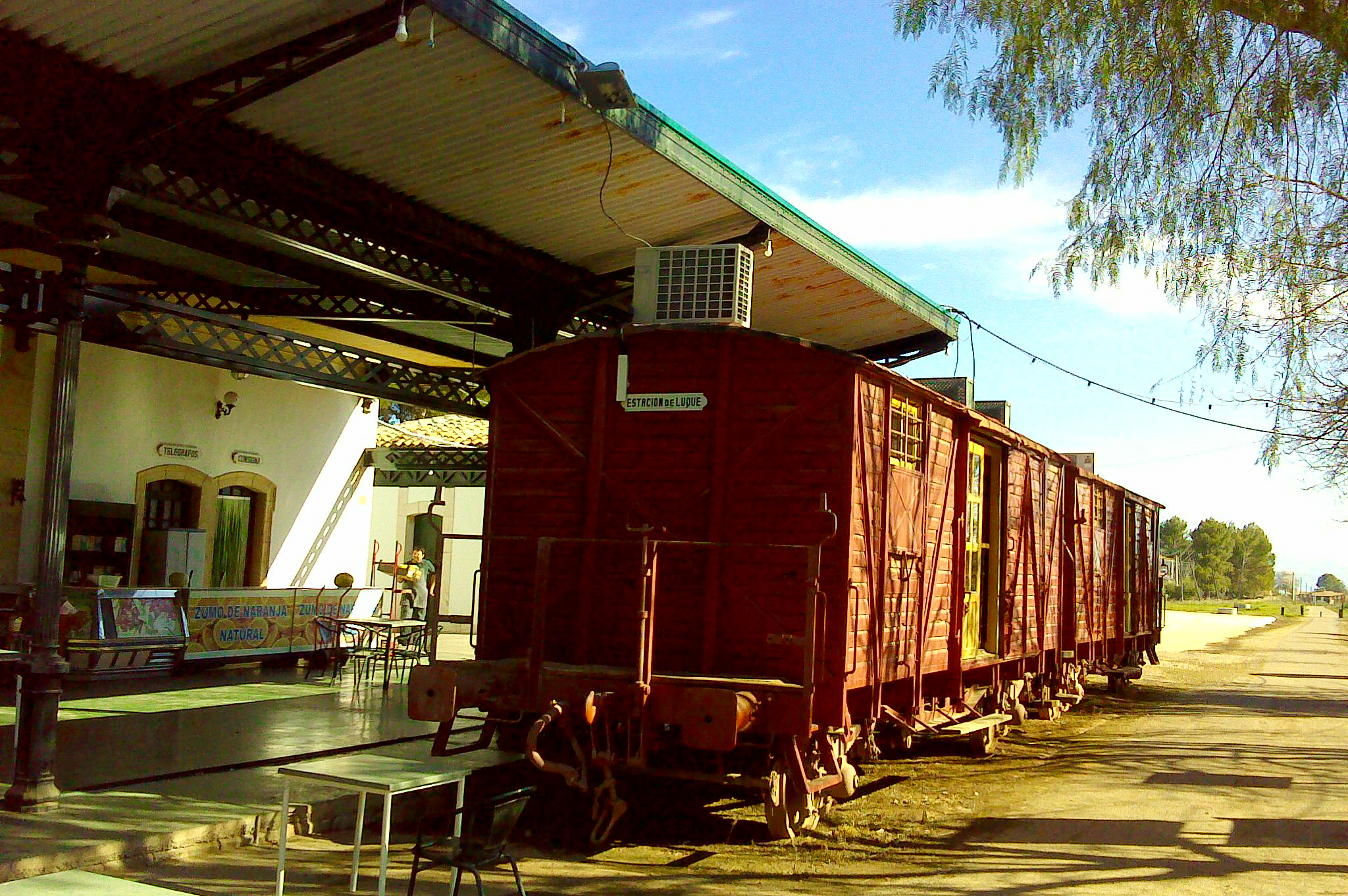
The last stretch of the stage again runs between olive trees and trenches, negotiating the uneven terrain. A new metal footbridge allows you to cross the N-432 road, and further on you cross the streams of Las Pilas and Alamillo. The fifth stage of the Olive Oil Greenway Nature Trail ends in the neighbourhood of the Luque railway station, that has been restored and converted into a restaurant, a perfect place to rest.
Management entities
Sites of interest
Puntos de interés
Culture
Hydrography
Infrastructure
Hostel
Vegetation
Profile
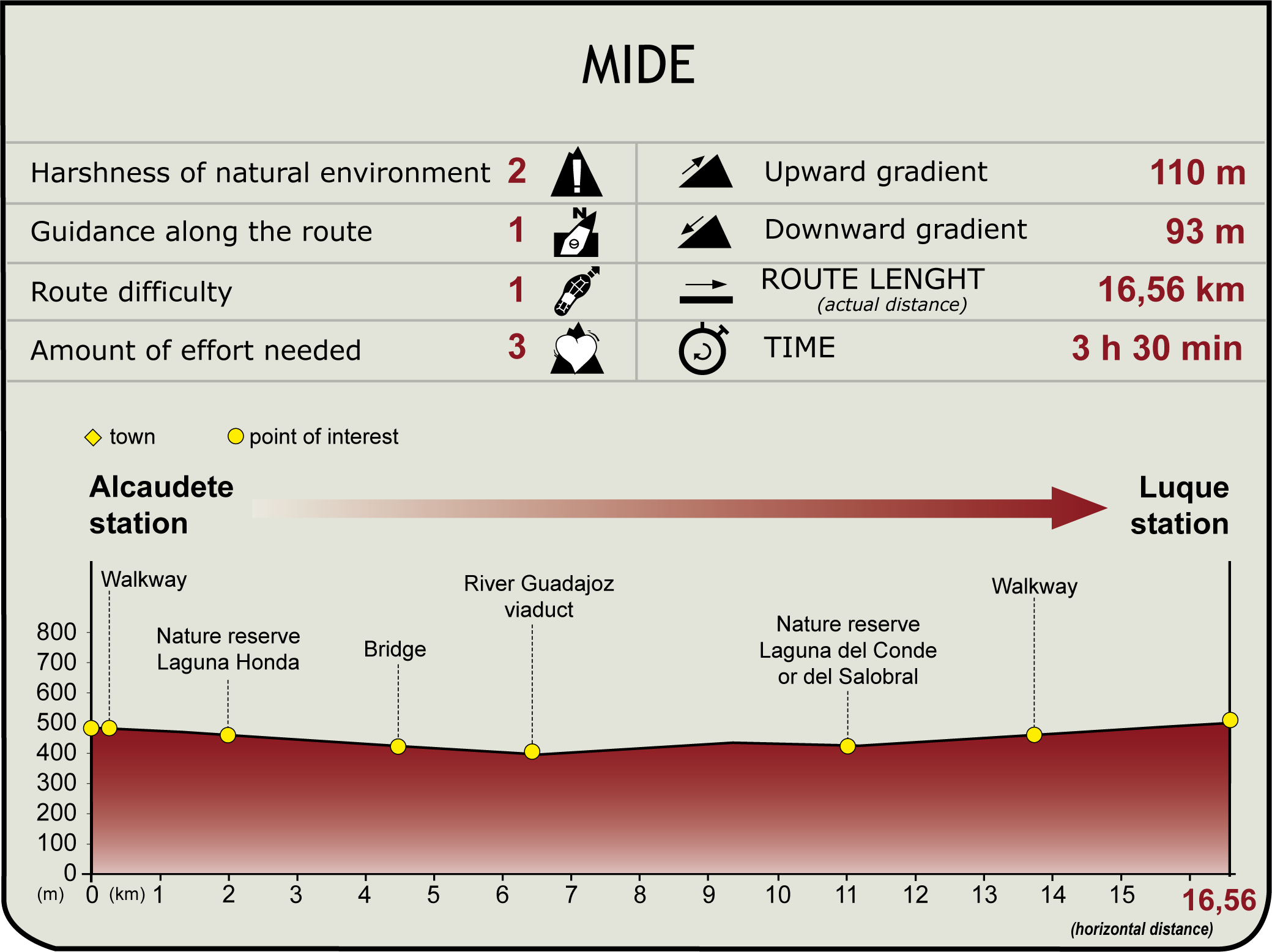
 Harshness of natural environment
- 1. The environment is not risk-free
- 2. There are more than one risk factors
- 3. There are various risk factors
- 4. There are quite a lot of risk factors
- 5. There are many risk factors
 Guidance along the route
- 1. Well defined trails and crossings
- 2. There is a clearly marked trail and signage
- 3. Requires the identification of geographic features and cardinal points
- 4. Requires off-path navigation
- 5. The trail is interrupted by obstacles that have to be gone around
 Route difficulty
- 1. Walking on a flat surface
- 2. Trails with different types of path
- 3. Walking on stepped paths or irregular terrain
- 4. The use of hands or jumping over the terrain is necessary
- 5. The use of hands is required to progress
 Amount of effort needed
- 1. Up to 1 hour of continuous walking
- 2. Between 1 and 3 hours of continuous walking
- 3. Between 3 and 6 hours of continuous walking
- 4. Between 6 and 10 hours of actual walking
- 5. More than 10 hours of continuous walking
(Calculated according to the MIDE criteria for an average excursionist with a light load)
Highlights
Further information
Viaduct over the Guadajoz River
This 199-metre-long viaduct, with a metal lattice structure assembled with rivets and limestone ashlar pillars, was built in 1891 to cross the Guadajoz River, and today stands over the tail end of the Vadomojón reservoir. Its 63.7 m span, supported by mixed stone and metal pillars, gives it an elegance superior to other viaducts on the Nature Trail.
The River Guadajoz has its source at the junction of the River Salado and the River San Juan shortly before the tail end of the reservoir, and flows into the Guadalquivir in the municipality of Córdoba.
Laguna Honda
The Laguna Honda (Spanish for “deep lagoon”), located in the area known as Tumbalagraja, in the municipality of Alcaudete, was declared in 1989 a Nature Reserve with an area of 65 hectares and a protection zone of 220 hectares. The old Linares-Campo Real railway line, today known as the Olive Oil Greenway Nature Trail, used to run close to this spot, between the Sierra Orbes, El Cambrón and El Desgarradero.
The lagoon has a high saline content, and it has water from autumn to spring thanks to a small stream that flows down from the Sierra de Orbes.
The original vegetation, consisting of bulrushes and reeds, together with rushes and tamarisks, surrounds the lagoon where, if you have a bit of luck, it is possible to observe species such as common moorhens, Eurasian coots or white-headed ducks. Sometimes even small flocks of flamingos can be sighted.
Laguna Salobral
The Laguna Salobral (Spanish for “brackish water lagoon”), the largest of the seasonal lagoons in the province of Cordoba with a surface area of 46.6 ha, is a refuge for migratory and nesting birds. The origin of the lagoon is mixed, with contributions from rain, runoff and groundwater. The salt concentration makes its water brackish, hence its name.
Surrounded by an agricultural landscape, typical of the fertile countryside of Córdoba, this lagoon, declared a Nature Reserve in 1989, has typical lagoon vegetation consisting on southern cattail, reed, rush and tamarisk, all of them plants adapted to the harsh conditions of the brackish waters.
The area boast a diverse wildlife: the most significant bird species are the black-winged stilt, northern lapwing, Eurasian stone-curlew, Eurasian teal, white-headed duck, Kentish plover, black tern and Montagu's harrier, among many other species. This diverse wildlife includes many different species of amphibians (Perez's frog, natterjack toad, Iberian ribbed newt and Iberian painted frog), reptiles (viperine snake and Iberian pond turtle) and mammals (common genet, weasel and European polecat).
In the past, several projects were made to drain the lagoon as it was considered a "health hazard", but, fortunately, none of these projects was actually carried out.
The remains of the old Collado de las Arcas halt with its cargo platform, which was linked to hematite mining by the company Grupo Minero Zamoranos, can still be seen on the old railway line that runs along the edge of the wetland.
Luque Railway Station
Inaugurated in 1893 as Luque-Baena railway station, it formed part of the Puente Genil-Linares railway line, designed to transport metal and agricultural products, mainly olive oil, to the ports of Málaga and Algeciras.
The architectural design of the main building is identical to that of Lucena station, and the small village of La Estación grew next to it. The station manager lived on a flat on the first floor, while their offices were on the ground floor together with the waiting room for passengers, the telegraph office, the cloakroom and the railway police station.
Today, the building has been refurbished as a restaurant and hostel, as well as the Olive Oil Interpretation Centre, a meeting point with the history of olive groves and olive groves, that carries out olive oil tastings and has an exhibition of the machinery used on old oil mills and a collection of farming tools.
Multimedia







Downloads

GPS Downloads


Documents

Cyclability
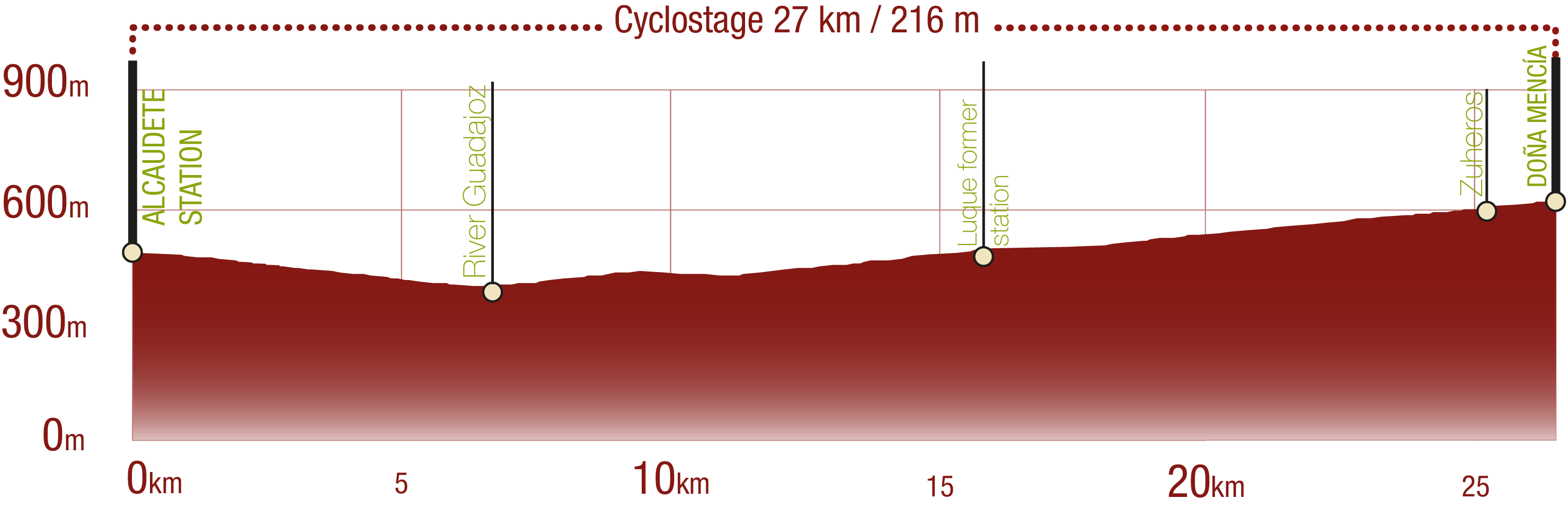
This cycling stage corresponds from Alcaudete Station to Doña Mencía Station
PROFILE
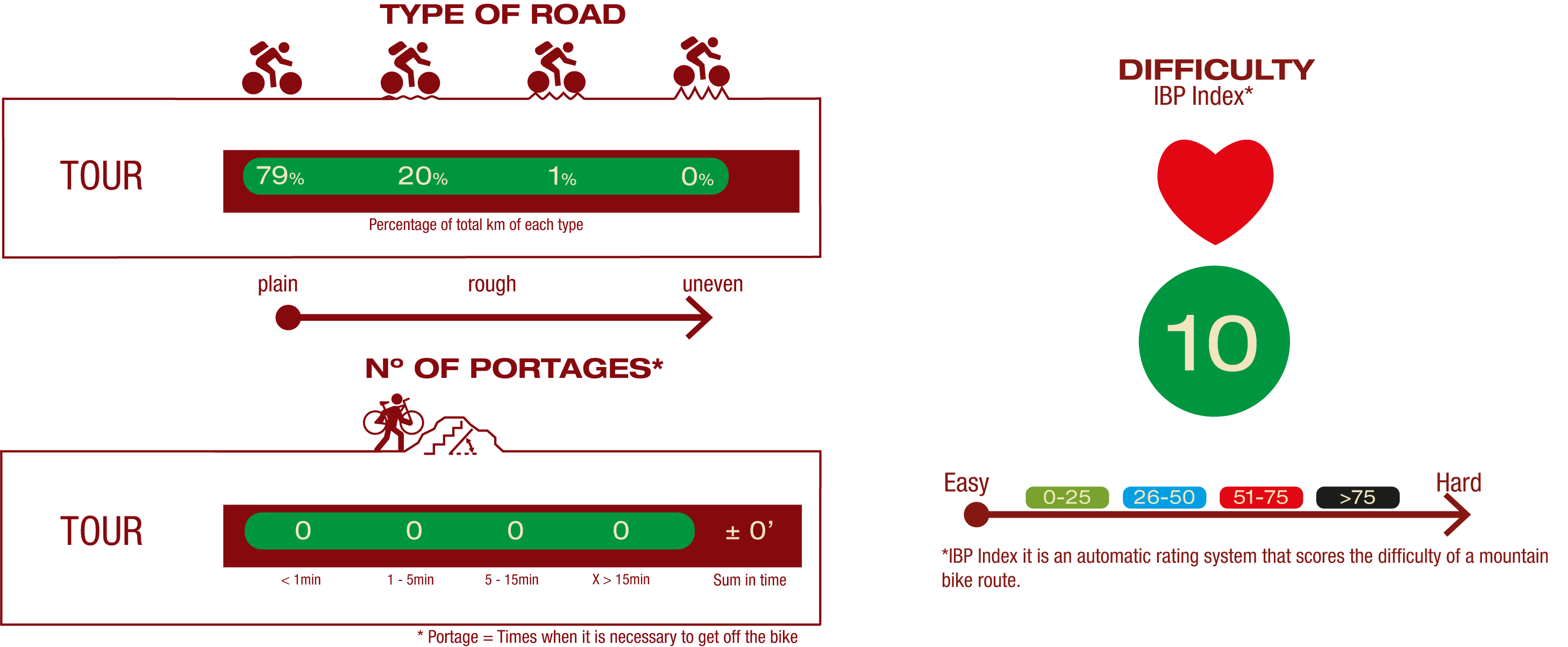
TYPE OF ROADS, PORTAGES & DIFICULTY
TEST

GENERAL RECOMMENDATIONS
- Find out about the technical aspects of the route and the weather on the day.
- Take care of the environment. Take care not to disturb animals or damage vegetation. Respect private areas.
- You must give priority to pedestrians and comply with general traffic rules.
- The environment in which you will be riding is open, free to move around and an area where many activities are carried out (sporting, forestry, livestock and agricultural activities).
- Always have an understanding, prudent, responsible and respectful attitude.