


Net of Nature
Trails

Stage: Andoain – Leitza Station


Description
Following in the footsteps of the old railway through the spectacular Leitzaran Valley
This stage begins in the town of Andoain and, after passing through part of the town centre, the train journey takes us into the Leitzaran Protected Biotope, where we can marvel at the rich flora and the beautiful scenery, whilst also discovering the numerous tunnels and other remnants of the railway’s past. The route reaches the boundary between Gipuzkoa and Navarre, where the Basque Giant Chair stands, and ends in the picturesque Navarrese town of Leitza, which offers a range of facilities.
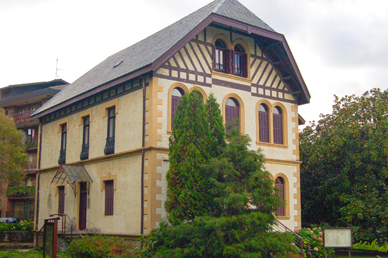
The Plazaola Greenway Nature Trail begins next to an industrial building, at the northern entrance to Andoain. The route follows the old railway line, as it is obvious from the very first few metres, as it passes through the first tunnel shortly after setting off. Once past this point, the route continues south-west, gradually entering the town.
The route continues in a straight line along Arantzibia Street, where it climbs a slight incline and passes close to the church of San Martín de Tous and the town hall, both built in the 18th century. The road returns to the old railway line and, after crossing La Salle Avenue, reaches the old palace now known as Urigain Etxea. This multidisciplinary cultural centre, run by Andoain Town Council, also houses the Tourist Information Office.
At this point there is an information panel detailing the adventure that has just begun along the Plazaola Greenway Nature Trail. The route continues between stone walls until it reaches a street again. After crossing it at the pedestrian crossing provided for this purpose, the route turns left onto a red-cobbled path that leads out of the town.
The route winds its way through a wooded area consisting mainly of oak trees (Quercus sp.) and chestnut trees (Castanea sativa) until it reaches the Antzizar tunnel, which is almost 100 metres long. The tunnel is well-lit and well-maintained, and leads us to an area somewhat apart from the town centre.
The route continues halfway up the hillside through woods and grassland until it reaches a turn-off to the right which, after a short descent of less than half a kilometre, leads to the Olazar Park leisure area. After the visit, it is necessary to retrace your steps until to rejoin the main route
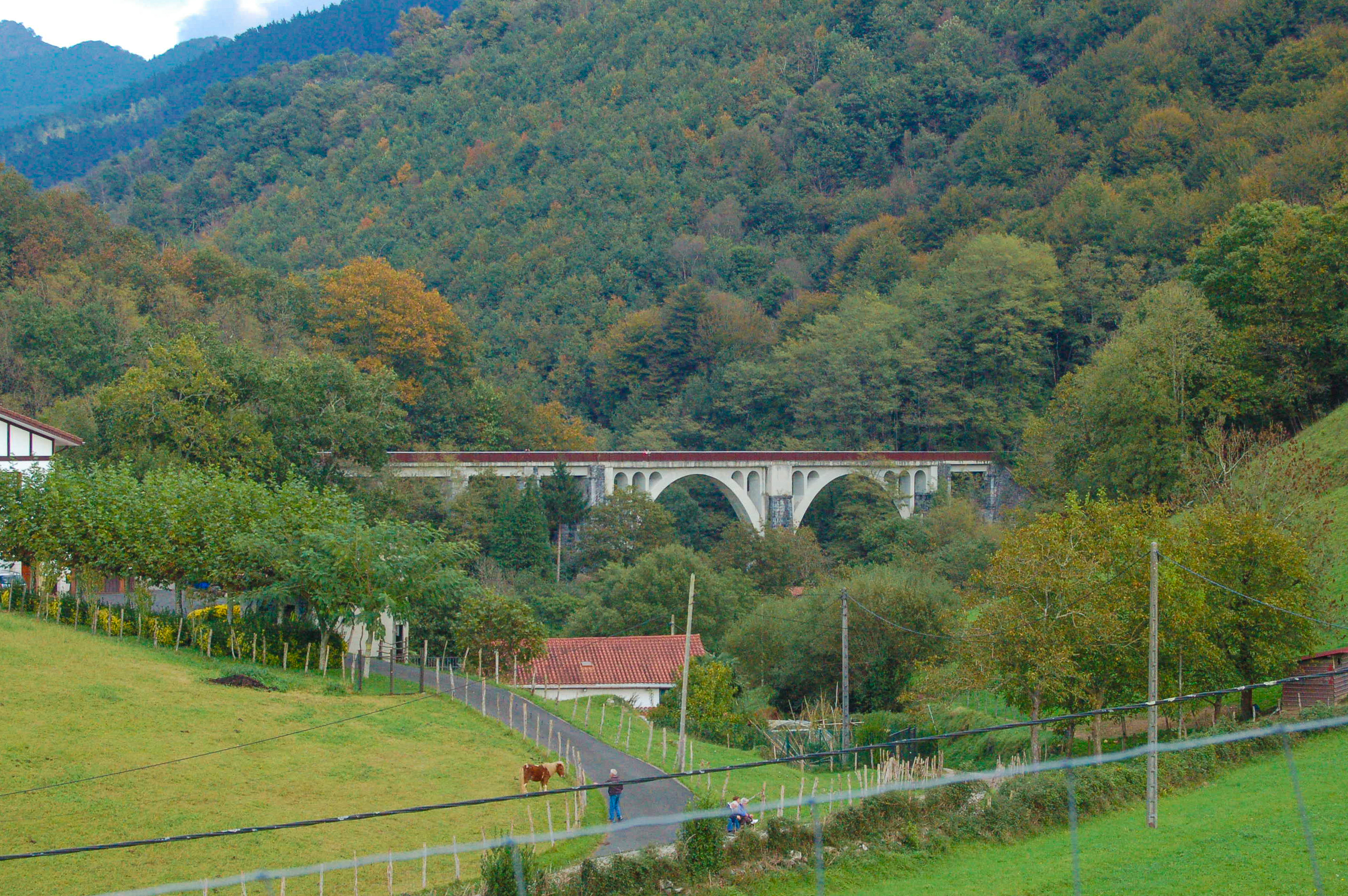
Back on the old railway line, the route continues in the pleasant shade of the trees until it reaches the impressive Auzokalte viaduct. Its central area is a good place to stop and enjoy the views and the tranquillity of the surroundings. After crossing this area, a few metres further on, the path finds the Otieta tunnel, which is 280 metres long and has artificial lighting. However, it is always advisable to carry a torch, headlamp or bike light, as not all the tunnels on this stage are lit.
At the tunnel exit, the trail comes to the car park for the Leitzaran Protected Biotope. From there, a few metres down to the right, the trail comes to the Leitzaran Visitor Centre, which features a wide range of interpretation material, a bicycle repair station, a rest area and toilets. All this is located beside the Leitzaran River and the Unanibia Bridge – popularly known as the Witches’ Bridge – so there are plenty of reasons to enjoy this spot before continuing the adventure.
The route then heads into the Leitzaran Valley, following the old narrow-gauge railway line, which is now popular with both visitors and locals. This natural area offers a range of leisure and recreational activities, such as climbing and fishing – subject to the relevant permits and authorisations – as well as walking and cycle touring through this beautiful protected area along the Plazaola Greenway Nature Trail.
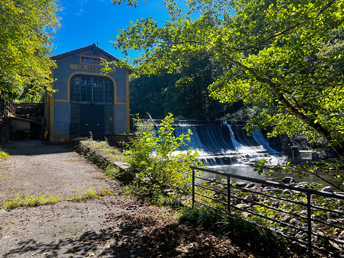
With the Leitzaran River as a faithful travelling companion, the route winds its way through chestnut, beech and oak trees. To the right of the route lies the Olaberri weir and hydroelectric power station, an example of how environmental protection can coexist with certain compatible uses. A few metres further on, there is another weir and the Leitzaran hydroelectric power station, which precedes a curved tunnel with no artificial lighting. On this occasion, carrying a torchlight is essential.
The railway line winds its way alongside the Leitzaran River, curving in unison as if they were two dancers moving in perfect step. A new, unlit tunnel leads up to a point of particular interest known as the Txapela de Bertxin, a beret-shaped rock formation which was created during the construction of the old railway line to allow the train to pass through.
After passing through another tunnel with no artificial lighting, the trail reaches the Andoain weir at the Bertxin hydroelectric power station, popularly known as the ‘power station with the stairs of the 500 steps’ because of the flight of stairs connecting the penstock to the main building.
The deciduous forest, together with the tunnels, is the dominant feature of the Leitzaran Valley. After passing through five more tunnels, the route reaches a viaduct that crosses the Leitzaran River, followed by another tunnel next to the Olloki hydroelectric power station. The kilometres fly by, as the route doesn’t require much effort and the rewards it offers to the senses are countless, making it extremely easy to switch off from the hustle and bustle of everyday life.
A new small viaduct once again spans the river, and three new tunnels – without artificial lighting – ensure that the old railway line remains close to the river and continues to be surrounded by its lush vegetation. Over a distance of just over 600 metres, there are four small viaducts alternating with three tunnels, built to ease the gradient of the railway line and navigate this rugged terrain, with the carriages laden with iron ore.
There is another tunnel leading up to the weir and the Ameraun hydroelectric power station. Next, four more tunnels and a small viaduct lead to the Ameraun aqueduct, which runs perpendicular to the route. Its eight stone eyes form part of one of the most striking structures along this stretch, which was used to supply water to the hydroelectric power station of the same name.
Three tunnels and three further viaducts dot the route before reaching the Plazaola 1 hydroelectric power station, which, like all the previous ones, is located alongside the bed of the Leitzaran River. The old railway line allows visitors to view these facilities from a vantage point above the riverbed.
Tunnels and viaducts line this endless succession of old railway structures, with the old Bizkotx mines – commonly known as the Plazaola mines – lying to the left of the track. Iron ore was extracted from these deposits, which enabled the construction of the Plazaola narrow-gauge railway.
Shortly afterwards, the trail reaches the Plazaola 2 hydroelectric power station, followed by the border between Gipuzkoa and Navarre. This spot is one of the highlights of the route, as it is home to the Basque Giant Chair, a wooden structure built with the aim of strengthening ties between neighbouring towns in different autonomous communities. There are also various information boards at this point, including, of course, the Nature Trail information board, which provides all the useful information about the route and the attractions of the area through which it passes.
The route continues along a tarmac track, passing a tunnel on the left that forms part of the old railway line; this tunnel is not open to traffic due to its poor condition. Below are the buildings that formed part of the old Plazaola station. The route passes under the A-15 motorway viaducts twice and, after the second one, the surface changes from tarmac to a dirt track.
After travelling just over 2 km from La Muga, the route passes through the Gazpillotxiki tunnel, which is 76 m long and has no artificial lighting. About 1 km further on, there is a patch of Northern red oak (Quercus rubra). The landscape now alternates between wooded areas, meadows and hamlets, leading to the 135-metre-long Martikonera tunnel, which is artificially lit.
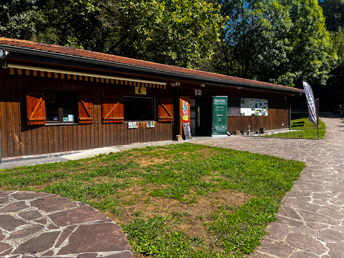
At this point, the Plazaola Greenway Nature Trail approaches Leitza station, where the Nature Trails information panel marks the end of this stage. Both the warehouse building and the old station building have been refurbished and are in excellent condition. There is also a car park here, which makes it easier to access the route, as well as a drinking fountain and a rest area.
Although the route does not go into the town centre, it is well worth visiting Leitza to explore this beautiful Navarre town, with its cobbled streets and stately stone houses, which have also caught the attention of the film industry.
Managing Entities
Sites of interest
Puntos de interés
Culture
Geology
Hydrography
Information
Infrastructure
- Túnel
- Túnel Antzizar
- Viaducto de Auzokalte
- Puente de Unanibia
- Azud y la central hidroeléctrica de Olaberri
- Túnel Otieta
- Túnel de Arantzazunea
- Túnel Martikonera
- Estación de Leitza
- Túnel Gazpillotxiki
- Acueducto de Ameraun
Municipality
Profile
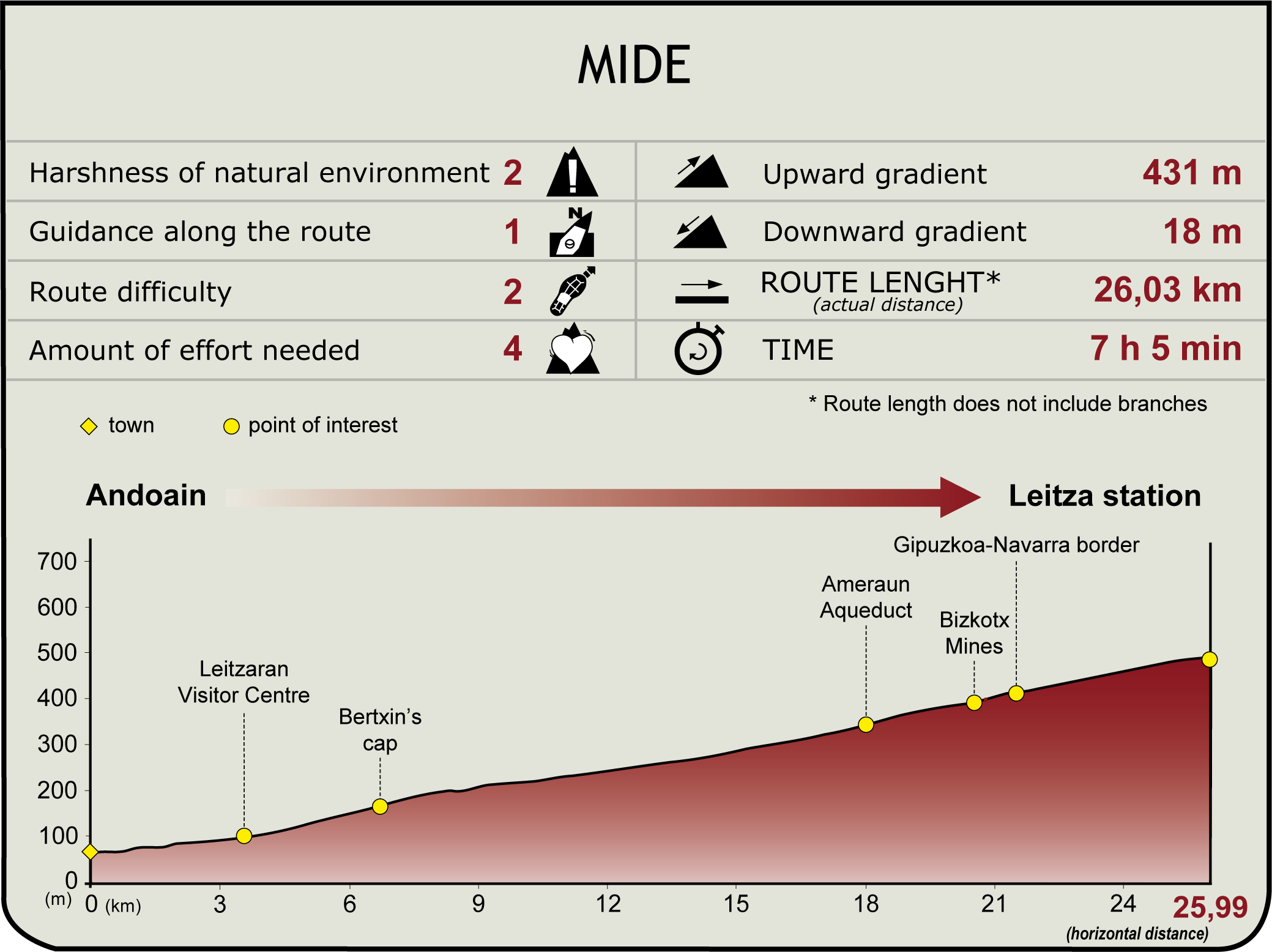
 Harshness of natural environment
- 1. The environment is not risk-free
- 2. There are more than one risk factors
- 3. There are various risk factors
- 4. There are quite a lot of risk factors
- 5. There are many risk factors
 Guidance along the route
- 1. Well defined trails and crossings
- 2. There is a clearly marked trail and signage
- 3. Requires the identification of geographic features and cardinal points
- 4. Requires off-path navigation
- 5. The trail is interrupted by obstacles that have to be gone around
 Route difficulty
- 1. Walking on a flat surface
- 2. Trails with different types of path
- 3. Walking on stepped paths or irregular terrain
- 4. The use of hands or jumping over the terrain is necessary
- 5. The use of hands is required to progress
 Amount of effort needed
- 1. Up to 1 hour of continuous walking
- 2. Between 1 and 3 hours of continuous walking
- 3. Between 3 and 6 hours of continuous walking
- 4. Between 6 and 10 hours of actual walking
- 5. More than 10 hours of continuous walking
(Calculated according to the MIDE criteria for an average excursionist with a light load)
Highlights
Leitzaran River Protected Biotope
Designated in 1995, this 74-hectare nature reserve encompasses the Leitzaran River and its banks from where it enters the province of Gipuzkoa until a few kilometres before it reaches the town of Andoain.
The waters of this river are of a high quality and rich in biodiversity, and are home to species such as trout, eel and minnow. Other notable species include the Pyrenean desman and the European mink. The vegetation is characterised by stands of oak (Quercus sp.), chestnut (Castanea sativa) and beech (Fagus sylvatica), as well as a spectacular alder grove (Alnus glutinosa) and the riparian woodland that lines the riverbank.
The biotope is also home, both within its boundaries and in the surrounding area, to many small hydroelectric power stations that harness the power of the Leitzaran River to generate electricity. In addition to these, there are numerous tunnels, viaducts and other railway remains that bear witness to the Plazaola narrow-gauge railway, the former route of which has been converted and upgraded into the Plazaola Greenway Nature Trail.
Multimedia


Downloads

GPS Downloads


Cyclability
PROFILE
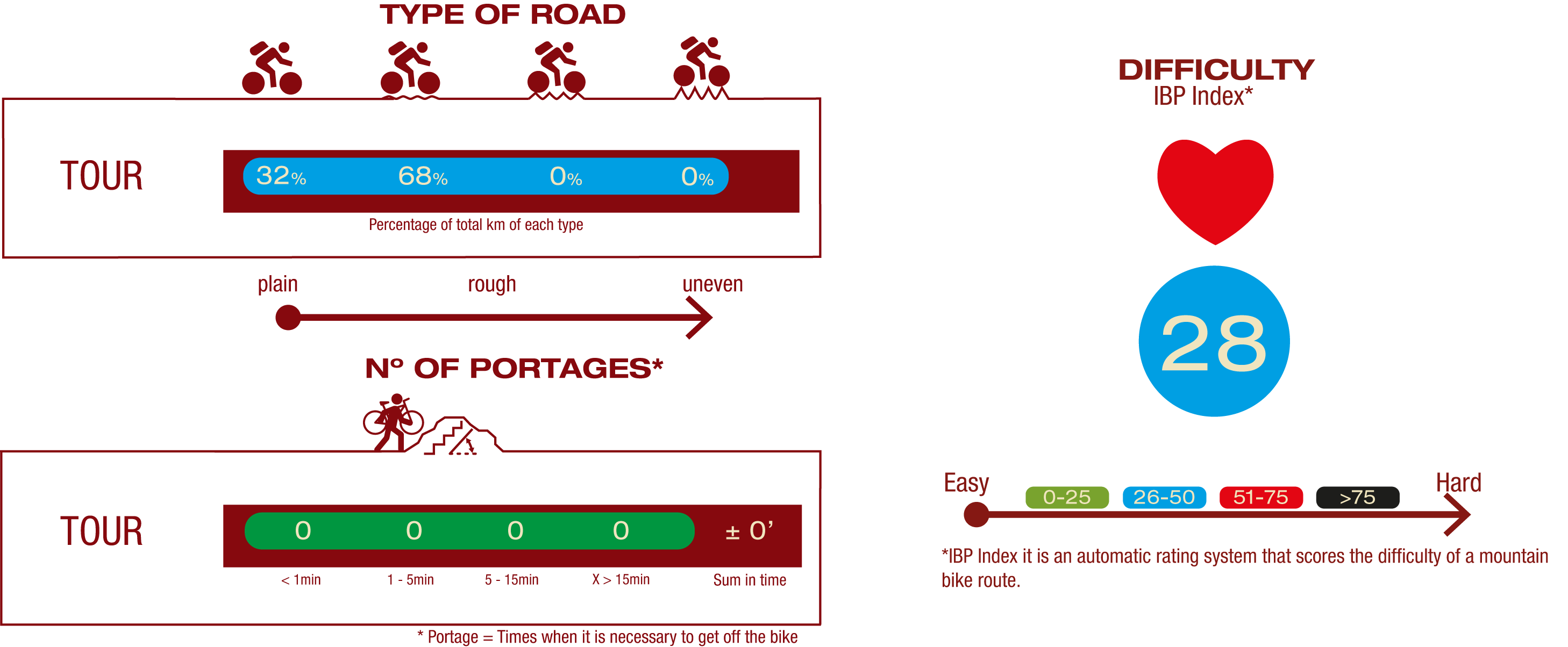
TYPE OF ROADS, PORTAGES & DIFFICULTY
TEST

SAFETY RECOMMENDATIONS
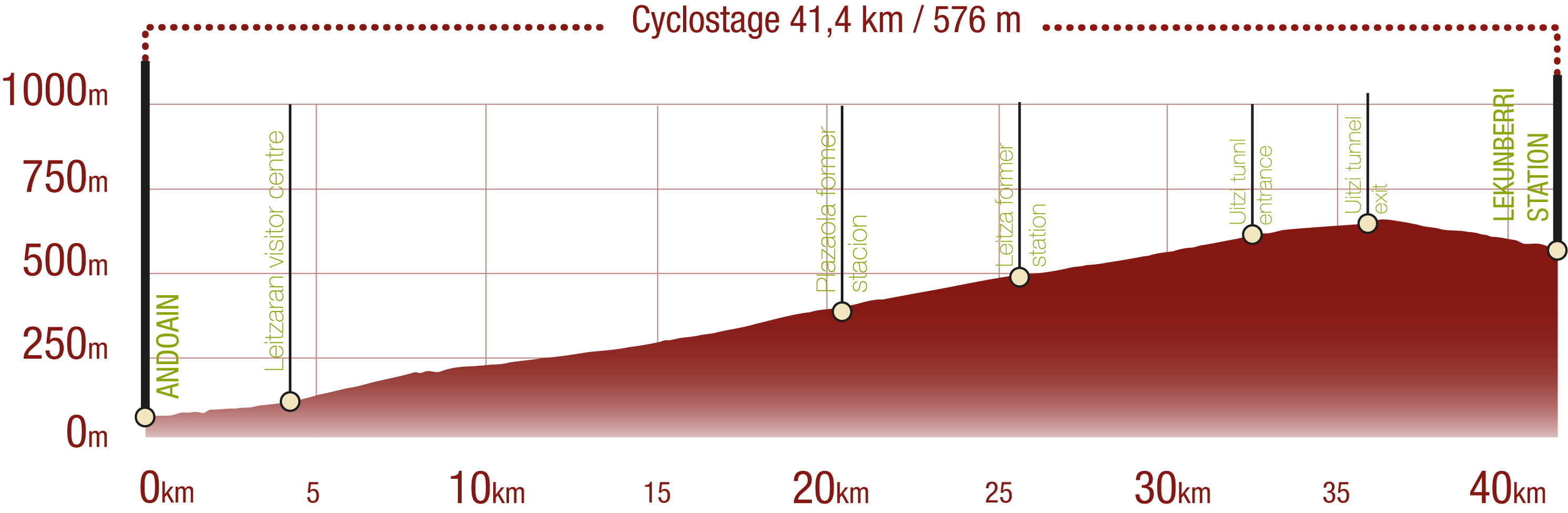
The route features 46 tunnels along the cycle route, 39 of which have no lighting. Of the seven tunnels with artificial lighting, the Leitza Tunnel is 649 metres long and the Uitzi Tunnel is 2,700 metres long. For all these reasons, it is essential to have a bike light to ride through them. Furthermore, some of them may have puddles inside. There are several sections shared with motor vehicles, where the necessary precautions must be taken; furthermore, the route passes through the town centre of Andoain, where extreme care must also be taken. The route passes over 15 viaducts with a good road surface and kerbing on both sides.
GENERAL RECOMMENDATIONS
- Find out about the technical aspects of the route and the weather on the day.
- Take care of the environment. Take care not to disturb animals or damage vegetation. Respect private areas.
- You must give priority to pedestrians and comply with general traffic rules.
- The environment in which you will be riding is open, free to move around and an area where many activities are carried out (sporting, forestry, livestock and agricultural activities).
- Always have an understanding, prudent, responsible and respectful attitude.